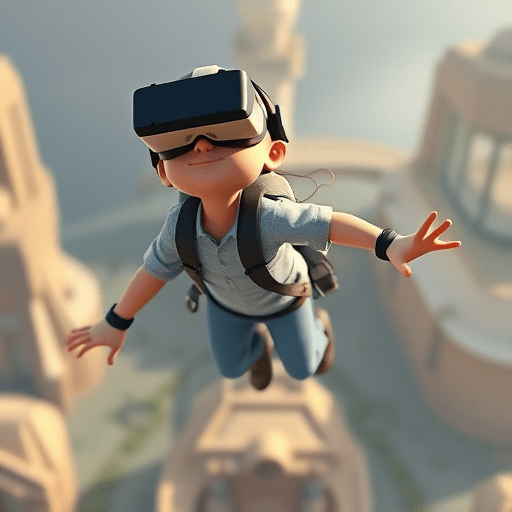
Neuroadaptive haptics is reshaping virtual reality by using real-time biosignals so systems can respond to your body—reducing VR motion sickness and amplifying presence in ways static controllers never could. In this article, explore the neuroscience behind closed-loop haptics, meet startups pioneering the space, and consider accessibility implications that could make VR more inclusive for everyone.
What Is Neuroadaptive Haptics?
At its core, neuroadaptive haptics combines sensors (EEG, heart rate, skin conductance, muscle activity) with haptic actuators (vibration motors, pneumatic bladders, localized force feedback) and a control loop that adapts feedback in milliseconds. Instead of playing back predetermined rumble patterns, a neuroadaptive system monitors physiological markers of discomfort or engagement and tunes tactile responses to steer the user’s sensations—damping cues that trigger nausea or enhancing signals that anchor attention and presence.
The Neuroscience Behind Closed-Loop Haptics
Understanding why this works requires a quick tour of embodied cognition and multisensory integration. The brain constantly reconciles visual, vestibular, and somatosensory inputs; conflict between these systems is a primary cause of VR motion sickness. Closed-loop haptics intervenes at the somatosensory level to reduce conflict and restore coherence.
Key physiological signals and what they reveal
- EEG rhythms: Changes in alpha and theta bands often correlate with immersion and cognitive load; sudden shifts can signal discomfort.
- Heart rate variability (HRV): Drops in HRV suggest stress or autonomic imbalance, useful for early detection of nausea onset.
- Electrodermal activity (EDA): Spikes indicate arousal—useful for distinguishing excitement from negative stress.
- Muscle tone (EMG): Tension in neck and shoulders often accompanies disorientation, signaling the need for grounding haptics.
Algorithms fuse these streams to create an internal estimate of the user’s comfort and presence state. When the estimator crosses thresholds, the haptic layer applies targeted interventions—subtle torso pulses to re-anchor the body, gentle opposing forces to realign perceived motion, or rhythmic patterns to calm autonomic responses.
Startups to Watch: Who’s Building the Closed-Loop Future
The neuroadaptive haptics sector blends neuroscience, wearables, and game design. Below are a handful of startups—representative of the approaches gaining traction—that illustrate how varied products can be.
Somatiq Labs — Holistic biosignal suites
Somatiq Labs pairs a lightweight EEG headband with a haptic vest and a machine learning layer that personalizes interventions over time. Their focus: quantifying “presence signatures” for individual users so the system becomes more predictive with each session.
PulseSense — Minimal, mobile-first interventions
PulseSense targets mobile VR with a wristband that measures HRV and EDA and a companion controller that injects micro-vibrations to counteract rising nausea. Their emphasis is battery efficiency and ultra-low latency for mainstream adoption.
Vestio — Full-body somatosensory solutions
Vestio develops modular haptic garments with localized force and pressure actuators. By integrating IMUs and EMG, Vestio’s closed-loop firmware uses body posture and muscle tension to create stabilizing cues during locomotion-heavy experiences.
AffectHaptics — Affect-aware content tools
AffectHaptics provides an SDK for game developers to author adaptive haptic layers tied to affective state. Their platform enables designers to craft rules like “when EDA spikes during a cutscene, reduce motion blur and increase subtle seat pulses.”
These examples highlight different design trade-offs—wearability, signal fidelity, developer tools, and cost—but all share one ambition: make VR more comfortable and believable by listening to the body.
Design Patterns for Effective Neuroadaptive Haptics
Successful systems typically follow a few reproducible patterns:
- Early detection + graceful mitigation: Detect precursors to motion sickness (tiny HRV dips, EEG micro-shifts) and apply subtle countermeasures before full nausea develops.
- Personalized baselines: Calibrate each user’s physiological baseline and adapt thresholds over multiple sessions to avoid false positives.
- Multimodal anchoring: Combine haptics with visual or audio grounding (e.g., horizon stabilization and heartbeat-synced audio) for stronger multisensory coherence.
- Fail-safe defaults: If sensors fail or signals are ambiguous, fall back to conservative noninvasive haptics that prioritize comfort.
Accessibility Implications: Toward More Inclusive VR
Neuroadaptive haptics holds particular promise for accessibility. For users with sensory processing differences, vestibular disorders, or limited mobility, adaptive haptics can customize experiences that would otherwise be intolerable.
Ways neuroadaptive haptics improves accessibility
- Reduce motion sickness for vestibular-impaired users by offering personalized stabilization cues.
- Provide alternative feedback for users with visual or auditory impairments—haptic patterns can convey navigation, object identity, or emotional tone.
- Enable dynamic difficulty and pacing adjustments based on physiological stress, making content playable for people with chronic conditions or neurodivergence.
However, accessibility also raises ethical and design questions: data privacy for physiological signals, consent for long-term monitoring, and ensuring devices are affordable and physically comfortable for diverse bodies. Designers must build transparency and opt-in controls into both hardware and software.
Barriers and the Road Ahead
Challenges remain: reliable sensors in consumer settings, low-latency pipelines, robust machine learning models that generalize across populations, and clear regulatory frameworks for biometric data. Progress will come from interdisciplinary collaboration—neuroscientists, haptics engineers, UX designers, and accessibility advocates working together.
Where neuroadaptive haptics could make the biggest impact
- Mass-market VR and AR where motion sickness currently limits adoption.
- Therapeutic and rehabilitation apps that need safe, adaptive feedback loops.
- Education and training simulations that benefit from deeper presence without discomfort.
As hardware miniaturizes and analytics improve, expect neuroadaptive haptics to shift from niche research demos to embedded features in consumer headsets and enterprise systems.
Conclusion: Neuroadaptive haptics offers a pragmatic path to fewer sick days in VR and more convincing, accessible virtual worlds by teaching systems to read and respond to the body in real time. Thoughtful design, attention to privacy, and inclusive product decisions will determine whether this technology becomes a universal enabler or a niche luxury.
Ready to explore neuroadaptive haptics for your VR project? Reach out to developers and accessibility experts to start prototyping adaptive feedback today.