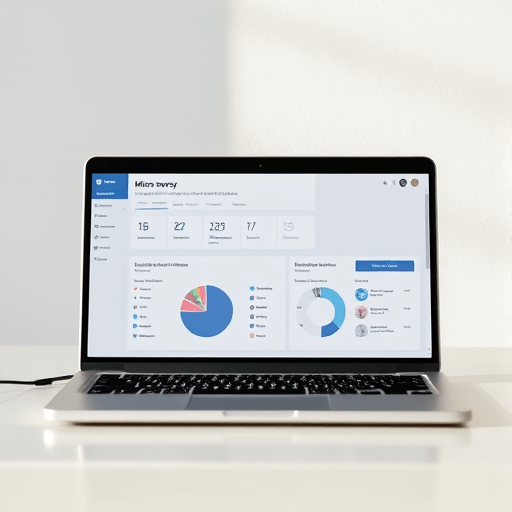
In the fast‑paced world of early‑stage startups, measure & boost early‑stage team health is the cornerstone of sustainable growth. Unlike later‑stage companies, fledgling teams must juggle product development, market fit, and investor expectations—all while building a culture that can weather turbulence. This 6‑month playbook equips founders and leaders with a data‑driven, agile framework to track key performance indicators (KPIs), iterate in real time, and maintain high morale.
Month 1: Establish a Baseline & Define Core Metrics
Kick‑off with a full‑team workshop to surface what “team health” means to everyone. Capture qualitative insights (surveys, one‑on‑ones) and translate them into measurable indicators. Prioritize three core metrics that blend output, engagement, and wellbeing:
- Velocity & Quality Ratio – Story points completed per sprint divided by bug tickets raised.
- Employee Net Promoter Score (eNPS) – A quick pulse on team happiness.
- Burnout Index – Hours worked per week minus scheduled breaks, weighted against self‑reported stress levels.
Use a lightweight dashboard (e.g., Google Data Studio, Power BI, or an Airtable base) to surface these numbers daily. Remember, data alone won’t solve problems—context does. Pair numbers with anecdotal feedback in a “Health Snapshot” slide at each sprint review.
Tool Setup Checklist
- Project management tool with story point tracking (Jira, ClickUp, or Trello + custom fields)
- Survey platform for weekly eNPS (Officevibe, 15Five, or simple Google Forms)
- Timesheet integration to auto‑populate work hours (Harvest, Toggl)
- Dashboard connector (Zapier or n8n) to pull data into a central sheet
Month 2: Build Iteration Loops & Rapid Feedback
With baseline data in place, start designing short, disciplined iteration loops. Adopt a 30‑day sprint cycle that ends with a full Team Health Review. The review should ask: “What did we learn? How did our health metrics shift? What actions will we take?”
Integrating OKRs with Health Metrics
Align team OKRs (Objectives and Key Results) to health KPIs. For example, an objective of “Improve code quality” can have a key result of “Reduce bugs per 1000 LOC by 20%.” This ensures that delivering product value directly feeds into healthier metrics.
Encourage a “fail fast, learn fast” culture by treating negative trends as learning opportunities, not failures. For instance, if the Burnout Index spikes, trigger a retrospective focused on workload redistribution, rather than blaming the team.
Micro‑Retrospectives for Quick Wins
- Hold a 10‑minute stand‑up after each major feature release.
- Use the Start, Stop, Continue framework to surface actionable items.
- Assign owners and set a 48‑hour deadline for each action.
These micro‑retrospectives keep the team agile and ensure health metrics are not left to the monthly sprint review alone.
Month 3: Scale Communication & Visibility
Transparent communication is the glue that binds health initiatives. Deploy a team‑wide health newsletter (bi‑weekly) that aggregates KPI trends, celebrates wins, and highlights upcoming focus areas.
Dashboard Enhancements
- Add trend lines and predictive alerts (e.g., color‑coded thresholds for eNPS).
- Enable role‑based dashboards: developers see velocity and bug stats; HR sees burnout and engagement.
- Integrate Slack or Teams alerts for KPI thresholds that cross critical points.
Invite cross‑functional participation by embedding a “Health Radar” in the company intranet. This fosters collective ownership of the team’s wellbeing.
Month 4: Introduce Structured Development & Recognition
At this point, the team is accustomed to data loops. Add depth by implementing structured development plans and recognition frameworks that feed back into health KPIs.
Growth Pathways
- Create role‑based learning modules (e.g., “Front‑end Mastery” for developers).
- Schedule quarterly skill‑gap assessments tied to velocity gains.
- Track completion rates as a secondary health metric.
Recognition Cadence
- Weekly shout‑outs in the health newsletter.
- Monthly “Health Champion” awards based on peer nominations.
- Link recognition to eNPS improvements: teams with high engagement see more peer recognition.
These initiatives reinforce that investing in people translates into higher output quality and lower burnout.
Month 5: Optimize Workflows & Resource Allocation
Use the data accumulated over four months to identify workflow bottlenecks. Apply Lean principles to streamline processes.
Value Stream Mapping
- Map the end‑to‑end flow of a feature from ideation to deployment.
- Identify handoffs that consistently cause delays or rework.
- Redesign handoffs to reduce context switches and improve velocity.
Dynamic Resource Allocation
- Use real‑time workload dashboards to re‑balance tasks before overloads happen.
- Allocate buffer time for high‑risk tasks based on historical defect rates.
- Employ a “parking lot” for non‑critical tasks to avoid sprint backlogs.
After these changes, revisit the Burnout Index and Velocity‑Quality Ratio. A measurable uptick confirms that process tweaks are contributing to team health.
Month 6: Institutionalize Health as a Continuous KPI
The final month solidifies health tracking as an integral part of the startup’s culture. Embed the metrics into the company’s Strategic Planning and Fundraising narratives.
Health KPI in Quarterly Reports
- Present health dashboards alongside product KPIs to investors.
- Show trend lines that correlate health improvements with revenue milestones.
- Highlight initiatives that reduced turnover or accelerated feature delivery.
Long‑Term Health Roadmap
- Plan bi‑annual health workshops to revisit metrics and adjust focus areas.
- Schedule a quarterly “Health Deep Dive” with an external consultant to benchmark against industry peers.
- Introduce a health budget (e.g., for wellness programs, flexible work arrangements).
By embedding health metrics into every layer of the organization, you create a self‑sustaining loop that continuously aligns product success with human wellbeing.
Key Takeaways
- Start with a minimal set of core metrics: velocity‑quality ratio, eNPS, and burnout index.
- Use short sprint cycles with micro‑retrospectives for rapid feedback.
- Scale communication through dashboards, newsletters, and role‑based visibility.
- Introduce structured growth and recognition programs to reinforce engagement.
- Apply Lean and dynamic resource allocation to eliminate bottlenecks.
- Institutionalize health KPIs in strategic planning and investor reporting.
Follow this 6‑month playbook and you’ll transform data into actionable insight, turning early‑stage team health from a vague concept into a measurable, continuously improving asset. The result is a team that not only builds great products but does so with resilience, collaboration, and sustained enthusiasm.