In 2026 the promise of data‑driven care has moved beyond buzzword to routine clinical practice. For chronic disease management—diabetes, heart failure, COPD—embedding a Clinical Decision Support System (CDSS) directly into the Electronic Health Record (EHR) can transform patient outcomes while keeping clinicians from drowning in irrelevant alerts. This guide walks you through a practical, technology‑agnostic roadmap to integrate CDSS with your existing EHR, tackle alert fatigue, and unlock measurable improvements in chronic disease care.
1. Assess Your Current EHR Landscape
Before you write a single line of code, you must understand the ecosystem you are working in. Start with a comprehensive inventory:
- Version & Customizations: Identify the EHR version, any custom modules, and the scope of vendor support.
- Data Architecture: Map how patient data is stored—relational databases, NoSQL, or hybrid.
- Integration Points: Pinpoint existing APIs, webhooks, or HL7 interfaces that could serve as anchors for CDSS logic.
- Clinical Workflows: Document the exact steps taken for chronic disease management (e.g., monthly HbA1c review, quarterly BNP checks).
- Alert History: Analyze past alert logs to quantify alert fatigue rates and identify common sources of false positives.
Deliverables from this phase include a “Readiness Matrix” that scores your system on interoperability, data quality, and staff readiness. This matrix will guide the choice of CDSS architecture in the next step.
2. Choose the Right CDSS Architecture for 2026
By 2026, CDSSs are no longer monolithic rule engines. Instead, you’ll find micro‑service architectures, containerized modules, and even AI‑enhanced inference layers. Consider these options:
- Rule‑Based Engines: Mature, explainable, and ideal for guideline adherence.
- Machine‑Learning Models: Best for predictive analytics (e.g., readmission risk) but require rigorous validation.
- Hybrid Platforms: Combine rule sets for clinical guidelines with ML models for risk scoring.
Key selection criteria:
- Vendor neutrality (OpenAPI, RESTful services)
- Ease of embedding into existing UI
- Scalability to support multiple chronic disease domains
- Compliance with emerging privacy frameworks (e.g., EU AI Act, US Health Data Privacy Act)
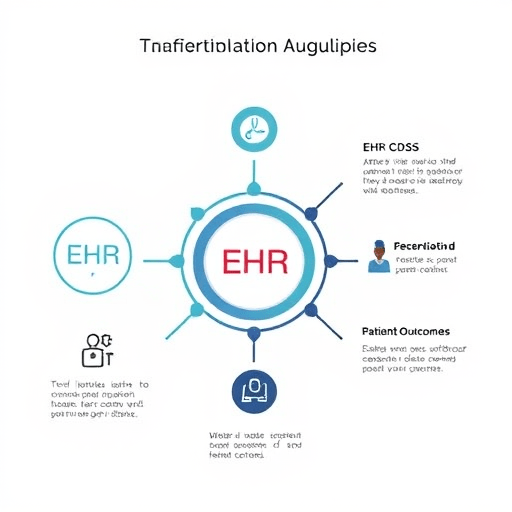
When the architecture is settled, map out the data flow: EHR → CDSS → EHR. This “data lineage” ensures traceability for audit and for future updates.
3. Map Clinical Workflows to Decision Logic
Chronic disease care thrives on routine, predictable steps. Turn these steps into CDSS triggers:
- Identify Decision Points: E.g., “When HbA1c > 8.0% and last dose change > 30 days, recommend dose adjustment.”
- Translate into Logic Rules: Use a structured language like Clinical Quality Language (CQL) or Decision Model and Notation (DMN).
- Validate with Clinicians: Run the logic in a sandbox and have care teams review recommendations for realism.
Document each rule in a shared repository (e.g., Git, SharePoint) so updates can be versioned and audited. Also, establish a “rule lifecycle” policy: who approves changes, how often they’re reviewed, and how deprecation is handled.
4. Configure Context‑Aware Alert Engines
Alert fatigue arises when notifications lack relevance or are poorly timed. To mitigate this, implement a context‑aware engine that considers:
- Patient Context: Age, comorbidities, prior alerts, and medication adherence.
- Clinician Context: Role, workload, and specialty.
- Temporal Context: Time of day, season, and upcoming appointments.
Use a scoring system that assigns weights to each factor, allowing the engine to triage alerts. For example, a “high‑priority” alert might require >70% weight on patient risk and <30% on clinician workload. Set thresholds so low‑impact suggestions become subtle, while critical actions are unmistakable.
5. Integrate Interoperability Standards (FHIR, HL7 v2/v3)
Standards ensure that your CDSS can talk to the EHR regardless of vendor quirks. In 2026, FHIR (Fast Healthcare Interoperability Resources) has become the lingua franca, especially with its new FHIR Decision Support Service (FDS) draft. Steps:
- FHIR Resource Mapping: Align CDSS inputs and outputs to FHIR resources (e.g.,
Observationfor lab values,MedicationRequestfor prescriptions). - Use FDS Profiles: Implement the
Decision Supportresource to publish recommendation bundles. - Leverage HL7 v2/3 for Legacy Systems: Wrap legacy HL7 messages into FHIR wrappers or use middleware like Mirth Connect to bridge the gap.
Testing this layer early prevents integration headaches when you roll out the full system.
6. Testing & Validation with Simulated Patient Data
Simulation gives you the safety net needed before live deployment. Create a synthetic patient cohort that mirrors your population’s demographics, disease prevalence, and data quality. Run your CDSS against this cohort to evaluate:
- Accuracy: Sensitivity and specificity of recommendations.
- Coverage: % of cases where the CDSS produces actionable advice.
- False‑Positive Rate: Proportion of alerts that clinicians deem unnecessary.
Iterate on the logic until you hit a sweet spot where accuracy is high and false positives are minimal. Document each iteration in a Validation Log for regulatory review.
7. Managing Alert Fatigue: Personalization & Learning Algorithms
Personalization reduces cognitive load. Build a feedback loop where clinicians can dismiss or accept alerts, and feed that data back into the CDSS to adjust future priorities.
- Adaptive Thresholds: If a clinician consistently dismisses a particular alert type, the system lowers its weight for that user.
- Collaborative Learning: Aggregate de‑identified clinician decisions to refine population‑level thresholds.
- Explainability Layer: For every alert, provide a concise rationale (e.g., “Patient’s HbA1c > 8.5% and last insulin dose unchanged for 45 days”). Transparent logic reduces skepticism.
Monitor alert fatigue metrics quarterly: alert volume, dismissal rate, and impact on workflow times.
8. Deployment Strategies: Pilot, Rollout, and Continuous Monitoring
Deploy in phases to capture real‑world feedback without jeopardizing care:
- Pilot Phase: Select one specialty (e.g., endocrinology) and one clinic. Run for 3 months, collect data.
- Evaluation: Analyze key performance indicators (KPIs) such as HbA1c reduction, readmission rates, and alert dismissal patterns.
- Iterative Rollout: Expand to other specialties, adjusting logic based on pilot insights.
- Governance Dashboard: Build a real‑time dashboard that tracks alert volume, clinician engagement, and outcome metrics.
- Continuous Improvement: Schedule bi‑annual reviews of CDSS logic and alert thresholds.
9. Data Governance & Compliance in 2026
With evolving regulations, governance is non‑negotiable. Ensure you have:
- Data Use Agreements (DUAs): Clarify who owns the data and how it can be used for model training.
- Audit Trails: Log every change to CDSS rules and each recommendation delivered.
- Patient Consent Management: Integrate opt‑in/opt‑out flows for predictive analytics.
- Security Controls: Enforce role‑based access, encryption at rest and in transit, and intrusion detection.
Align with frameworks such as the ISO/IEC 27001 for information security and the EU AI Act for algorithmic transparency.
10. Future‑Proofing Your CDSS Integration
Technological change is relentless. Embed adaptability into your architecture:
- Containerization: Use Docker/Kubernetes to isolate CDSS components and enable rapid scaling.
- Serverless Functions: Deploy micro‑services that trigger on specific EHR events, reducing overhead.
- Model Versioning: Store each ML model in a model registry (e.g., MLflow) to track performance drift.
- Interoperability Hooks: Keep FHIR and HL7 adapters up to date with the latest standards.
Plan for periodic “tech refresh” reviews—every 18 months—so your system remains aligned with vendor upgrades and regulatory shifts.
By following this structured approach, you can embed a CDSS into your EHR with confidence, minimize alert fatigue, and deliver measurable benefits for chronic disease management in 2026 and beyond.