In 2026 the market is saturated with consumer-grade heart monitors that promise real-time arrhythmia detection, heart rate variability analysis, and even stress level assessment. Yet, before a clinician can confidently prescribe such devices, rigorous verification of accuracy and privacy is essential. This guide walks you through a step-by-step audit process that balances technical scrutiny with regulatory compliance, ensuring patients receive reliable data without compromising their personal health information.
1. Understanding the Landscape of Consumer Heart Monitors
Types of Devices and Typical Accuracy Claims
Consumer heart monitors fall into three main categories: smartwatches, chest straps, and patch-based sensors. Smartwatches use photoplethysmography (PPG) to estimate heart rate, chest straps rely on electrocardiogram (ECG) electrodes, and patches combine PPG with additional metrics like oxygen saturation. Manufacturers often cite heart rate accuracy within ±3 bpm at rest and ±5 bpm during activity. However, such claims rarely account for user variability, skin tone, or motion artifacts.
Key Performance Metrics
When evaluating devices, focus on the following metrics:
- Heart Rate Accuracy (bpm error) at rest and during exercise
- Arrhythmia detection sensitivity and specificity
- Signal-to-noise ratio (SNR) in real-world settings
- Battery life and firmware update cadence
- Data latency between sensor capture and cloud upload
2. Establishing Data Integrity Standards
Signal Quality and Noise Reduction
PPG signals are highly susceptible to motion artifacts. Verify that the device incorporates motion compensation algorithms, such as adaptive filtering or sensor fusion with accelerometers. A clean PPG trace should exhibit a stable baseline and consistent pulse waveform during rest.
Calibration Protocols
Clinical-grade devices undergo factory calibration against a gold-standard ECG. Check if the manufacturer provides a calibration certificate or a validated calibration protocol. Some newer models allow patient-side calibration via a short ECG burst; confirm the protocol’s reproducibility.
Battery and Firmware Update Policies
Frequent firmware updates can alter algorithm performance. Verify that firmware releases include a changelog detailing algorithm adjustments, and that the device supports secure OTA (over-the-air) updates with cryptographic signing. Also, review the battery endurance under typical use: at least 7 days for watches, 12 hours for chest straps.
3. Clinical Verification Process
Pre-Prescription Lab Validation
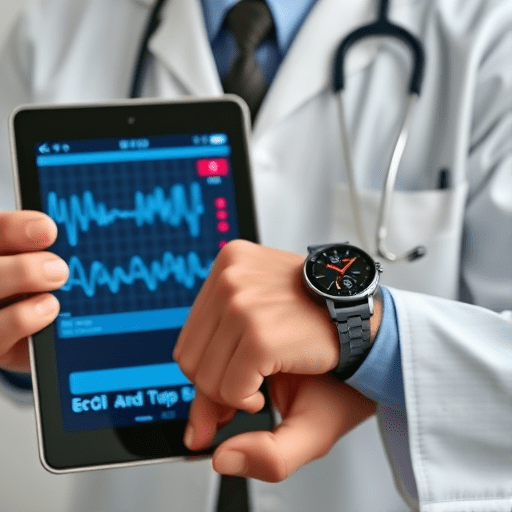
Before prescribing, conduct a lab validation where the consumer monitor is compared side-by-side with a validated clinical ECG machine. Use a 12-lead ECG as the reference standard, sampling at 1 kHz. Capture at least 10 minutes of resting data and 5 minutes of moderate-intensity activity. Compute mean absolute error (MAE) and root mean square error (RMSE) for heart rate and arrhythmia detection.
Real-World Validation: Patient Monitoring Trials
After lab validation, run a pilot study with 30 patients representing your typical demographic spread (age, skin tone, activity level). Instruct participants to wear the monitor for 24 hours, capturing data during daily routines. Correlate the consumer data with an intermittent clinical ECG, preferably using a Holter recorder, to assess long-term accuracy.
Interoperability Testing with EHR Systems
Ensure the device’s data export format (FHIR, HL7, or proprietary JSON) can be ingested by your Electronic Health Record (EHR) system without loss of fidelity. Test both automated APIs and manual upload workflows. Verify that timestamps are synchronized to UTC and that time zone adjustments preserve data integrity.
4. Patient Privacy and Data Security
GDPR and HIPAA Compliance
Consumer devices often route data to third-party cloud services. Confirm that the manufacturer complies with GDPR (for EU patients) and HIPAA (for US patients). Look for data residency options, explicit patient consent mechanisms, and clear data retention policies.
Secure Data Transmission and Storage
Check that data is encrypted in transit (TLS 1.3+) and at rest (AES-256). Verify that the device and cloud provider support role-based access control (RBAC) and audit logging. Also, ensure that the device does not expose any unencrypted local storage that could be accessed via a connected phone.
Patient Consent and Transparency
Develop a consent form that explains what data is collected, how it will be used, and with whom it may be shared. Include clauses that cover firmware updates and potential data sharing with research partners. Ensure patients can easily opt out and delete their data from all servers.
5. Case Study: Implementing a Heart Monitor Audit in a Community Clinic
Green Valley Community Health Clinic adopted a two-phase audit in early 2026. Phase I involved lab validation of a top-selling smartwatch against a 12-lead ECG. The smartwatch achieved an MAE of 2.5 bpm at rest and 4.3 bpm during walking. Phase II rolled out a 4-week pilot with 40 patients. Data quality metrics remained within acceptable ranges, and patient satisfaction scores were 4.8/5 for ease of use. Importantly, the clinic established a GDPR-compliant data pipeline that automatically anonymized data before sending it to the cloud. The audit resulted in a streamlined prescription workflow and increased clinician confidence in wearable data.
6. Practical Checklist for Clinicians
- Verify manufacturer’s calibration certificate.
- Conduct lab validation against a 12-lead ECG.
- Perform a 24‑hour real‑world trial with a diverse patient cohort.
- Test interoperability with your EHR via API or manual upload.
- Confirm GDPR/HIPAA compliance and secure data transmission.
- Document consent procedures and patient education materials.
- Set up an ongoing audit schedule (biannual device reassessment).
- Create a fallback plan if device accuracy degrades.
7. Recommendations for Future Practice
As consumer heart monitors evolve, clinicians should anticipate algorithmic updates that could affect accuracy. Consider establishing a vendor relationship that includes performance monitoring dashboards. Also, stay informed about regulatory changes—especially those relating to AI-driven analytics in wearables. Finally, foster a culture of continuous audit; patient trust hinges on the reliability of the data that informs their care.
By systematically validating accuracy, ensuring data privacy, and integrating devices into existing clinical workflows, clinicians can responsibly incorporate consumer heart monitors into patient care, delivering both high-quality care and robust data protection.