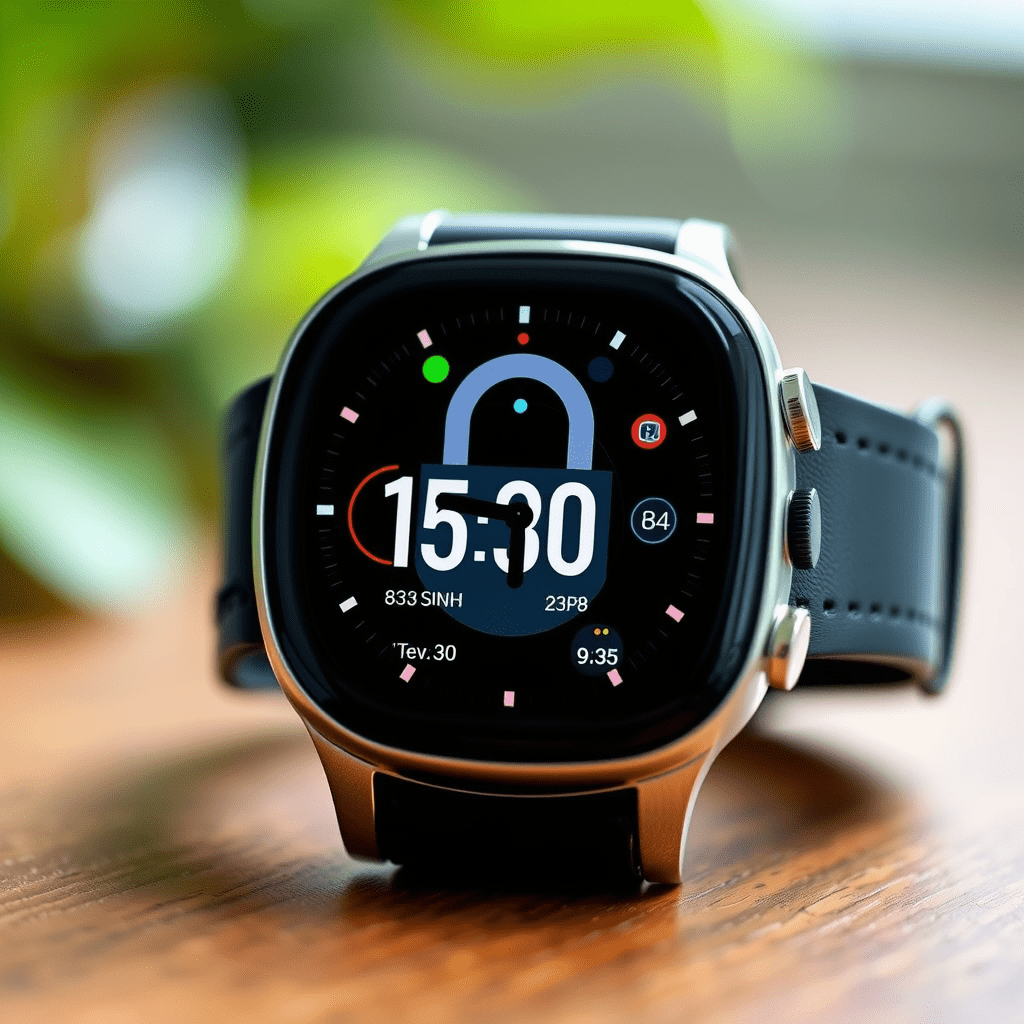
Federated Learning for Wearables: Preserving Privacy While Enhancing Health Insights
Wearable devices have become ubiquitous, tracking everything from heart rate to sleep patterns. Yet the data they collect—so personal and potentially sensitive—has raised legitimate privacy concerns. Federated learning for wearables offers a solution that keeps raw data on the device while still allowing the creation of powerful health models. By training algorithms locally and sharing only model updates, this approach protects user privacy, reduces bandwidth usage, and complies with emerging data protection regulations.
What Is Federated Learning?
Core Principles
Federated learning is a distributed machine‑learning approach where the central server orchestrates the training of a global model but never accesses the raw data. Instead, each device trains the model on its own local data, generates an update (gradient or weight delta), and sends that encrypted update back to the server. The server aggregates these updates—often using techniques like secure aggregation—and refines the global model. The updated model is then redistributed to all devices for the next training round.
Why Federated Learning Matters for Wearables
Wearable data is highly personal and location‑specific. Federated learning eliminates the need to transmit this data to a central cloud, dramatically reducing the risk of data breaches. It also addresses the issue of uneven data distribution across users, enabling the model to learn from diverse lifestyles while respecting individual privacy. Moreover, by keeping data on the device, it conserves battery life and network bandwidth, which are precious resources for wearables.
Edge AI Protocols Revolutionizing Smartwatch Data
The Role of Edge Computing
Edge computing brings computation closer to the data source. On a smartwatch, the edge device—whether a microcontroller or a lightweight AI chip—processes sensor streams in real time, detects anomalies, and prepares training data locally. This capability is the backbone of federated learning, as it enables on‑device model updates without relying on constant connectivity.
New Protocols: Secure Aggregation, Differential Privacy, Homomorphic Encryption
- Secure Aggregation: Uses cryptographic protocols to ensure that the server can only see aggregated updates, not individual device contributions.
- Differential Privacy: Adds calibrated noise to updates, guaranteeing that the presence or absence of a single user’s data cannot be inferred.
- Homomorphic Encryption: Allows computation on encrypted data, providing an extra layer of security for sensitive health metrics.
These protocols work in tandem to create a privacy‑preserving pipeline that still yields high‑accuracy models for health insights.
Practical Applications in Health Monitoring
Sleep Analysis
Sleep trackers gather acceleration, heart rate variability, and ambient light to model sleep stages. Federated learning enables the model to adapt to each user’s unique circadian rhythm without exposing raw sleep logs. As a result, users receive personalized sleep recommendations while their data remains private.
Cardiovascular Health
Wearables monitor heart rate, rhythm irregularities, and blood oxygen. By training a federated model across thousands of users, the system can detect early signs of atrial fibrillation or sleep apnea more accurately than a generic algorithm. Importantly, the model learns from a broad population, enhancing its robustness, while each user’s cardiac history stays local.
Chronic Disease Management
For conditions like diabetes, continuous glucose monitors integrated with smartwatches can benefit from federated models that predict glucose spikes based on activity and diet data. Because the raw data never leaves the device, patients can share insights with their physicians without compromising privacy.
Overcoming Challenges
Data Heterogeneity
Users generate data at different rates, with varying sensor fidelity. Federated learning frameworks address this by weighting updates according to data volume and quality, ensuring that the global model remains balanced and representative.
Model Drift
Device firmware updates and changes in user behavior can cause the model to drift. Continuous federated learning—where devices periodically re‑train and send fresh updates—keeps the model aligned with evolving patterns.
Device Constraints
Smartwatches have limited CPU, memory, and power budgets. To accommodate these constraints, researchers are developing lightweight architectures like TinyML and using model compression techniques (quantization, pruning) that maintain performance while fitting into tight resource envelopes.
Future Outlook and Industry Adoption
Collaborations Between Tech Companies and Healthcare Providers
Major smartwatch manufacturers are partnering with hospitals and research institutions to deploy federated learning in clinical trials. These collaborations validate that privacy‑preserving models can meet medical standards while respecting patient confidentiality.
Regulatory Landscape
Regulations such as the EU’s General Data Protection Regulation (GDPR) and the U.S. Health Insurance Portability and Accountability Act (HIPAA) increasingly favor data minimization. Federated learning aligns with these mandates by ensuring that personal data never leaves the device, simplifying compliance for manufacturers and insurers.
Conclusion
Federated learning for wearables is reshaping how we interpret health data. By keeping raw sensor readings on the device and exchanging only aggregated, encrypted updates, we can build sophisticated, personalized health models that respect user privacy. Edge AI protocols, robust security measures, and thoughtful handling of device constraints ensure that this approach is both technically viable and ethically responsible. As the wearable ecosystem expands, federated learning will become an indispensable tool for delivering smarter, safer, and more private health insights.
Explore the future of wearable health data with federated learning today!