Drone Surfing Takes Flight: AI‑Powered Boards Transform Extreme Water Sports
What Is Drone Surfing?
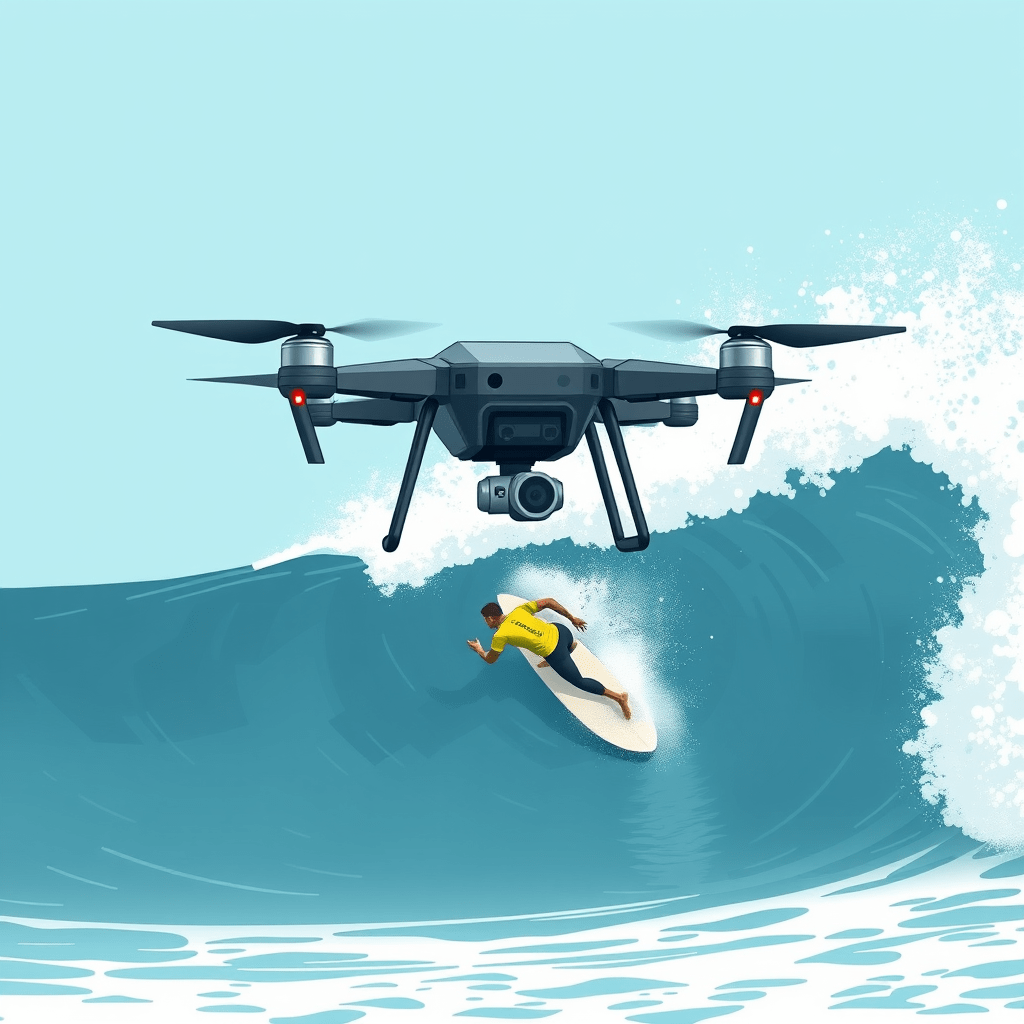
Imagine the feeling of riding a wave, but instead of relying solely on the ocean’s motion, you’re guided by a miniature aircraft that hovers just above the water. That’s the essence of drone surfing—a cutting‑edge blend of aerial robotics and surf culture that lets athletes ride waves with unprecedented precision. The board is attached to a small, autonomous drone equipped with powerful motors, lightweight frame, and advanced sensors. By hovering close to the water surface, the drone can push, pull, and steer the board in real time, allowing surfers to perform tricks that would be impossible on a traditional board.
How AI Is the Game Changer
While the idea of a floating drone might seem like science fiction, the real innovation lies in the AI that powers it. Artificial intelligence turns a simple remote‑controlled vehicle into a smart companion that learns the rider’s style, interprets wave data, and makes split‑second decisions. The AI stack typically includes:
- Computer Vision: Cameras feed the onboard processor images of the wave, allowing the system to detect troughs, peaks, and foam.
- Predictive Modeling: Machine‑learning models forecast the wave’s trajectory and speed, enabling the drone to pre‑emptively adjust thrust.
- Reinforcement Learning: The drone refines its control policy over thousands of simulated rides, learning to balance power and stability.
- Human‑Machine Interface: Haptic feedback or a lightweight headset lets the surfer receive real‑time cues, enhancing the sense of control.
These capabilities combine to produce a board that can “surf” even in choppy conditions, maintain optimal speed, and execute complex maneuvers without the rider needing to constantly adjust their stance.
Hardware: The Heart of the Experience
Building a drone capable of sustaining a board above water is no trivial task. Designers must balance weight, power, and safety. Here are the key components:
- Carbon‑fiber Frame: Keeps the drone light (often under 3 kg) while providing rigidity.
- Brushless Motors & ESCs: Deliver high thrust-to-weight ratios necessary for rapid acceleration.
- Li‑Po Battery Pack: Offers 20–30 minutes of flight time, a sweet spot between endurance and weight.
- Water‑Resistant Enclosure: Protects electronics from splashes and occasional submergence.
- Multi‑sensor Suite: GPS, IMU, LiDAR, and ultrasonic sensors work together to maintain precise altitude and orientation.
Advanced propellers with a hydrophobic coating reduce drag and improve efficiency, while a fail‑safe parachute system ensures that a sudden power loss won’t endanger the surfer.
Control Algorithms: From Theory to Board
The AI translates sensor data into control commands through a multi‑layer architecture. First, raw inputs are filtered to remove noise; next, a state estimator (like an Extended Kalman Filter) fuses data to produce accurate pose information. The reinforcement‑learning policy then outputs motor thrust vectors, which a PID controller translates into actual motor speeds. The result is a stable hover that follows the rider’s intended trajectory.
Safety & Regulation: Keeping Riders Secure
Safety is paramount when introducing autonomous drones into a high‑risk sport. Manufacturers and governing bodies have introduced several protocols:
- Redundancy: Dual flight controllers and backup communication channels reduce the risk of total failure.
- Geo‑Fencing: The drone’s flight is restricted to a predefined zone to prevent accidental collisions with other swimmers or lifeguards.
- Mandatory Training: Riders undergo a certification process that covers drone basics, emergency procedures, and wave physics.
- Certification Standards: International bodies like the International Surfing Federation (ISF) are collaborating with aerospace regulators to create unified safety guidelines.
Accessibility: Democratizing Extreme Water Sports
One of the most exciting aspects of drone surfing is its potential to level the playing field. Traditional surfing requires months of training, a lot of water, and a suitable wave. With AI‑powered boards, the learning curve is shortened dramatically:
- Virtual Coaching: The onboard AI can provide instant feedback on stance, paddle timing, and balance.
- Adaptive Difficulty: The drone can adjust its assistance level based on the rider’s skill, making it accessible for beginners and challenging for pros.
- Remote Sessions: Coaches can monitor a rider’s performance from anywhere, providing data‑driven insights that would be impossible in traditional settings.
- Inclusive Design: Adaptive algorithms can compensate for riders with disabilities, offering support tailored to individual needs.
Economic Impact: From Startup to Market Leader
Early adopters of drone surfing include boutique surf shops, coastal resorts, and tech startups. Revenue streams are emerging beyond the initial hardware sale:
- Subscription Services: Cloud‑based updates and performance analytics are offered on a monthly basis.
- Event Licensing: Companies license the technology for surf competitions, generating brand exposure.
- Data Monetization: Aggregated wave and rider data can inform coastal management and surf‑forecasting services.
- Retail Partnerships: Collaboration with surf apparel brands to create themed kits and accessories.
Investors are paying close attention. According to Crunchbase, funding for drone surf startups rose by 35% in 2023, reflecting growing confidence in the market’s long‑term viability.
Future Trends: What’s Next for Drone Surfing?
The evolution of drone surfing is far from finished. Here are a few trends to watch:
- Swarm Surfing: Multiple drones coordinated to create a “wave field,” allowing riders to switch boards mid‑ride.
- Biomimetic Propulsion: Inspired by sea turtles, new prop designs promise greater efficiency and quieter operation.
- Hybrid Materials: Incorporating graphene and 3D‑printed composites to reduce weight while increasing strength.
- Augmented Reality Integration: Live overlays on the rider’s helmet or visor to display real‑time data and coaching cues.
- Regulatory Harmonization: Global standards for drone usage in water sports will simplify international competitions.
Conclusion
Drone surfing is redefining what it means to ride a wave. By marrying advanced AI, cutting‑edge hardware, and thoughtful safety protocols, the sport is becoming faster, more accessible, and more exciting than ever. Whether you’re a seasoned pro looking for the next thrill or a beginner eager to catch your first wave, AI‑powered boards promise an experience that feels both intuitive and otherworldly.
Ready to step into the future of water sports? Explore the latest drone surfing technology today and surf the next generation of waves.