Digital Twins of Coastal Cities: Simulating Sea-Level Rise to Design Resilient Infrastructure
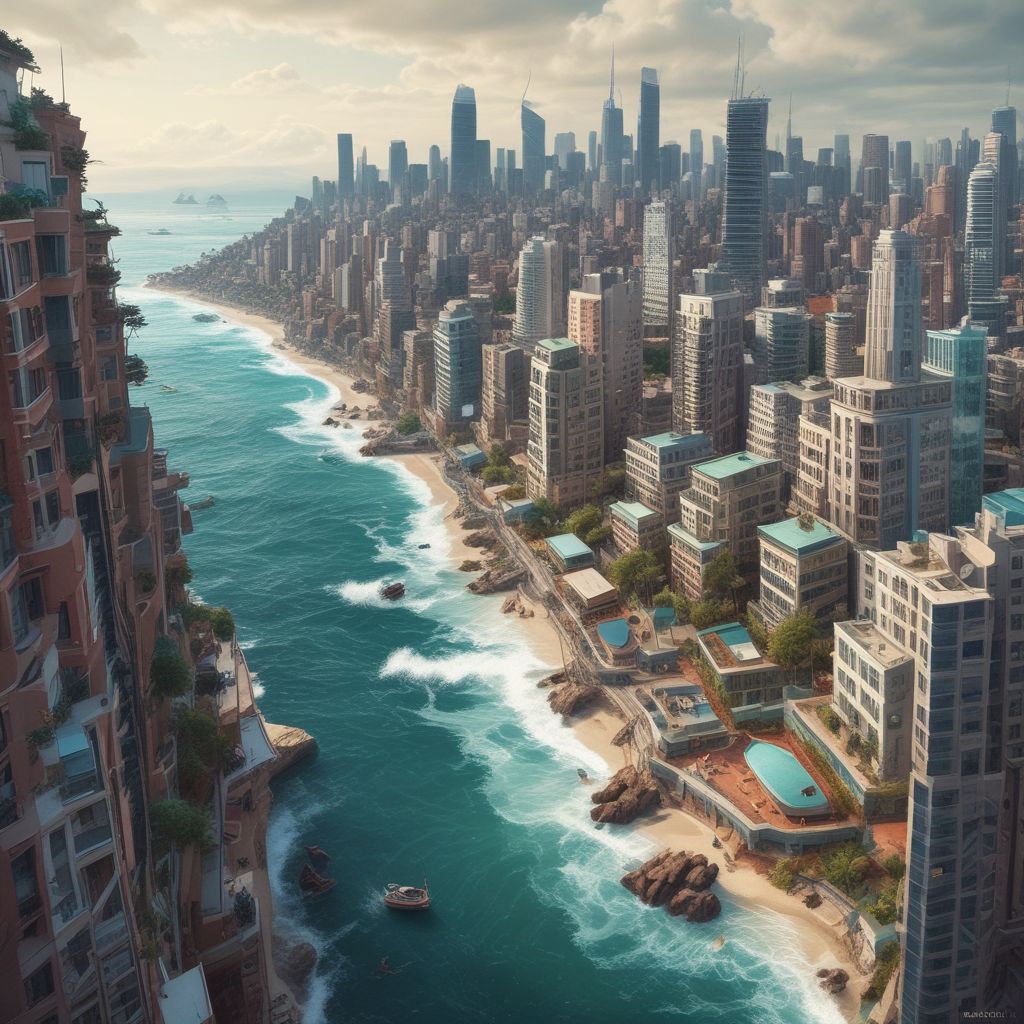
As climate change accelerates, coastal cities face unprecedented threats from rising seas and storm surges. The concept of digital twins of coastal cities—high‑fidelity virtual replicas that mirror real‑world geography, infrastructure, and environmental conditions—offers a powerful tool to anticipate, plan for, and mitigate these risks. By integrating real‑time data with advanced modeling, planners can run thousands of “what‑if” scenarios, testing the resilience of bridges, ports, and urban layouts before any physical changes are made.
What Are Digital Twins and Why They Matter for Coastal Cities?
A digital twin is essentially a dynamic, data‑rich 3‑D model that reflects the current state of a physical system. For coastal cities, this means mapping every street, building, drainage pipe, and seawall, and coupling those elements to environmental variables such as tide levels, wind speed, and temperature. The real power lies in the twin’s ability to ingest live sensor feeds—seawater levels from tide gauges, rainfall from meteorological stations, and structural strain from smart sensors embedded in bridges—allowing the model to update in near real‑time.
In practice, this translates to:
- Predictive analysis: Simulating how a 2-meter sea‑level rise would affect existing flood defenses.
- Optimization: Determining the most cost‑effective placement of new seawalls or green infrastructure.
- Risk communication: Visualizing potential impacts for policymakers and the public.
Building a Digital Twin: Data, Sensors, and Modeling
Creating a robust digital twin starts with high‑quality geographic information systems (GIS) data: satellite imagery, LiDAR scans, and cadastral records. Adding sensor layers—IoT devices that monitor water levels, wind, and structural health—provides the twin with the dynamism needed to reflect reality.
Modeling techniques vary, but the most common are:
- Hydrodynamic models: Tools like Delft3D or MIKE 21 simulate water flow, wave action, and sediment transport.
- Urban heat island models: Predict how temperature variations affect building performance and stormwater runoff.
- Finite element analysis (FEA): Evaluates the structural integrity of existing and proposed infrastructure under sea‑level rise pressures.
Integrating these models requires a robust computational framework—often a cloud‑based platform—to handle the massive data volumes and run complex simulations quickly.
Simulating Sea-Level Rise: Scenarios and Tools
Once the twin is operational, planners can explore a spectrum of sea‑level rise scenarios, from 0.5 m to 3 m, combined with extreme weather events. By layering these scenarios onto the twin, city officials can identify vulnerable zones and quantify potential losses.
Key tools include:
- OpenMI and OGC APIs: Facilitate data exchange between disparate models.
- Unity 3D or Cesium: Provide immersive visualizations for stakeholder engagement.
- ArcGIS Insights: Enables interactive dashboards that link simulation outputs to actionable metrics.
Case Study: Rotterdam, Netherlands
Rotterdam pioneered the use of digital twins for flood resilience. By coupling real‑time tide data with a 3‑D model of the city, the Dutch authorities simulate storm surges up to 4 m above current levels. The twin informs the “Waterland” initiative, guiding the construction of adaptive dikes that can be reconfigured as sea levels change.
Case Study: Miami, USA
Miami’s “MiDigitalTwin” project uses IoT sensors embedded in its stormwater system to predict flooding hotspots during hurricanes. The twin has already influenced the design of elevated roadways and reinforced coastal barriers, reducing projected flood damage by an estimated 30%.
Case Study: Venice, Italy
Venice employs a digital twin that integrates the famous MOSE barrier system with real‑time salinity and tide data. The twin allows the city to test barrier configurations against various sea‑level rise projections, ensuring the historic lagoon remains protected while preserving the cultural heritage.
Design Resilience: From Data to Action
Data alone does not solve resilience; translation into policy and engineering is critical. Digital twins enable a feedback loop where:
- Scenario testing: Engineers propose design modifications—e.g., raising a bridge deck—and the twin predicts the outcome.
- Cost-benefit analysis: Simulation outputs feed into financial models that quantify return on investment for each adaptation strategy.
- Regulatory alignment: The twin helps ensure designs meet local building codes, flood insurance requirements, and environmental regulations.
Moreover, public engagement is amplified when stakeholders can explore a realistic, interactive representation of future risks. Virtual reality tours of projected flood scenarios help secure community buy‑in for costly infrastructure projects.
Policy, Planning, and Public Engagement
Governments can institutionalize digital twins by embedding them in long‑term master plans. Steps include:
- Creating a Data Governance Framework that defines ownership, privacy, and sharing protocols.
- Establishing a Cross‑Sector Task Force of city planners, engineers, environmental scientists, and IT specialists.
- Securing Funding Mechanisms—public‑private partnerships, EU grants, or national disaster mitigation funds—to support ongoing twin maintenance and upgrades.
Citizen participation can be facilitated through open‑source platforms, where residents upload local knowledge—like flood histories or informal drainage paths—further enriching the twin’s accuracy.
Challenges and Future Directions
Despite the promise, digital twins face several hurdles:
- Data Quality & Coverage: Remote coastal regions may lack dense sensor networks, leading to gaps.
- Computational Demand: High‑resolution hydrodynamic simulations require significant processing power.
- Interoperability: Ensuring different data sources and models communicate seamlessly remains a technical challenge.
- Human Factors: Decision makers must be trained to interpret and trust simulation outputs.
Future innovations point toward:
- Integration of Artificial Intelligence for pattern recognition and predictive maintenance.
- Use of Blockchain for secure data sharing among stakeholders.
- Advances in Edge Computing to process sensor data locally, reducing latency.
- Enhanced Augmented Reality interfaces for on‑site engineers.
By addressing these challenges, digital twins can evolve from conceptual tools into essential assets for climate‑adaptive urban planning.
Conclusion
Digital twins of coastal cities stand at the intersection of technology, engineering, and public policy. By simulating sea‑level rise with unprecedented precision, they empower planners to design resilient infrastructure that safeguards lives, preserves heritage, and sustains economic vitality. As climate risks grow, adopting and refining these virtual replicas will become not just an option, but a necessity for any coastal city aspiring to thrive in a changing world.
Explore how your city can leverage digital twin technology to stay ahead of the tide.