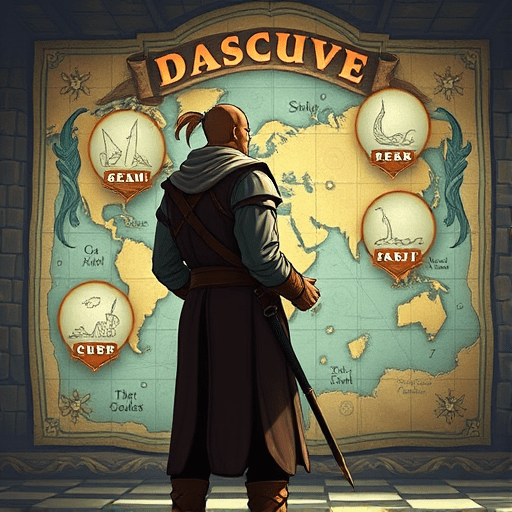
In 2026, strategy role‑playing games (RPGs) continue to seek new ways to keep players invested over countless playthroughs. One proven method is the implementation of adaptive quest systems—dynamic, branching narratives that respond to player choices and in‑game events. By weaving context‑sensitive missions into the core gameplay loop, developers can create a living world that feels genuinely responsive, increasing replayability and deepening emotional connection.
Why Adaptivity Matters for Modern Strategy RPGs
Players today demand immersion that extends beyond static storylines. An adaptive quest system offers:
- Personalized storytelling – Missions shift based on the hero’s reputation, past decisions, or alliances.
- Strategic variety – New objectives surface as battlefield conditions change, requiring different tactics each run.
- Replay value – Every playthrough presents unique challenges, encouraging multiple attempts to explore all narrative paths.
For strategy RPGs, where resource management and planning are core, adaptive quests integrate seamlessly with the player’s strategic mindset, reinforcing the sense that choices have lasting impact.
Design Foundations: The Pillars of an Adaptive Quest System
Crafting an adaptive system involves balancing complexity with clarity. Developers should consider these three pillars:
- Event Triggers – Define clear in‑game signals (e.g., territory conquest, character death, faction negotiation) that initiate quest changes.
- Outcome Branching – Map multiple mission variations that logically stem from each trigger, ensuring each branch feels distinct yet coherent.
- Progression State Tracking – Maintain a lightweight state machine or flag system that records player actions, allowing the system to reference past choices without excessive overhead.
By structuring quests around these pillars, designers can maintain narrative consistency while still delivering surprise and depth.
Event Triggers in Detail
Triggers are the engine’s heartbeat. For example, a strategic RPG might treat the loss of a stronghold as a trigger that changes the political landscape. When a player captures a rival city, the system could automatically shift the neighboring faction’s behavior, unlocking new diplomatic missions or hostile campaigns. Using a modular event bus keeps the core game logic clean and the quest logic decoupled.
Outcome Branching Mechanics
Outcome branching demands creative storytelling. Instead of a single linear quest, developers can design several mission templates that respond to the same trigger but differ in objectives, difficulty, or rewards. This approach keeps the player’s sense of agency intact: the system offers different paths, but the player’s choice—or lack thereof—determines which path is activated.
Progression State Tracking
Efficient state tracking is crucial to avoid performance pitfalls. Lightweight flags—boolean or integer counters—are ideal. For instance, a “Reputation” metric could be stored as a simple integer, and quests would check if this value surpasses a threshold before spawning. Storing state in a centralized save file ensures persistence across sessions, a must‑have for true replayability.
Integrating Adaptivity with Core Gameplay Loop
Adaptive quests should not feel like an afterthought; they must mesh with the game’s strategic core. Here are key integration strategies:
- Resource‑Based Quest Outcomes – Tie quest rewards to the player’s current resource pool. A mission that grants a powerful unit may become available only if the player has sufficient gold, adding a layer of economic strategy.
- Terrain‑Responsive Missions – Modify quest objectives based on the geographic layout. If the player occupies a mountain pass, the quest might involve defending it against sieges, while controlling a desert oasis could trigger supply‑line missions.
- Dynamic Enemy AI Tuning – Adjust enemy difficulty in real time based on the player’s success rate. An adaptive system could analyze win/loss ratios and scale upcoming quests accordingly.
These techniques ensure that the adaptive system feels integral rather than optional.
Case Study: “Echoes of Empire” – A Hypothetical 2026 Strategy RPG
Let’s walk through a hypothetical title that showcases best practices for adaptive quests.
World Setup
“Echoes of Empire” is set in a fractured continent where five kingdoms vie for dominance. The player starts as a minor warlord, building an army, forging alliances, and exploring ruins. The world is alive: each kingdom’s influence fluctuates based on military victories, diplomatic negotiations, and cultural achievements.
Adaptive Quest Example 1 – “The Broken Banner”
Trigger: The player defeats the ruler of the Eastern Kingdom.
Outcome Branches:
- Allied Branch – If the player has a diplomatic pact, the quest becomes a covert operation to secure the eastern capital’s loyalty.
- Conquest Branch – Without a pact, the quest shifts to a full siege with increased enemy reinforcement.
- Neutral Branch – If the player’s reputation is low, the quest morphs into a rescue mission for captured allies, with morale‑boosting rewards.
The branching is determined by two flags: DiplomaticPactEastern and PlayerReputation.
Adaptive Quest Example 2 – “Sands of Betrayal”
Trigger: The player’s caravan is ambushed in the desert.
Outcome Branches:
- Supply Recovery – A quest to retrieve stolen supplies, offering a temporary resource boost.
- Trade Negotiation – A diplomatic mission to negotiate safe passage with local tribes.
- Espionage – A covert operation to sabotage the ambushers’ base, granting future tactical advantages.
This example showcases terrain‑based adaptivity, as the desert setting influences the available options.
Reward Design
All quests offer varied rewards: unique units, special abilities, or strategic bonuses. Crucially, rewards are scaled to the quest’s difficulty, ensuring balance across playthroughs.
Balancing Challenges and How to Overcome Them
Adaptive systems can unintentionally create imbalances. Developers should anticipate and address these pitfalls:
- Over‑generation of Variants – Too many branches can overwhelm designers and dilute narrative focus. Use modular templates and limit branching to the most impactful decisions.
- Redundancy in Rewards – If different quest paths grant identical outcomes, players may ignore certain branches. Ensure each path offers unique incentives.
- Player Frustration from Inconsistency – Randomly changing quests may feel unfair. Provide clear feedback and optional “undo” mechanisms where appropriate.
Iterative playtesting, coupled with analytics to track player choices, helps refine the adaptive logic and maintain equilibrium.
Testing and Quality Assurance for Adaptive Quests
Because adaptive quests depend on state, thorough testing is essential:
- Automated State Checks – Build unit tests that simulate various flag combinations and verify the correct quest branch is spawned.
- Regression Tests for Dialogue – Ensure that branching dialogue lines align with quest outcomes and avoid dead‑ends.
- Long‑Run Playthroughs – Run full campaigns with different playstyles to uncover hidden edge cases.
Moreover, a robust logging system that captures state changes and quest activations during testing provides invaluable data for debugging.
Future Trends: AI‑Driven Adaptive Quests
2026 marks a shift toward AI‑augmented storytelling. Techniques such as procedural narrative generation and machine‑learning‑based player modeling can create quests that adapt not just to discrete events but to player behavior patterns. For instance:
- Predictive Pathing – An AI model could anticipate the player’s strategic preferences and offer quests that challenge those tendencies.
- Dynamic Narrative Threads – Using natural language processing, the system could generate unique dialogue lines that reflect the player’s past choices.
- Personalized Difficulty Scaling – Real‑time adjustments to enemy AI based on player success rates keep the game challenging without frustration.
While these technologies promise richer experiences, they also raise new design questions around transparency, player agency, and narrative coherence.
Conclusion
Adaptive quest systems are no longer a niche feature; they are a cornerstone of engaging, replayable strategy RPGs in 2026. By grounding quest design in clear event triggers, branching outcomes, and efficient state tracking, developers can create worlds that feel alive and responsive. When integrated thoughtfully with core gameplay, adaptive quests elevate strategic depth, empower player choice, and ensure each playthrough offers fresh challenges. As AI tools mature, the potential for even more nuanced and personalized adaptive narratives will expand, setting the stage for the next wave of immersive strategy RPGs.