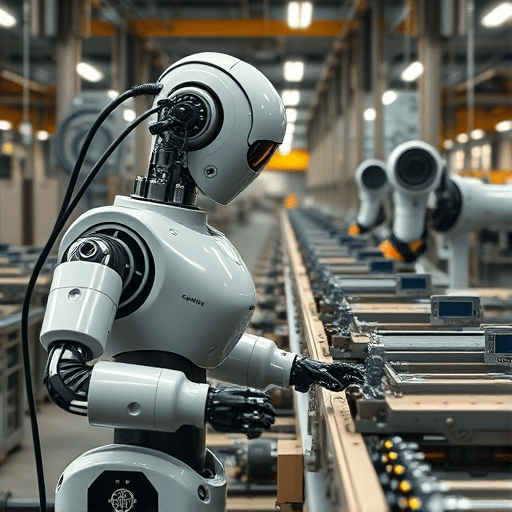
Manufacturers often find themselves stuck in a loop of costly downtime, trying to keep aging assembly lines operational while competing on speed and quality. The solution is no longer just about replacing machinery; it’s about intelligently integrating collaborative robots, or cobots, into legacy systems. By following this step‑by‑step guide, you can retrofit existing lines, reduce unplanned stoppages by up to 30%, and extend the productive life of your equipment without a complete rebuild.
Understanding the Downtime Problem in Legacy Lines
Legacy lines were designed for a different era—manual operators, heavy-duty hydraulic presses, and bespoke tooling that now runs on outdated control panels. The primary sources of downtime include:
- Mechanical wear and tear on repetitive tasks.
- Long setup times when switching product variants.
- Lack of real‑time monitoring and predictive maintenance.
- Safety concerns that slow down task handoffs.
Identifying these pain points is the first step toward a data‑driven retrofit strategy that focuses on cobots’ strengths—precision, flexibility, and human‑robot collaboration.
Choosing the Right Cobots for Your Legacy Equipment
Not every cobot is created equal. When selecting units for a retrofit, consider:
- Payload and reach: Match the cobot’s specifications with the weight and size of the parts it will handle.
- Degrees of freedom: More DOFs allow smoother integration with existing kinematics.
- Safety features: Built‑in force sensors, speed reduction, and collaborative modes.
- Communication protocols: OPC‑UA, EtherCAT, or CAN‑open compatibility with legacy PLCs.
Consulting with a vendor who offers a “Cobots as a Service” model can also provide flexibility for pilot projects.
Planning the Retrofit: Safety, Integration, and Workflow
A successful retrofit hinges on meticulous planning. Create a cross‑functional team that includes production engineers, safety specialists, and IT professionals. Map out the workflow, identify potential collision zones, and draft a safety case that satisfies local regulations.
Step 1: Assessing the Existing Line
Conduct a full audit of the line’s mechanical and digital assets. Document:
- Current tooling and fixtures.
- Control logic and PLC programs.
- Cycle times and downtime logs.
- Physical constraints such as work cell dimensions.
This baseline data will guide the subsequent design phases.
Step 2: Selecting Cobots and End‑Effectors
With the audit complete, choose cobots that complement the line’s existing tooling. Pair them with end‑effectors that can perform the same tasks—gripping, screwing, or welding—while providing sensors for force feedback and vision for alignment.
Step 3: Designing the Cobots’ Trajectory and Tooling
Use simulation tools like RoboDK or Siemens Simatic IT to model the cobot’s movement within the legacy environment. Optimize for:
- Minimal interference with existing equipment.
- Fast cycle times to match or exceed the current throughput.
- Safe working envelopes that prevent collisions.
Adjust the end‑effector design to adapt to the part geometry, ensuring reliable pick‑and‑place operations.
Step 4: Building the Control Interface and API
Integrate the cobot’s control system with the legacy PLC using a gateway or direct API calls. Key considerations include:
- Real‑time data exchange for status monitoring.
- Fallback logic that disables the cobot in case of a fault.
- Remote diagnostics and firmware updates.
Document the integration so future maintenance teams can troubleshoot without a steep learning curve.
Step 5: Installing and Commissioning the Cobots
Plan the installation during a scheduled maintenance window. Steps include:
- Mounting the cobot chassis and securing it to the floor.
- Wiring for power, Ethernet, and safety interlocks.
- Performing an initial calibration and testing of the safety envelope.
- Running a short pilot production run to validate performance.
Use the first week of data to fine‑tune trajectory parameters and safety thresholds.
Step 6: Training Personnel and Implementing SOPs
Introduce operators to the cobot’s collaborative features. Develop Standard Operating Procedures (SOPs) that cover:
- Hand‑over protocols for parts between human and robot.
- Emergency stop procedures.
- Routine inspection and maintenance tasks.
Encourage a culture of continuous improvement by gathering operator feedback after each shift.
Step 7: Monitoring Performance and Reducing Downtime
Deploy a digital twin of the line that mirrors real‑time data. Track metrics such as:
- Cycle time improvements.
- Mean time between failures (MTBF).
- Overall equipment effectiveness (OEE).
Use analytics to identify patterns that signal impending failures, allowing predictive maintenance before a breakdown occurs.
Case Study: XYZ Manufacturing
XYZ Manufacturing retrofitted a 20‑year‑old assembly line for automotive components. By introducing two 3‑DOF cobots for fast part transfer and a vision‑guided pick system, they reduced average downtime from 4.5 h per week to 3.1 h—an 30% cut. OEE increased from 78% to 88%, and the company reported a return on investment within 18 months.
Common Pitfalls and How to Avoid Them
- Underestimating Integration Complexity: Legacy PLCs may lack the APIs required for smooth cobot communication. Mitigate by using a middleware gateway.
- Overlooking Safety: Failing to implement proper force sensors or collaborative zones can lead to incidents. Conduct a thorough safety audit before deployment.
- Neglecting Operator Acceptance: Resistance from staff can derail the project. Involve operators early and provide hands‑on training.
- Insufficient Data Collection: Without detailed logs, you cannot optimize performance. Ensure that sensors and software capture all relevant metrics.
Future‑Proofing Your Retrofit with AI and Machine Learning
Once the cobots are operational, the next wave of innovation is AI‑driven predictive analytics. By feeding historical downtime data and real‑time sensor outputs into a machine learning model, you can predict component failures before they occur. Additionally, reinforcement learning algorithms can adapt cobot trajectories in real time to improve efficiency as product specifications evolve.
Investing in a scalable IoT platform will allow you to layer new capabilities—such as autonomous quality inspection—without reworking the entire retrofit.
Conclusion
Retrofitting legacy assembly lines with cobots is no longer a futuristic concept; it’s a practical strategy to slash downtime by up to 30% and extend the life of existing infrastructure. By systematically assessing your line, selecting the right cobots, integrating safety and control systems, and committing to continuous monitoring, you can transform aging equipment into a flexible, high‑performance production asset.