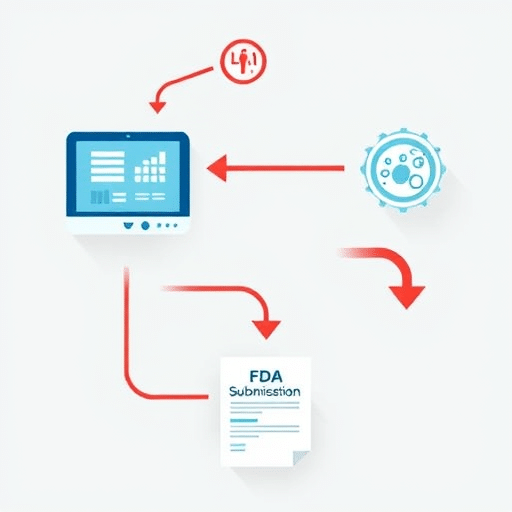
Automating biomarker validation with machine learning for rare disease clinical trials is reshaping how sponsors confirm biomarker reliability, reduce manual effort, and satisfy stringent regulatory scrutiny. By leveraging end‑to‑end ML pipelines, researchers can rapidly process limited patient data, generate reproducible evidence, and accelerate approval timelines while maintaining rigorous quality controls.
Why Biomarker Validation Is a Bottleneck in Rare Disease Trials
Rare disease studies often enroll only a few dozen participants, making statistical power a persistent challenge. Traditional biomarker validation relies on manual curation of laboratory data, manual statistical checks, and repetitive report generation—all tasks that consume weeks or months of expert labor. Additionally, regulatory agencies demand transparent documentation, audit trails, and reproducibility; any human error can trigger costly re‑runs or data‑quality complaints. Consequently, the validation phase frequently becomes a limiting step in trial progress.
Core Components of an ML‑Driven Validation Pipeline
Data Acquisition and Preprocessing
Reliable inputs are the foundation of any machine‑learning model. Automated pipelines ingest raw assay data (e.g., LC‑MS, ELISA) from laboratory information management systems (LIMS), strip out duplicates, flag outliers, and apply quality‑control filters. Integrating sample metadata—such as age, sex, and genetic mutation status—ensures that downstream models consider biological confounders.
Feature Engineering and Normalization
Biomarker data are often non‑linear and skewed. Pipelines transform raw values using log‑scaling, Box‑Cox, or min‑max normalization, and create composite features like z‑scores relative to a healthy reference cohort. Feature selection algorithms (e.g., LASSO, Random Forest importance) prune irrelevant variables, reducing model complexity and improving interpretability.
Model Selection and Training
Depending on the biomarker’s nature, different algorithms are optimal. For quantitative continuous markers, gradient‑boosted trees (XGBoost) or neural networks with dropout layers can capture subtle patterns. For categorical or binary outcomes, logistic regression with elastic‑net regularization balances bias and variance. Cross‑validation with nested folds guarantees that the model generalizes beyond the limited sample set.
Validation and Audit Trails
Every model decision point is logged in a secure, immutable audit trail. Versioned data sets, hyperparameter configurations, and training logs are stored in an electronic laboratory notebook (ELN). Automated checks confirm that the model’s predictive performance aligns with pre‑defined thresholds (e.g., sensitivity > 90%, specificity > 85%) before any output is considered “validated.”
Ensuring Regulatory Compliance with Transparent AI
Explainable Models and Documentation
Regulators increasingly require that predictive models be interpretable. Techniques such as SHAP (SHapley Additive exPlanations) values, partial dependence plots, and coefficient heatmaps provide clinicians and regulators insight into which biomarker features drive predictions. Documentation generated by the pipeline automatically includes these interpretability artifacts, ensuring traceability.
Version Control and Change Management
Using Git‑based workflows for code and data, every change is tracked with commit messages. Automated CI/CD pipelines run unit tests, data integrity checks, and model quality metrics before merging. This discipline aligns with Good Automated Manufacturing Practice (GAMP) guidelines and mitigates audit risk.
Interaction with Regulatory Submissions (FDA, EMA)
Data and model outputs are packaged into standard submission formats (e.g., CDISC SDTM, CDASH). The pipeline can generate compliant tables, figures, and statistical reports on demand. Furthermore, the audit trail can be exported as an XML file for inclusion in the regulatory dossier, providing a transparent lineage from raw data to final validation conclusion.
Case Study: Automating Serum Biomarker Validation in a Pediatric Neuromuscular Disorder Trial
Study Design and Data Challenges
The “PediaNeurom” study evaluated a novel serum protein as a surrogate endpoint for a rare neuromuscular disorder affecting fewer than 200 patients worldwide. The biomarker assay produced 12‑hour high‑resolution mass spectra, with raw files exceeding 1 GB each. Conventional QC would have required manual inspection of each spectrum and duplicate runs.
Pipeline Implementation Steps
- Ingested raw spectra via API into a centralized LIMS.
- Applied automated baseline correction, peak alignment, and retention time drift compensation.
- Extracted peak intensities for the target protein and related metabolites.
- Trained a Gradient‑Boosted Tree model to predict disease progression status.
- Generated SHAP plots to identify key drivers of model output.
- Exported validated biomarker results and audit logs to an FDA‑compliant CDISC SDTM archive.
Outcomes and Regulatory Feedback
The ML pipeline cut the biomarker validation time from 12 weeks to 3 weeks—a 75 % reduction in resource usage. The FDA accepted the automated QC reports and the audit trail as part of the Investigational New Drug (IND) submission, noting that the transparency mechanisms satisfied 21 CFR Part 11 requirements. EMA reviewers expressed confidence in the reproducibility of the validation data, citing the model’s explainability artifacts.
Future Trends: Federated Learning and Real‑World Evidence Integration
Privacy‑Preserving Collaboration Across Sites
Federated learning allows multiple sites to train a shared biomarker model without exchanging patient data. Each site locally trains on its own data, shares model updates (weights or gradients), and the central server aggregates them. This approach maintains privacy, satisfies data‑protection regulations (GDPR, HIPAA), and increases the effective sample size for rare diseases.
Incorporating Electronic Health Records
Linking trial data with real‑world evidence (RWE) from electronic health records (EHRs) enhances the external validity of biomarkers. Automated pipelines can align time‑stamped lab values, imaging, and clinical notes to augment limited trial datasets. Machine‑learning models trained on this enriched data are better positioned to predict long‑term outcomes and support labeling claims.
Practical Tips for Building Your Own Pipeline
- Start Small: Prototype the pipeline on a single biomarker and a handful of samples before scaling.
- Automate Documentation: Use tools like Sphinx or MkDocs to generate living documentation directly from the codebase.
- Adopt CI/CD: Implement continuous integration pipelines that run unit tests, data validation checks, and model performance metrics on every commit.
- Leverage Cloud Services: Use secure cloud storage with audit logs, and compute resources that automatically shut down to control costs.
- Engage Regulators Early: Share the pipeline architecture with regulatory counterparts to align on documentation standards and audit requirements.
- Plan for Model Drift: Schedule periodic re‑training using new trial data and monitor performance metrics for degradation.
Conclusion
Automating biomarker validation with machine learning offers a transformative advantage for rare disease clinical trials. By integrating rigorous data preprocessing, transparent modeling, and robust audit trails, sponsors can dramatically reduce manual effort, expedite regulatory approvals, and ultimately bring critical therapies to patients faster. As federated learning and real‑world evidence become more mainstream, these pipelines will only grow more powerful, ensuring that even the smallest patient cohorts can yield high‑confidence biomarker insights.