In 2025, developers building digital health software must navigate two distinct regulatory frameworks—EMA’s European Medicines Agency and the U.S. Food and Drug Administration. Understanding the nuanced differences in pre‑market approval, post‑market surveillance, data governance, and quality system requirements is essential for launching products that meet both markets. This guide dissects each critical phase of the lifecycle, offering practical steps to harmonize compliance and avoid costly delays.
The Regulatory Landscape: EMA vs FDA Basics
The EMA regulates medicinal products in the EU, including software that qualifies as a medical device or a therapeutic product. The FDA governs medical devices and certain software as a medical device (SaMD) under the 21 CFR 820 series. While both agencies aim to protect patient safety, they differ in legal authority, assessment procedures, and the extent of clinical evidence required.
Legal Frameworks
- EMA: EU Regulation 2017/745 (Medical Device Regulation), 2017/746 (In Vitro Diagnostic Regulation).
- FDA: 21 CFR 820 (Quality System Regulation) and 21 CFR 820.30 (Software as a Medical Device).
Decision‑Making Bodies
- EMA: European Commission and the European Medicines Agency’s Committee for Medicinal Products for Human Use (CHMP).
- FDA: Center for Devices and Radiological Health (CDRH) and the Medical Device Innovation Consortium (MDIC).
Classification of Digital Health Software: What Both Agencies Do
Both EMA and FDA require developers to classify software based on intended use and risk. However, the thresholds and terminology differ.
Risk‑Based Classifications
- EMA: Class I (low risk), Class IIa (medium risk), Class IIb (high risk), Class III (critical risk).
- FDA: Class I (general controls), Class II (general and special controls), Class III (highest risk).
Key distinctions emerge in the criteria for moving from Class II to Class III or IIb to III, especially when software controls life‑supporting functions or performs high‑confidence diagnostic tasks.
Pre‑Market Approval Pathways: Comparing EMA and FDA
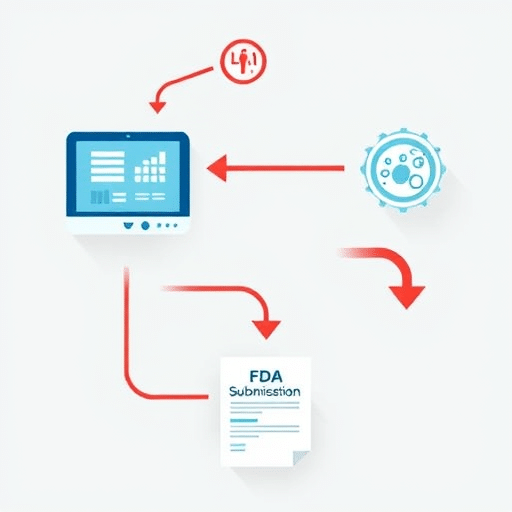
Pre‑market approval pathways determine the type of documentation, clinical data, and testing required before a product can be sold. The EMA’s approach emphasizes a centralized, EU‑wide approval, while the FDA relies on a combination of 510(k) submissions, De Novo classifications, and Premarket Approval (PMA) processes.
Centralized vs Decentralized Approval
- EMA: Centralized procedure through the EMA’s Centralized Review System (CRS); a single application covers all EU Member States.
- FDA: Decentralized approach; each state has its own regulations, but the FDA’s 510(k) and PMA cover the entire United States.
Clinical Evidence Requirements
Both agencies require clinical evidence, yet the scope differs. EMA often requires a more robust dataset for high‑risk devices, whereas FDA may accept surrogate endpoints in certain cases.
Timeframes and Costs
- EMA: Typical review time 3–6 months for low‑risk devices; up to 12–18 months for high‑risk.
- FDA: 510(k) review averages 90 days; PMA can take 12–18 months.
Post‑Market Obligations: Real‑World Evidence and Surveillance
After launch, manufacturers must monitor device performance, report adverse events, and conduct post‑market studies. EMA’s vigilance system and FDA’s Medical Device Reporting (MDR) requirements share objectives but differ in scope and reporting thresholds.
Adverse Event Reporting
- EMA: Mandatory reporting to the European Commission’s EudraVigilance database for Class III and certain Class IIb devices.
- FDA: Medical Device Reporting (MDR) to the FDA’s MedWatch system; reporting threshold set at 100 adverse events per device class.
Post‑Market Clinical Studies
Both agencies encourage or require post‑market clinical studies for high‑risk devices. EMA’s Clinical Evaluation Reports (CER) must be updated annually, while FDA’s Post‑Market Surveillance (PMS) reports are required under the 21 CFR 820.30 for Class III devices.
Software Updates and Version Control
- EMA: Requires an amendment to the MDR if updates change the intended purpose or risk profile.
- FDA: Software updates may trigger a 510(k) or De Novo review if they constitute a significant change.
Data Governance & Privacy: GDPR vs HIPAA
Data protection laws shape how developers design, collect, and share patient data. The EU’s General Data Protection Regulation (GDPR) and the U.S. Health Insurance Portability and Accountability Act (HIPAA) impose distinct obligations.
Consent and Data Use
- GDPR: Requires explicit, informed consent; users can withdraw at any time.
- HIPAA: Imposes the Privacy Rule, permitting data use for treatment, payment, and healthcare operations with patient authorization.
Security Requirements
- GDPR: Mandates “privacy by design” and “privacy by default” throughout the product lifecycle.
- HIPAA: Requires technical safeguards such as encryption, access controls, and audit controls.
Cross‑Border Data Transfers
- GDPR: Prohibits transfers to third countries without adequate safeguards (Standard Contractual Clauses, Binding Corporate Rules).
- HIPAA: Allows data transfers if covered entities comply with the Privacy and Security Rules; no explicit cross‑border restrictions.
Risk Management & Quality Systems: Harmonizing ISO and EU‑ISO
Quality management systems (QMS) must reflect both ISO 13485:2016 and regional extensions. Aligning processes reduces duplication and streamlines audits.
ISO 13485:2016
Globally recognized, ISO 13485:2016 covers medical device QMS. The EU adds Annex L, a set of additional requirements for medical devices sold within the EU.
ISO 14971:2019 (Risk Management)
Both EMA and FDA require risk management documentation following ISO 14971. However, EMA often demands more extensive risk analyses for Class III devices.
Quality System Audits
- EMA: Audits focus on compliance with EU MDR and ISO 13485:2016.
- FDA: Audits assess adherence to 21 CFR 820 and ISO 13485:2016.
Digital Evidence & AI/ML Validation Requirements
Artificial Intelligence and Machine Learning (AI/ML) components introduce unique validation challenges. Regulatory bodies are tightening evidence requirements to ensure algorithmic transparency and safety.
Algorithmic Transparency
- EMA: Requires a Technical Documentation dossier detailing training data, validation processes, and performance metrics.
- FDA: Emphasizes explainability and requires an AI/ML Risk Management Plan.
Adaptive Algorithms
Both agencies scrutinize self‑learning algorithms. EMA’s MDR 2021 includes guidance on “Adaptive Algorithms,” whereas FDA’s Digital Health Innovation Action Plan calls for pre‑market validation of adaptive systems.
Clinical Validation Studies
- EMA: Expect multicenter trials to validate AI/ML outputs against established gold standards.
- FDA: May accept simulation studies if supported by real‑world evidence.
Practical Steps for Developers: Aligning Dual Compliance
Below is a step‑by‑step roadmap for developers aiming to streamline cross‑border compliance.
1. Early Stakeholder Engagement
- Consult with regulatory affairs specialists in both regions.
- Define product scope, intended use, and risk classification early.
2. Dual‑Pathway Documentation Planning
- Create a master Technical Documentation folder with modular sections for EMA and FDA.
- Use a common risk management template compliant with ISO 14971.
3. Integrated Data Governance Framework
- Embed GDPR “privacy by design” and HIPAA “privacy by default” in the architecture.
- Implement role‑based access controls and end‑to‑end encryption.
4. Harmonized Clinical Validation Strategy
- Design studies that satisfy both EMA’s MDR and FDA’s PMA or 510(k) requirements.
- Leverage adaptive clinical trial designs to accommodate AI/ML updates.
5. Continuous Post‑Market Surveillance Plan
- Set up real‑time monitoring dashboards for adverse events.
- Automate reporting to EudraVigilance and MedWatch.
6. Software Lifecycle Management
- Adopt version control that records all changes and their impact on risk.
- Document each update’s compliance status (e.g., amendment for EMA, significant change for FDA).
Common Pitfalls and How to Avoid Them
Cross‑border development often encounters the following hurdles:
Misaligned Risk Classification
Assuming a device falls into the same class across regions can lead to regulatory gaps. Always confirm classifications with both agencies.
Incomplete Data Governance
Failure to satisfy GDPR’s data minimization or HIPAA’s breach notification can halt product launches.
Ignoring Post‑Market Obligations
Developers sometimes neglect ongoing surveillance, resulting in costly recalls or penalties.
Underestimating AI/ML Validation
Assuming simulation studies alone are sufficient can cause FDA rejections; real‑world evidence is increasingly required.
By proactively addressing these pitfalls, developers can smooth the regulatory journey and bring digital health software to market faster.
In 2025, aligning EMA and FDA compliance is not optional—it is a strategic imperative. With the right planning, robust documentation, and a commitment to data governance, developers can successfully navigate both regulatory landscapes and deliver safer, more effective digital health solutions to patients worldwide.