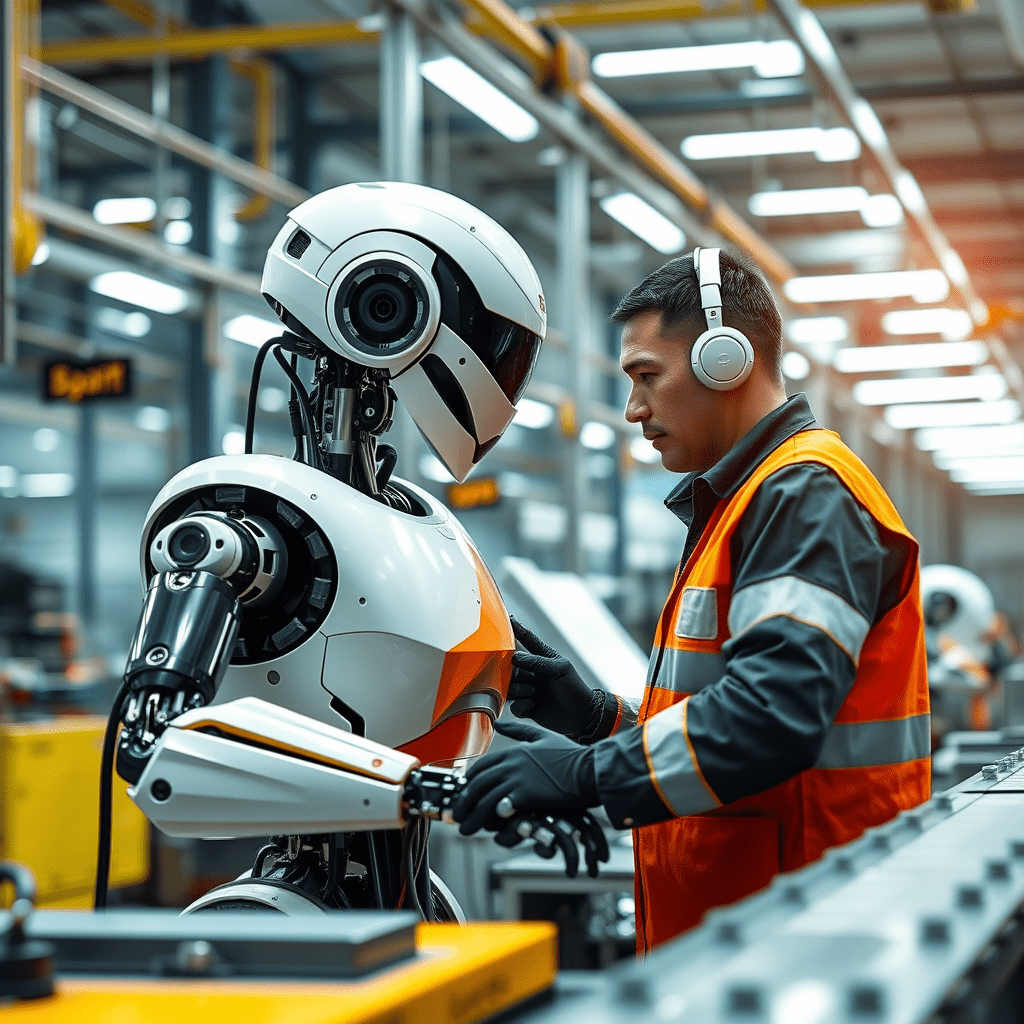
Emotionally Intelligent Manufacturing: How AI Robots that Learn from Human Cues are Revolutionizing Factories
Emotionally intelligent manufacturing is no longer a futuristic concept; it is becoming the cornerstone of next‑generation production lines. By integrating affective computing into industrial robots, factories can now read human emotions, adapt to stress levels, and collaborate more naturally with workers. This article dives into how AI robots that learn from human cues are making manufacturing more responsive, safer, and collaborative, and what this means for the future of work.
What is Emotionally Intelligent Manufacturing?
At its core, emotionally intelligent manufacturing blends two powerful fields: artificial intelligence (AI) and affective computing. Affective computing equips machines with the ability to detect, interpret, and respond to human emotions—whether through facial expressions, voice intonation, physiological signals, or behavioral patterns. When these capabilities are embedded into robots and control systems, the result is a production environment that can anticipate human needs, mitigate stress, and adjust processes in real time.
The Three Pillars of Emotional Intelligence in Factories
- Empathy – Robots gauge worker mood and respond with supportive actions.
- Self‑Regulation – Machines monitor their own performance metrics to avoid overexertion or miscommunication.
- Social Skills – Collaborative robots (cobots) coordinate with humans to balance workloads and reduce friction.
How Affective Computing Works in the Factory
Implementing emotionally intelligent robots requires a multi‑layered sensor and software stack. Below is a simplified overview of the process.
1. Sensing Human Cues
Robots are equipped with cameras, microphones, and wearable biosensors that capture:
- Facial micro‑expressions (e.g., micro‑smiles or frowns).
- Voice pitch and tone shifts indicating excitement or frustration.
- Heart rate variability and galvanic skin response for physiological stress markers.
- Movement patterns, such as abrupt body language or slowed steps.
2. Data Processing and Emotion Recognition
Collected data is streamed to edge processors or cloud services where machine‑learning models analyze signals in real time. Techniques such as convolutional neural networks (CNNs) for images and recurrent neural networks (RNNs) for speech allow the system to classify emotions into categories like “focused,” “anxious,” or “overwhelmed.”
3. Decision Making and Adaptive Behavior
Once emotions are identified, the robot’s control algorithms decide on appropriate actions:
- Slowing down or pausing to allow a stressed worker to catch up.
- Providing verbal encouragement or visual cues to boost confidence.
- Reallocating tasks based on workload distribution and worker capacity.
- Adjusting lighting or temperature to reduce environmental stressors.
Benefits: Responsiveness, Safety, and Collaboration
Emotionally intelligent manufacturing yields tangible improvements across multiple dimensions of the production process.
Enhanced Responsiveness
By detecting subtle changes in worker mood, factories can proactively adjust processes before bottlenecks or errors occur. For instance, if a worker shows signs of fatigue, the system can automatically trigger a brief rest period or shift the load to a more rested colleague, maintaining throughput while preserving quality.
Improved Safety
Traditional safety protocols rely on predefined zones and manual overrides. Affective robots add a human‑centric layer: they monitor for signs of distress or disorientation and can halt operations instantly. In one pilot program, a cobot that sensed elevated heart rate and slowed reaction times prevented a near‑miss incident, showcasing how emotional awareness translates into lifesaving interventions.
Strengthened Collaboration
Collaborative robots equipped with emotional intelligence act as teammates rather than tools. They interpret worker intent and adjust their movements to complement human actions. This synergy reduces errors, increases job satisfaction, and fosters a culture where humans and machines thrive together.
Real‑World Examples
Several leading manufacturers are already integrating emotionally intelligent robots into their lines:
- Volkswagen uses cobots that monitor driver fatigue through facial recognition, pausing manual assembly tasks when a driver’s eyes show signs of drowsiness.
- Philips Healthcare deploys bedside robots in manufacturing labs that adjust their pacing based on the emotional state of technicians, improving assembly accuracy for medical devices.
- Fanuc has developed an industrial robot with built‑in affective computing modules that use voice sentiment analysis to gauge operator morale during shift handovers.
Challenges and Ethical Considerations
While the benefits are compelling, the adoption of emotionally intelligent manufacturing also presents several hurdles.
Data Privacy and Consent
Collecting physiological data and facial imagery raises privacy concerns. Companies must implement transparent consent processes and robust data protection measures to ensure workers’ rights are respected.
Algorithmic Bias
Emotion recognition models trained on limited datasets can misinterpret cultural differences or gender variations. Continuous model validation and inclusive training data are essential to avoid bias.
Reliance on Human Emotional Signals
Human emotions are complex and context‑dependent. Overreliance on automated interpretations can lead to miscommunication or unintended interventions. Human oversight remains crucial.
Future Outlook
Looking ahead, advancements in multimodal sensing, federated learning, and explainable AI will further refine how robots interpret and respond to human emotions. We anticipate the following trends:
- Integration of emotion‑aware AI with augmented reality (AR) to provide workers with contextual feedback.
- Standardized regulatory frameworks governing affective data collection in industrial settings.
- Expansion beyond the factory floor to include supply chain and maintenance operations.
As the boundaries between human and machine intelligence blur, emotionally intelligent manufacturing promises to create factories that are not only efficient but also humane.
In conclusion, AI robots that learn from human cues are redefining industrial productivity by making factories more responsive, safer, and collaborative. By embracing affective computing, manufacturers can unlock a new era of work where human well‑being and operational excellence go hand in hand.
Ready to bring emotional intelligence into your production line? Contact us today for a customized implementation plan.