Open-source contributions have quietly become one of the most powerful signals in technical hiring. But while many developers focus on building impressive projects, they often overlook the single most underutilized career asset sitting right inside their commit messages. In 2026, with remote and hybrid teams dominating the tech landscape and AI-assisted tooling flooding recruiter pipelines, a well-crafted commit history is no longer a nice-to-have — it’s a competitive differentiator. This article explores how you can flip mundane patches into recruiter magnets with intentional storytelling in every commit, turning your Git log into a portfolio that speaks before you ever enter an interview room.
Why Your Commit History Is Your Secret Résumé
Recruiters and hiring managers rarely read entire codebases. What they do read — quickly, and in bulk — is your commit log. A clean, descriptive history communicates professionalism, collaboration skills, and engineering maturity faster than any cover letter. A vague history, on the other hand, raises red flags: poor communication, lack of ownership, or rushed work.
Think of each commit as a micro-narrative. When dozens or hundreds of these micro-narratives align across a project, they tell a coherent story about who you are as a developer. The question is: are you authoring that story intentionally, or leaving it to chance?
The Anatomy of a Recruiter-Ready Commit Message
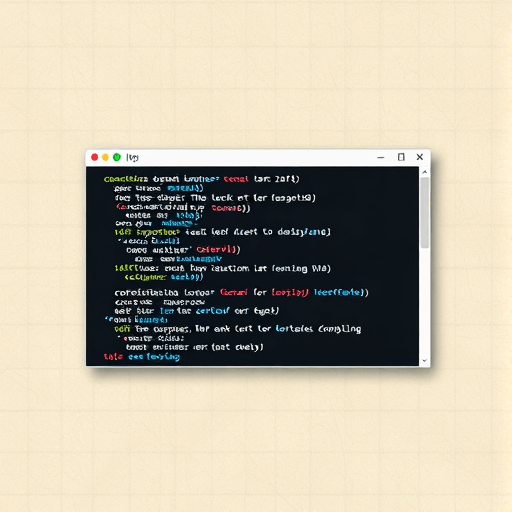
The conventional wisdom has always been: subject line, optional body, optional footer. But in practice, most developers treat commits as throwaway notes to themselves. Strategic commit messages follow a more deliberate structure:
- A clear, action-oriented subject line — Write in imperative mood (“Add token refresh logic” rather than “Added token refresh”). Keep it under 72 characters.
- A body that answers three questions — What was changed, why it was needed, and what trade-offs were considered.
- Contextual references — Link to issues, design docs, or RFCs. This signals you work within a team process, not in isolation.
- A consistent footer pattern — Even in solo work, a “BREAKING CHANGE” or “Tested with:” note shows rigor.
When recruiters scan your profile, they’re scanning for patterns. Disciplined structure across hundreds of commits demonstrates habits that translate directly to production environments.
Commit Storytelling: Turning Patches into Narratives
Storytelling in code sounds abstract, but it’s concrete and learnable. Every commit can answer three narrative beats:
The Problem
Why did this code need to exist? A great commit body names the friction or limitation being addressed. Instead of “Fix bug,” write “Prevent session timeout when users idle during long content uploads.” This kind of context shows empathy for end users and an understanding of how engineering decisions affect product outcomes.
What alternatives did you consider? Mentioning rejected approaches signals analytical depth. “Used retry-with-backoff instead of cron-based polling because external API rate-limits are unpredictable” demonstrates architectural thinking that elevates your profile from “coder” to “engineer.”
What changed after this commit shipped? Even qualitative notes (“Reduces average request latency by ~40%” or “Closes the loop on long-standing UX complaint #214”) turn your history into evidence of impact — the single metric hiring teams value most.
Granular vs. Atomic: Finding the Right Commit Rhythm
A common debate among developers is whether commits should be massive feature dumps or tiny save-points. Strategic portfolios balance both through what I call thematic commits — each representing a coherent unit of work, even if it spans several files or refactors.
For example, instead of a single commit labeled “Refactor auth,” a recruiter-friendly history would split into: “Extract token validation into middleware,” “Add unit tests for token expiry edge cases,” “Document new auth flow in README.” Each commit is reviewable, traceable, and tells part of a larger story.
This rhythm matches how production teams actually ship software. Hiring managers notice when your commit cadence mirrors professional workflows.
How to Audit and Rewrite Your Existing History
If your current commit history is messy, don’t panic — and don’t rewrite public history. Instead, focus forward. For older repositories, add a top-level README that curates highlights and links to specific commits that demonstrate your best work. For active projects, establish new habits starting today.
A simple audit exercise: open your last 30 commits and ask yourself, could a stranger understand each one without seeing the diff? If not, rewrite your habits before your next push.
The 2026 Hiring Landscape: What Recruiters Actually Look For
The technical hiring market has shifted noticeably. With AI-generated applications overwhelming traditional application funnels, hiring managers increasingly rely on verifiable signals. Public commit histories on GitHub, GitLab, and Codeberg serve as ground truth that can’t be fabricated. They’ve become a primary screening tool, especially for mid-level and senior roles.
Moreover, with the rise of distributed-by-default teams, evidence of asynchronous collaboration is gold. A commit history that shows clear discussion references, code review participation, and thoughtful documentation tells recruiters you can thrive in remote environments without constant supervision.
Companies in 2026 are also placing higher value on maintainership signals. Triaging issues, reviewing pull requests, and releasing tagged versions all show community trust. These activities typically appear in commit metadata and activity graphs before they appear anywhere else on your profile.
Building Your Commit Strategy: A Practical Framework
Here’s a repeatable process you can apply to every new contribution, whether it’s a one-line typo fix or a major refactor:
- Before writing code: Write the commit message first. This forces clarity of intent and often reveals missing requirements.
- During development: Stage changes logically, not just technically.
- Before committing: Re-read the staged diff against your message. Does the message still accurately describe what’s about to land?
- After committing: Check the rendered log in your Git host. Does it read cleanly when others scan it?
This framework takes minutes per commit and pays compound dividends across your entire career.
The Compound Effect of Intentional Commits
Most developers underestimate the exponential value of consistent quality. A single polished commit is forgettable. Five hundred polished commits form a reputation. Recruiters who discover your profile after seeing one thoughtful contribution will click through to others — and they’ll find a coherent body of work, not a random collection of patches.
This is the core principle behind a curating an OSS résumé: you can’t control every project you contribute to, but you can control the story each commit tells about you. Over time, that story becomes unmistakable.
Conclusion
Your commit history is one of the few professional artifacts in software engineering that grows richer with age and never depreciates. By treating each commit as a deliberate, well-written micro-narrative, you build a portfolio that recruits can read, trust, and act on — long before any interview happens. In 2026, when verifiable engineering signals matter more than polished résumés, strategic commit messages are the most leveraged writing you’ll ever do as a developer.