When a single API serves dozens of tenants — each with their own mobile apps, partner integrations, and embedded clients frozen on legacy builds — the temptation to fork the codebase grows stronger with every release. Versioned schema negotiation offers a cleaner path. By teaching the gateway to inspect, translate, and serve the right schema for each caller at request time, engineering teams can ship breaking changes in one tenant without disrupting another. This guide walks through a practical architecture for designing a backwards-compatible API gateway that gracefully handles divergent client versions in both REST and GraphQL contexts, without multiplying your maintenance burden.
Why Multi-Tenant Versioning Breaks Traditional API Strategies
Most API versioning advice assumes a single deployment serving a single customer base. In a multi-tenant SaaS, however, that assumption collapses. One tenant might still rely on a v1 contract signed two years ago, while another demands every field exposed by your newest data model. A simple URL prefix like /v1/ or /v2/ is not enough when:
- Tenants negotiate version compatibility per resource, not per API.
- GraphQL clients send arbitrary field selections that must be resolved against a tenant-specific schema.
- Partner integrations cannot be upgraded on demand, yet your internal teams need to evolve the schema continuously.
- Embedded SDKs ship inside customer-managed environments that you cannot patch.
The result is what many teams call a version matrix problem: instead of one current version, you face N tenants × M client versions × P resource types. Without a deliberate negotiation layer, the only answer is a codebase fork per supported version — and forks always rot.
Core Principles of a Negotiation-Aware API Gateway
A gateway built for versioned schema negotiation treats the schema itself as a runtime artifact, not a compiled constant. Four principles keep it maintainable:
1. Schemas Are Data, Not Code Paths
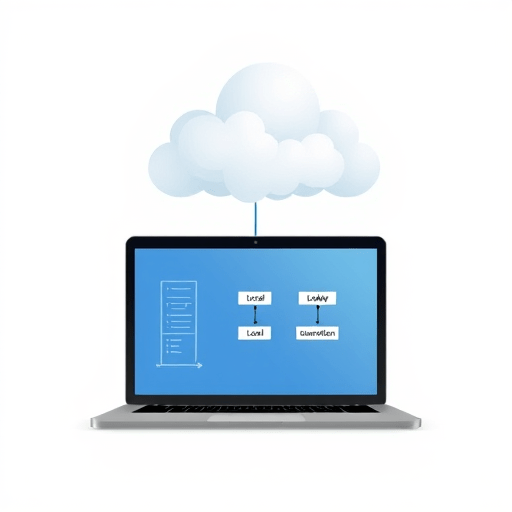
Store every supported version of your REST resource definitions and GraphQL schemas in a versioned registry (database, Git-backed store, or schema registry service). The gateway reads the schema at boot — and selectively hot-reloads it — rather than baking type checks into source files.
2. Version Signals Come From the Client, Not the URL
Prefer version negotiation headers (X-Schema-Version, Accept-Schema, GraphQL client extensions) over versioned paths. URLs describe resources; schemas describe contracts. This decouples routing from compatibility.
3. Translation Lives at the Edge
Field renames, type coercions, and deprecated-but-still-served fields should be resolved before requests reach business logic. A request/response transformer in the gateway keeps the core domain ignorant of legacy shapes.
4. Divergence Is Expected, Not Exceptional
Design the system so that no tenant ever blocks another tenant’s evolution. When a breaking change ships, only the tenants still negotiating for the old version pay the translation cost.
A Reference Architecture for the Gateway
Picture the request lifecycle from a legacy mobile client hitting your public endpoint:
- Authentication and tenant resolution. The gateway resolves the caller’s tenant ID and any cached version metadata from a signed token or API key profile.
- Version negotiation. The gateway reads the
X-Schema-Versionheader, falling back to the tenant’s last-known-good version if absent. - Schema lookup. The gateway loads the appropriate schema artifact from the registry — a JSON Schema for REST, a parsed GraphQL schema document for GraphQL.
- Request validation and coercion. Inbound payloads are validated against the negotiated schema. Missing fields are defaulted; legacy enum values are remapped.
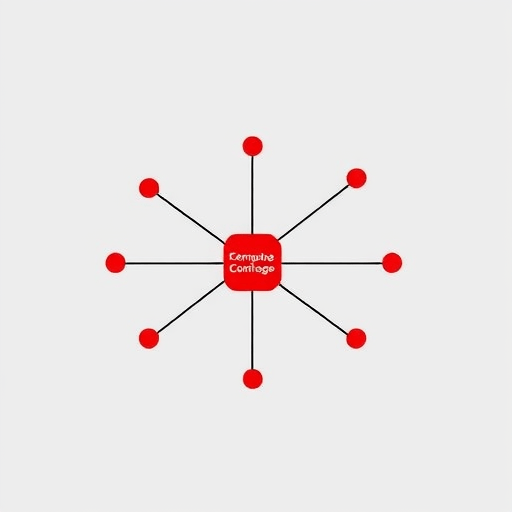
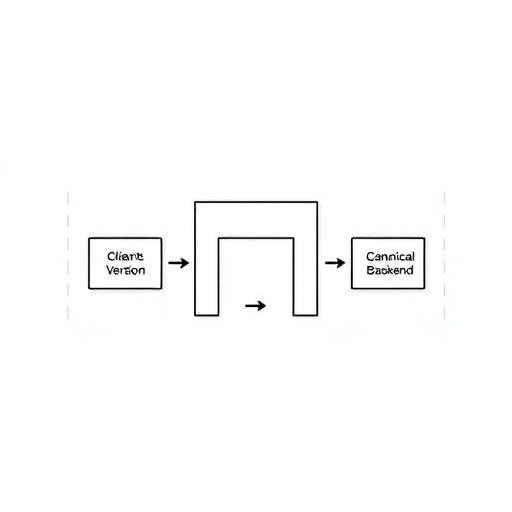
- Translation to canonical model. A canonical internal representation shields downstream services from tenant-specific shapes. The gateway rewrites the request into this canonical form.
- Dispatch to business services. Core services see one stable contract and never branch on tenant.
- Reverse translation on the way out. Responses are re-projected into the negotiated schema, applying deprecations, field removals, and format conversions.
Handling GraphQL’s Unique Challenges
REST is straightforward to version because each endpoint has a fixed shape. GraphQL versioning is notoriously harder because clients compose queries dynamically. A negotiation-aware gateway solves this by serving a per-tenant schema view.
Schema Stitching vs. Schema Projection
Two patterns work well in practice:
- Schema projection: take your master GraphQL schema and apply a set of allow/deny/rename rules specific to a tenant-version pair. The client sees a tailored SDL with only the fields it should access.
- Federated subgraphs with version gates: if you use Apollo Federation or a similar approach, gate subgraphs behind version-aware directives. Older clients get a frozen subgraph; newer clients get the evolving one.
Both approaches share a critical requirement: deprecations must be honored, not ignored. When a tenant negotiates an older schema, fields that have been deprecated in the master schema must still resolve correctly, even if they are one indirection away from the new canonical field.
Persisted Queries as a Version Anchor
If your GraphQL deployment uses persisted queries (APQ, Automatic Persisted Queries), you can store the query hash alongside the schema version it was registered against. The gateway then knows exactly which schema to load — without trusting arbitrary introspection results from the client.
REST Endpoints: Field-Level Compatibility Without Forks
For REST resources, versioned schema negotiation looks more like JSON Schema transformation. A practical pipeline:
- Define each REST resource as a JSON Schema document, versioned alongside the API.
- Store migration rules between versions: renames, type coercions, default values, structural rewrites.
- At request time, load the canonical schema and the caller’s negotiated schema, then apply forward and reverse transforms.
For example, if v3 renamed customer_id to accountId, a v3 caller sees only accountId, while a v1 caller continues to receive customer_id. Both come from the same canonical payload produced by the core service.
Operational Concerns: Telemetry, Deprecation, and Sunsetting
A negotiation layer is only as good as the visibility you have into it. Instrument the gateway to answer three questions continuously:
- Who is still on an old schema? Per-tenant counters on negotiated versions let product teams plan deprecations with real data.
- What does each schema cost? Track translation latency separately from business logic latency to spot regressions early.
- When can a version be retired? A sunset pipeline should automatically warn tenants when traffic on their negotiated version drops below a threshold, then route them to a forced upgrade.
Deprecation headers and GraphQL @deprecated directives remain useful, but they target application developers. The gateway’s telemetry targets operators — the people who decide when a fork is no longer worth maintaining.
Avoiding the Trap of Hidden Forks
The biggest risk in any negotiation-based system is that translation logic slowly becomes a fork in disguise. Guard against this by:
- Treating translation rules as first-class artifacts with their own tests and code review.
- Keeping canonical models strictly minimal — no tenant-specific fields leaked into shared services.
- Refusing conditional code paths in core services that branch on tenant or version.
- Auditing translation rules quarterly to ensure they still serve real traffic.
Done well, versioned schema negotiation turns API evolution from a hostage negotiation with your oldest customer into a routine engineering decision. Tenants get stability; your team gets a single, evolving codebase; and the gateway quietly absorbs the differences that used to require a fork.
The payoff is a platform that can absorb a 2026-era explosion of client diversity — AI agents, embedded partners, regulated integrations, mobile apps with multi-year lifecycles — without rewriting the same business logic for each one. The gateway becomes the version manager, the schema registry becomes the source of truth, and your core services finally get to focus on the domain instead of the compatibility matrix.