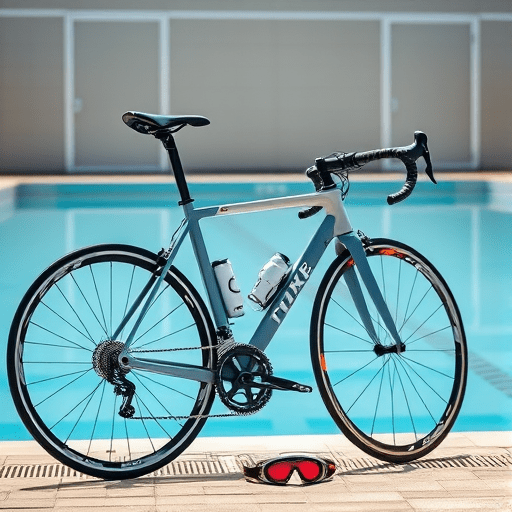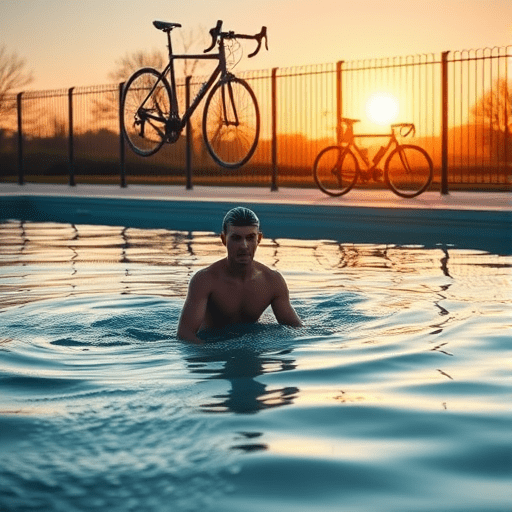
Many endurance athletes take up swimming as a low-impact complement to long hours on the bike, expecting instant relief for overworked knees. The irony is that the crossover period from cycling to swimming can actually trigger new knee discomfort if the body isn’t prepared for the change. Whether you’re a gravel rider adding pool sessions, a triathlete adjusting your weekly routine, or a former cyclist rehabbing an old injury, understanding how to prevent knee pain when switching from cycling to swimming starts with recognizing that “low-impact” does not mean “no-impact.” The unique demands of kicking, pushing off walls, and even entering the pool can challenge joints that have adapted to pedaling in a single plane of motion.
Why Cycling Muscles Struggle in the Water
Cycling builds quadriceps, calves, and hip flexors in a shortened, repetitive pattern. In the pool, those same muscles are asked to work through a fuller range of motion, particularly during the kick phase. If the knees are accustomed to the slightly bent, stable position of a pedal stroke, the sudden demand for lateral stability and extension underwater can expose imbalances.
Common culprits include:
- Overdeveloped quads pulling the kneecap out of alignment during flutter kick
- Tight hip flexors that tilt the pelvis and overload the front of the knee
- Weak inner thighs and glutes, which force the knees to do stability work they were never trained for
- Ankles unused to plantarflexion, causing the knee to bend excessively to compensate
Pool-Entry Technique That Protects the Knees
Most swimmers don’t think of getting into the pool as a knee-loading event, but it can be. Repeatedly pushing off the wall, jumping in from the edge, or launching off the starting block places compressive force on the patellofemoral joint. For new pool swimmers coming from cycling, modifying entry habits is a surprisingly effective first line of defense.
Step In, Don’t Jump In
For the first few weeks, walk down the pool steps or use a ladder rather than hurdling in. This avoids the sudden eccentric load that the knees are not conditioned for after long indoor trainer sessions.
Master the Gentle Push-Off
When pushing off the wall, keep the knees soft. A fully locked knee at extension in the water transmits force directly to the joint. Instead, initiate the push with a slight bend and engage the glutes to streamline the body, allowing momentum rather than muscular force to carry you forward.
Use a Pull Buoy Early On
Many new pool athletes rush to develop a strong kick. A pull buoy placed between the thighs lets you swim with the upper body while the buoy supports the legs, dramatically reducing knee workload. This is especially helpful when transitioning from cycling, where the legs are already fatigued.
Bike-Fit Changes Worth Making Before Adding Swim Volume
Paradoxically, small bike-fit adjustments can reduce knee pain both on the bike and in the pool. The goal is to unload the patellar tendon and rebalance the muscles around the knee before introducing new aquatic stress.
Lower the Saddle a Fraction
Dropping your saddle by 2–4 millimeters reduces the degree of knee flexion at the bottom of the pedal stroke. Over a season of long rides, even a slightly too-high saddle can shorten the patellar tendon. A small adjustment gives the tendon room to recover and lengthen, which translates to better knee comfort in the water as well.
Move the Cleats Slightly Back
If you’ve been running cleats far forward for a quad-dominant pedal stroke, shifting them a few millimeters rearward engages more glute and hamstring, redistributing load away from the knee cap.
Check Your Q-Factor
A stance that’s too narrow or too wide can stress the knees laterally. A properly matched Q-factor between your pedals and your natural hip width keeps the knees tracking in line, which becomes essential when those same knees are asked to kick in the water.
Recovery Habits That Bridge the Two Sports
The transition period is when injuries tend to surface, not months later. Building a few recovery habits into the routine helps the knees adapt without flare-ups.
Foam Roll the Quads and IT Band
Two minutes per side before pool sessions loosens tissue and improves patellar tracking. Cyclists typically have dense, fibrous quads that benefit from consistent rolling, especially before a kicking set.
Stretch the Hip Flexors Daily
A kneeling hip flexor stretch held for 60–90 seconds per side counteracts the shortened position that cycling creates. Better hip extension translates to less anterior knee loading in every kick cycle.
Ice or Contrast Bath After Intense Sessions
For the first three to four weeks, applying cold to the knees for 10–15 minutes after the longest or most intense swim sessions can manage any inflammation that arises during adaptation. Contrast baths (alternating warm and cold) work well for athletes who find straight icing uncomfortable.
Sleep With a Pillow Under the Knees
For cyclists prone to patellar tendinopathy, sleeping with a pillow under the knees keeps the tendon in a slightly shortened position, which can reduce morning stiffness during the crossover period.
Smart Swim Training Adjustments for New Pool Athletes
Beyond entry technique and bike-fit tweaks, the structure of your swim workouts matters. A common mistake is replicating cycling volume in the pool too quickly.
Build Kick Volume Gradually
Start with 4 x 25 meters of kick work per session and add 25 meters per week. This gives the tendons time to adapt to the new loading pattern without sudden overload.
Mix Drill Work Into Every Session
Drills such as side kick, single-arm swimming, and catch-up engage the hips and core in ways that take pressure off the knees. They also build body awareness, which helps correct subtle knee misalignment underwater.
Alternate Pool Sessions With Easy Rides
Rather than stacking hard bike intervals and intense swim sets on the same day, alternate. The knees recover best when hard efforts are spaced at least 48 hours apart during the transition phase.
When to Seek Professional Help
Mild soreness during the first two to three weeks of swim training is normal as the knees adapt to a new movement pattern. Sharp pain, swelling, pain that lingers more than 48 hours after a session, or pain that alters your gait on land warrants a visit to a sports physiotherapist. Patellar tendinopathy, IT band syndrome, and runner’s knee (a misnomer for patellofemoral pain) are all common in athletes making this exact transition, and they respond far better to early intervention than to pushing through.
Conclusion
Transitioning from cycling to swimming is one of the smartest things an endurance athlete can do for long-term joint health, but the crossover period deserves attention rather than assumption. By adjusting how you enter the pool, fine-tuning your bike fit to offload the patellar tendon, building kicking volume gradually, and committing to small daily recovery habits, you give the knees a chance to adapt without protest. The result is a smoother, more sustainable blend of two sports that keeps you moving for decades rather than seasons.