When a large language model memorizes a fragment of a customer support transcript, a clinical note, or an internal access token, the leak rarely announces itself. It surfaces months later, sometimes as a hallucinated answer that recites a real email address. The gap between raw data ingestion and model behavior is exactly where a sensitive data discovery framework for AI training pipelines belongs, and 2026 is shaping up to be the year enterprises stop bolting this on after the fact. Below is a cloud-native approach that treats regulated data as a first-class artifact, scanned, tagged, and routed before it ever touches a training cluster.
Why Pre-Training Discovery Is the New Perimeter
Traditional data loss prevention watches the egress boundary: emails, uploads, API responses. AI workloads invert that assumption. Training corpora are the egress point. If a regulated record lands in a parquet file destined for a GPU cluster, the model effectively becomes an exfiltration channel. Worse, the leak is probabilistic. Retrieval of a memorized string depends on prompt shape, temperature, and alignment layers, which means a quiet privacy incident can pass every red-team test until a curious user stumbles onto it.
Architecturally, this means discovery cannot live only at the storage layer or only at the model evaluation layer. It has to span ingestion, transformation, and checkpointing, with consistent labels that survive every handoff.
The Three-Stage Discovery Pipeline
A workable framework divides the journey into scanning, tagging, and quarantining. Each stage produces a machine-readable signal that downstream systems can act on without re-inspecting the data.
1. Scanning at the Ingestion Edge
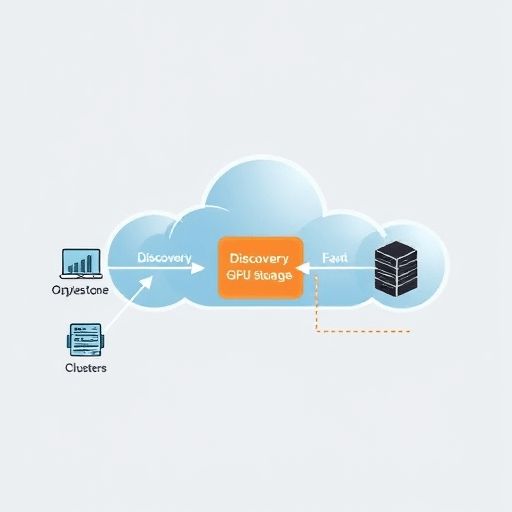
Every artifact entering the training lake should pass through a discovery service before it is registered with the feature or corpus catalog. In cloud terms, think of a sidecar that sits between object storage and the training orchestrator. It pulls object metadata, runs a lightweight classifier over the first few megabytes, and emits a risk score.
The classifier should combine three techniques:
- Pattern matching for structured identifiers such as national ID formats, IBANs, MRNs, and API key prefixes. This catches the easy wins and produces high-precision labels.
- Named entity recognition tuned for healthcare, financial, and legal vocabularies. A general NER model is too noisy for training governance, so a domain-adapted variant outperforms off-the-shelf baselines.
- Embedding-based similarity against a curated set of regulated exemplars. This catches paraphrases and translated variants that regex would never see.
The output is a structured tag set: data class, jurisdiction, retention class, and a confidence band. Treat the tag schema as part of your data contract; if a producer cannot supply it, the ingestion service should reject the artifact rather than guess.
2. Tagging as a First-Class Pipeline Artifact
Tags need to propagate. A tokenized column in a Spark job, a chunked document in a RAG index, and a checkpointed LoRA adapter should all carry the same lineage marker. Practically, this means writing tags into:
- Object metadata alongside the dataset
- Parquet or Iceberg column-level annotations
- Vector store payload fields, not just metadata sidecars
- Run records in the experiment tracker
When a regulator asks how a piece of personal information reached a deployed model, the answer should be a single query across the catalog, not a manual archaeology project.
3. Quarantine as a Routing Decision, Not a Block
The instinct is to reject any flagged record outright. That usually kills projects because useful signal gets mixed with regulated signal in the same document. Quarantine is more useful as a routing layer. Tagged artifacts can be diverted to:
- A redacted variant for general training, where PII spans are masked or replaced with synthetic surrogates
- A segregated training cluster with stricter access logs and shorter retention
- An approval queue for data stewards, with a documented rationale for inclusion or exclusion
The key is that the decision is recorded. If a steward approves a dataset that contains residual identifiers, that approval should appear in the model card and the audit log.
Choosing Discovery Tools Without Locking Yourself In
The discovery layer is the easiest place to over-engineer. A few pragmatic rules help.
First, prefer managed scanning services where they exist, because the regex sets for national identifiers age quickly. Second, keep custom classifiers in a containerized service so you can swap engines without rewriting the pipeline. Third, standardize on a single tag vocabulary across clouds; vendor-specific sensitivity labels look convenient until your second region has different taxonomy.
For high-volume pipelines, batch scanning beats streaming classification on cost, but you lose early rejection. A common compromise is to scan streaming metadata continuously and run deep content scans nightly, with quarantine triggered only after both signals align.
Operational Metrics That Actually Matter
Coverage, precision, and recall are the obvious metrics, but they hide the operational reality. The numbers worth watching on a dashboard are:
- Time to quarantine from first ingestion to segregated storage. Anything above a few hours means an unlabeled artifact is sitting in the training queue.
- False positive burn rate, the fraction of quarantined documents that stewards approve for inclusion. A high rate signals an over-tuned classifier and slows research.
- Tag completeness across the corpus catalog. Any artifact without a sensitivity label should be treated as unclassified and excluded from production training by default.
- Memorization probes on evaluation prompts that attempt to elicit known canary strings. This is the only metric that closes the loop between discovery and model behavior.
Closing the Loop With Evaluation
Discovery without evaluation is just compliance theater. Once tags exist, evaluation suites can be built that prioritize high-risk slices. A model that performs well on public web text but poorly on a stratified sample of de-identified clinical records is giving you an early signal that your training corpus is biased, or worse, that residual sensitive data is shaping outputs in unexpected ways. Pairing the two creates a feedback channel: if a memorization probe fires, the lineage system can trace the offending string back to a specific shard, and the discovery service can refine its rules.
Done well, this becomes a self-improving loop. Done poorly, it becomes a static filter that everyone learns to route around. The differentiator is whether the framework treats regulated data as something the engineering organization owns end to end, from the moment a file lands in a bucket to the moment a model ships a response.
In 2026, the regulatory floor is rising, and the technical ceiling for what models can memorize is rising with it. Cloud architects who build the discovery, tagging, and quarantine layer now will spend less time explaining why a model knows something it should not, and more time shipping capabilities that hold up under scrutiny.