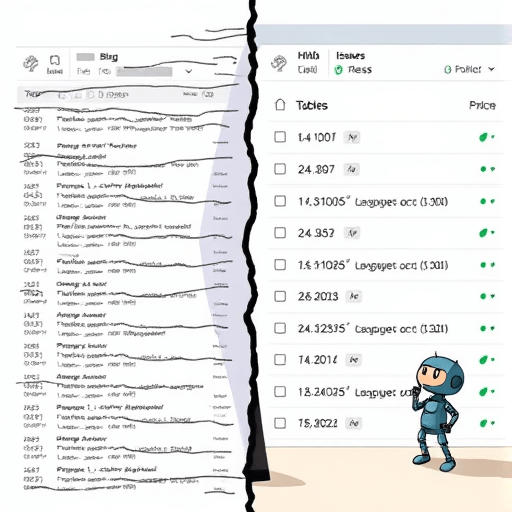
Every maintainer knows the morning ritual: you open the repo, see 47 new issues, and feel your energy drain before your coffee kicks in. Triage is not collaboration—it is the administrative tax you pay for having a project people care about. The good news is that 2026 has finally brought the tooling to fix it. You can automate your open source issue queue with LLM-based triage and stale-bot rules, not by replacing your judgment but by reserving it for the decisions that actually matter.
This article walks through a pragmatic, contributor-friendly approach: what LLM-based triage does well, where it still needs guardrails, and how to design stale-bot rules that clean up the backlog without angering the people who filed the issues in the first place.
Why Manual Issue Triage Breaks Down at Scale
In a small project, reading every issue takes ten minutes. In a popular one, it becomes a full-time job with a rotating shift of frustrated contributors. The problem is not just volume—it is variety. Issues arrive as bug reports, feature requests, documentation questions, and support tickets disguised as defects. Each one needs a label, a priority, a route to the right maintainer, and often a first response.
The same issues also arrive in duplicate. A contributor files a bug; another contributor posted the same stack trace three weeks earlier. Finding matches across hundreds of historical threads is exactly the kind of memory work humans are bad at and language models are good at.
Manual triage also decays unevenly. Maintainers unconsciously prioritize issues from familiar usernames, ignore unlabeled reports, or close things out of exhaustion. Automation offers a way to make the process less reactive and more consistent.
What LLM-Based Triage Actually Changes
LLM-based triage is not a fancy spam filter. It is a semantic layer that understands what the issue is about, not just which keywords it contains. Modern models can read a bug report, compare it against existing threads, and produce structured output: component tags, affected version, likely severity, and a draft first response. This works remarkably well, provided you set clear expectations.
Semantic Labeling and Routing
Traditional label bots rely on regex patterns. They see the word “crash” and add a bug label; they see “install” and add question. LLM-based triage goes deeper. It can detect when a user says the software works but their environment is misconfigured, or when an issue is actually a feature request hiding inside a bug template. It also suggests an owner based on code paths or file references in the report—something no amount of hand-written rule matching achieves.
Duplicate Detection Without the Memory Tax
One of the highest-value use cases is semantic duplicate detection. Instead of relying on maintainers to remember that “connection reset during upload” is the same as “upload fails with RST on macOS Sequoia,” an LLM can embed both issues, measure semantic similarity, and flag potential duplicates in the triage view. That frees hours each week and prevents the awkward “please search before filing” reply that makes new contributors disappear.
Drafting Human-Sounding First Responses
Speed matters in open source. A quick, useful first response—even if it is only “we think this is related to issue #402, can you confirm your OS?”—sets the tone. LLM-based triage can generate a polite, specific reply based on the project’s existing response patterns, and the maintainer only needs to hit approve. This is not about automating community management; it is about clearing the boring backlog so human conversation can happen on issues that actually need it.
Where LLMs Still Need Guardrails
An LLM cannot feel the emotional arc of a contributor relationship. It will confidently mislabel a serious security issue if the report is vague. It will also struggle with issues that require deep context from a decade-old architectural decision. So the rule of thumb is simple: let the model prepare, and let a human decide.
In practice, that means automation never closes, unassigns, or argues. It proposes. Maintainers stay in the loop for anything that involves removing contributor agency—locking threads, banning users, or marking valid feature requests as out-of-scope. You can also route issues that score high on “angry tone” or “missing reproduction steps” directly to a human, because those are the moments where empathy matters.
Stale-Bot Rules That Earn Contributor Trust
The stale bot has a bad reputation, and deservedly so. The classic pattern—auto-close every issue without activity for 60 days—creates a cycle of ghost-closed bugs that resurface later. Contributors feel unheard, and maintainers end up reopening more issues than they cleared.
Stale-bot rules work when they are designed as a communication system, not a cleanup mechanism. You should automate your open source issue queue with LLM-based triage and stale-bot rules that talk to each other: the LLM should be able to classify an issue as “blocked on reporter” before the stale bot ever starts counting days. If a maintainer asked for logs and the reporter never replied, the bot should not mark the issue stale—it should mark it waiting on reporter.
A Tiered Stale Policy That Feels Fair
A single stale threshold is the root of most contributor resentment. Instead, move to tiered rules based on issue classification:
- Support questions: close after 14 days without activity, pointing to docs or the discussion forum.
- Feature requests: keep open for 90 days but label them
needs-prioritizationso they surface in quarterly reviews. - Bug reports with no reproduction steps: warn after 21 days, close after 45 if the reporter does not respond, and include a one-click reopen button.
- Confirmed bugs: never stale-close. Mark them as
confirmedand triage them into the roadmap instead.
The key is that every automated close must include a clear reason, a link to the evidence, and a no-shame path back into the conversation. “This issue was closed because we didn’t hear back on reproduction steps. If you can still reproduce it, just comment and it will reopen automatically” is a sentence that builds trust.
Assemble a Workflow That Combines Both Tools
Here is a minimal, reproducible setup that takes advantage of modern CI and public LLM APIs without requiring a custom platform:
Start with a triage bot that runs when an issue is opened. The bot embeds the issue text, compares it against known duplicates, and generates labels, severity, and a suggested first response. It posts this as a temporary comment on the issue, but it does not assign anyone or apply final labels. A maintainer (or a small group of rotating maintainers) reviews one dashboard at the end of the day and clicks through the suggestions. This review takes fifteen minutes instead of two hours.
From that point, the issue enters the stale-bot system with correct metadata. If the LLM classified it as needing more information, the stale clock starts immediately with a friendly prompt. If it is confirmed as a bug, it bypasses staleness entirely and enters the project’s planning queue. The combination is powerful: the LLM makes sure the stale bot only touches issues that genuinely deserve dormancy.
Measure Maintainer Overhead Reduction
Do not adopt this tooling on faith. Measure the change before and after. Track the median time to first response, the percentage of issues that receive a label within 24 hours, the number of issues manually closed as duplicates each month, and—the most important metric—how many hours of maintainer time go to administrative triage each week. In most mature adoption stories, the three-hour daily backlog drops to under thirty minutes.
Conclusion
Open source sustainability is not only about funding; it is about protecting maintainer attention. LLM-based triage handles the repetitive reading and sorting, while stale-bot rules keep the backlog honest when contributors vanish or conversations wind down. The goal is not to automate your way out of community engagement. It is to make certain the time you do spend has a pulse—so when a real bug arrives, a real human has the energy left to care.