Your pull request has been open for weeks. The last comment on the thread is a bot’s stale-label warning. You’ve refreshed the page too many times to count, and your brilliant contribution is now just another orphaned tab in your browser. If this sounds familiar, you’re not alone — and you’re also not out of options. Learning how to revive a dead PR is one of the most underrated skills in open source development. In 2026, maintainers are more overloaded than ever, but with a thoughtful combination of maintainer communication and iterative follow-ups, you can turn even an ignored pull request into a strong piece of portfolio proof.
The key is to stop thinking of a stale PR as a failure. Instead, treat it as a negotiation that hasn’t concluded. With the right approach, you can get feedback, spark a review, or at least close the PR with your professionalism intact. And regardless of the outcome, the process itself becomes a compelling story for your portfolio.
Understand Why Pull Requests Go Cold
Before you send a single message, take a step back and diagnose why your PR is being ignored. Pull requests don’t die without cause. The most common reasons include:
- Maintainer bandwidth: Many maintainers juggle a full-time job, a family, and a dozen side projects. Your PR is not the only thing on their plate.
- Unclear scope: If the PR description doesn’t explain the problem, the solution, and the test plan, maintainers may not know where to start.
- Diff anxiety: A large, sprawling diff is intimidating. Even if the change is correct, maintainers may postpone reviewing it until they have a large enough block of time.
- Missing context: A PR that doesn’t live in the repository’s “why” runs a higher risk of being missed.
- Timing: Your contribution may have arrived during a maintainer’s vacation, a major release, or a period of project restructuring.
Understanding the root cause helps you craft a follow-up that is empathetic and useful rather than demanding. Maintainers are people, and a humanized approach is far more effective than a robotic “any updates?”.
Prepare the Ground Before You Reach Out
Your first follow-up should never be the first step. Before you re-open a conversation, do a thorough audit of your PR. This is where you demonstrate resilience and a commitment to quality. Ask yourself:
- Is my branch up to date with the default branch? If not, rebase and resolve conflicts.
- Are all tests passing? Have I run the full test suite locally, not just the happy path?
- Is my commit history clean and logically divided? If not, squash or rewrite it.
- Does my PR description clearly state the problem, the approach, and any trade-offs?
- Have I linked to the relevant issue or discussion?
- Have I added a screenshot, a short video, or a small reproduction for UI changes?
If any of these are weak, fix them before you ever type a comment. A maintainer who sees a freshly updated PR with a clean diff and a detailed description is far more likely to respond than one who sees the same old code with the same stale tag.
The First Follow-Up: A Polite Nudge That Gets a Response
After your PR has been quiet for at least a week or two, it’s time for the first nudge. This is not about demanding review time — it’s about offering new information. A generic “bump” adds nothing to the thread. A thoughtful nudge does.
Your first follow-up comment should include:
- A respectful greeting and a direct reference to the issue number.
- A one-line summary of what the PR does and why it matters.
- A note on what has changed since you originally submitted it (e.g., “I’ve just rebased this on the latest main” or “I added tests for the edge case we discussed”).
- A specific, answerable question, such as “Can I do anything to make this easier to review?” or “Would you prefer a different API shape for this function?”
Avoid asking “when will this be reviewed?” — it puts the maintainer on the defensive. Instead, frame the message around your willingness to adapt. For example:
“This PR is now rebased and all checks are green. I’ve also added a couple of supporting comments in the diff to explain the trickiest parts. If you have a moment, I’d love your feedback on whether the overall direction matches your vision before I invest any more time.”
That kind of message signals maturity. It tells the maintainer that you’re not just waiting, but actively iterating and ready to work with their input.
Iterative Follow-Ups: Persistence Without Being a Nuisance
If the first nudge goes unanswered, don’t panic. Maintainers get flooded with notifications and may have silently marked your PR as “later.” This is where iterative follow-ups become crucial. The trick is to add value each time, not to repeat the same message.
Set a rhythm: no more than one follow-up every two to three weeks, and never more than four or five total. Each follow-up should introduce something new, such as:
- A rebase to a newer version of the default branch.
- A new test case, or a refactored version of the code based on something the maintainer said elsewhere.
- A comment in the diff that anticipates a likely review question.
- A mention of a related change or dependency that makes your PR more relevant.
- A small snippet of benchmark results, if applicable.
Each of these actions demonstrates that you’re not just waiting around — you’re actively improving the contribution. Even if the maintainer stays silent, the thread’s activity history becomes a record of your diligence. When a future reviewer, hiring manager, or collaborator checks your profile, they’ll see a person who doesn’t give up easily.
Escalate Smartly: Maintainer Communication That Builds Relationships
After a few rounds of direct comments, you may need to try a different channel. This is where maintainer communication moves beyond the pull request itself. But be careful: escalation is a double-edged sword. It works only if it’s done with respect.
Start by looking at the project’s contributing guide or readme for preferred communication channels. Many projects have a discussion forum, a mailing list, an official chat server, or regular community calls. A short message like, “I have a PR that’s been open for a few weeks and I’d love to know if there’s anything I can do to move it forward. I’m happy to hop into a call if that helps,” can be effective.
If the project has no obvious channel, you can leave a comment on a recent commit or an issue that the maintainer is actively involved in. Mention that you have a PR that may be relevant, and ask if they’d be open to a quick async review. Avoid private emails unless the maintainer has explicitly shared contact details.
The goal is not to be annoying. It’s to make yourself useful. A message that demonstrates a genuine interest in the project’s future, rather than just in getting your code merged, will be remembered. And even if this PR never makes it in, you’ve seeded a relationship that may pay off in the next contribution.
Turn Your Stale PR into Portfolio Proof
If your PR still hasn’t been merged despite your best efforts, you can still extract enormous value from it. In fact, a stale PR — when handled correctly — is a better portfolio piece than a trivial merged one. It proves that you can work under ambiguity, handle rejection, and communicate professionally.
Here’s how to frame a dead PR as portfolio proof:
- Create a short case study on your personal blog or portfolio site. Describe the problem, your solution, the technical stack, and the challenges you faced.
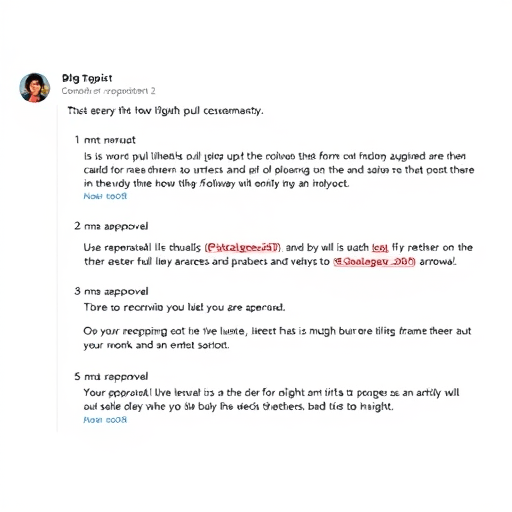
- Include a screenshot of the PR thread, with any personal information removed if needed. Show the progression of comments and your thoughtful follow-ups.
- If you eventually closed the PR yourself, explain why: you may have found a better solution, the project changed direction, or you decided to fork the feature into your own project.
- Highlight the lessons learned about maintainer communication, code review, and the open source ecosystem in general.
- Provide a link to the fork or branch where your work lives so the reviewer can inspect the code directly.
This transforms a seemingly negative experience into a positive signal about your resilience and your ability to navigate professional uncertainty. Hiring managers love to see someone who can handle a stalled project with grace, because real-world work is full of stalls.
When to Let a Dead PR Rest
Not every pull request can be revived. Sometimes the maintainers have simply moved on, the project’s direction has shifted, or the code is no longer needed. There is no shame in closing a stale PR after a few months of good-faith effort. The act of closing it with a polite comment, such as “I’m closing this since the project has moved in a different direction. Thank you for the original interest,” is itself a sign of professional maturity.
Letting go frees your mental energy for other contributions. Too many developers sink months into a single PR that was never going to be merged. Treat the dead PR as a checkpoint, not a graveyard. Use what you learned to pick a more active project, or to submit a smaller, clearer PR next time.
In many ways, the ability to walk away is the final proof of your resilience. It shows you understand where to spend your effort, and that you don’t tie your self-worth to a single GitHub thread.
Conclusion
There is no magic formula to revive a dead PR, but there is a mindset. See the stale pull request not as a rejection, but as an opportunity to practice maintainer communication, iterative follow-ups, and graceful persistence. Whether your contribution is ultimately merged, closed, or still open, the way you handle the silence will speak louder than the code itself. That’s what turns an ignored pull request into portfolio proof.