The night before a major competition is rarely peaceful. Your body feels heavy with fatigue, but your mind refuses to switch off, replaying every possible outcome, every missed cue, every worst-case scenario. For anxious athletes, this is the classic double-edged sword: you need rest more than ever, yet your brain perceives the upcoming event as a threat. The solution is not another hour of scrolling through sleep tips or another bout of deep breathing that fades in two minutes. A more effective, increasingly popular tool is pre-competition sleep hypnosis. This method uses a targeted 10-minute audio to reset racing thoughts and wake up ready, not just rested but mentally primed for the challenge ahead.
Why Racing Thoughts Feel Louder at Night
During training, distractions and physical exertion keep anxiety in check. At night, with no external stimuli, the mind turns inward. The amygdala — the brain’s threat detector — gets a clear runway to amplify perceived dangers. Cortisol levels stay elevated, which suppresses melatonin production, making actual sleep even harder. The result is a vicious loop: the more you worry about not sleeping, the less likely you are to sleep. For anxious athletes, this is not a minor inconvenience; it directly impacts reaction time, decision-making, and muscle recovery on game day.
Sleep hypnosis works by directly addressing this loop at the subconscious level. Rather than trying to force logical calm over emotional chaos, it uses guided imagery and suggestion to shift the brain’s default mode. A 10-minute audio is long enough to induce a relaxed alpha-to-theta brainwave state, but short enough to fit into a busy pre-competition routine. It is not a magic switch, but a repeatable skill that trains your mind to associate bedtime with safety, not stress.
How Sleep Hypnosis Targets the Anxious Athletic Mind
Hypnosis is often misunderstood as losing control or being asleep. In reality, it is a state of heightened focus and suggestibility. The audio voice guides you through progressive relaxation of major muscle groups, then uses metaphors and affirmations that your subconscious accepts without the usual critical filter. For athletes, this is particularly effective because their minds are already trained to follow cues and scripts from coaches. A well-written hypnosis session becomes an internal coaching dialogue.
The key lies in “post-hypnotic suggestion” — messages planted during the session that continue to influence thoughts and behavior after waking. For example, the audio might suggest that “every breath you take releases tension” or “your body knows exactly what to do tomorrow.” These suggestions counteract the anxious narrative that keeps you hypervigilant. Instead of waking with a jolt of dread, you wake with a quiet sense of preparedness. This is why a 10-minute audio before bed can have a measurable impact on pre-competition arousal regulation.
What a 10-Minute Session Actually Sounds Like
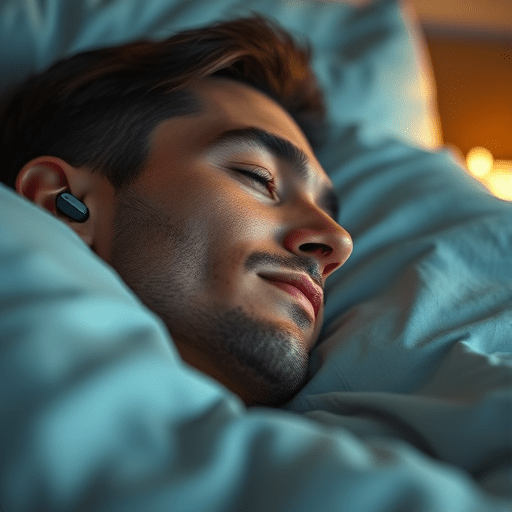
Unlike longer guided meditations that spend five minutes just on breathing, a focused 10-minute session is tightly scripted. It typically opens with a short grounding exercise — noticing the weight of your body on the mattress. Then the voice uses a countdown from ten to one, pairing each number with deeper relaxation. It introduces images specific to your sport: a swimmer visualizing the water as supportive, a basketball player seeing every shot drop cleanly. The final minutes are dedicated to anchoring suggestions for sleep and post-sleep confidence. The entire session is designed for one listen, right after lights out, with headphones optional.
Building a Pre-Sleep Reset Routine for Race Week
A single hypnosis listen on the night before a final will help, but consistent use creates a stronger effect. Consider integrating the audio into a broader pre-sleep reset routine in the three nights leading up to competition. By the second night, your brain starts to recognize the audio’s opening tones as a signal to downshift. This is classical conditioning, the same way a pre-shot routine primes a golfer’s swing. The audio becomes a reliable off-switch for racing thoughts.
One effective pattern is to listen immediately after a warm shower or a light foam-rolling session. Keep the room dim, screen-free, and at a cool temperature. Do not try to “analyze” or evaluate the hypnosis while listening; just let the voice lead. If your mind wanders, that is fine — the audio includes instructions to gently return to the voice. Over time, the 10-minute duration becomes achievable even on high-anxiety nights. Athletes who struggle with restless legs or repetitive worry often find that the structured imagery gives their body a tactile focus point.
It is also worth pairing hypnosis with a consistent wake time. Waking up at the same hour on race morning, regardless of how much sleep you actually got, helps regulate circadian rhythm and reduces the “I didn’t sleep enough” panic. The goal is not to guarantee eight hours of perfect sleep, but to ensure the hours you do get are restorative and free from obsessive mental loops. The hypnosis audio helps lower the heart rate and activate the parasympathetic nervous system, which is exactly what your body needs to enter slow-wave sleep.
Choosing or Creating an Effective Audio for Your Sport
Not all sleep hypnosis tracks are equal. Generic relaxation tapes that simply say “imagine a peaceful beach” may not resonate with a competitive athlete’s goal-oriented mind. The best pre-competition audio is one that acknowledges both recovery and performance. It should reference the importance of sleep as “active recovery” and frame the next morning as a time when your body demonstrates its training. Look for tracks that include a clear message about waking up refreshed, not just falling asleep.
For anxious athletes, the voice’s tone matters more than the background music. A calm but authoritative voice works well because it mirrors a trusted coach’s presence. Avoid tracks with heavy whale sounds or overly slow ambient music that might distract. Ideally, the audio should be around 10 minutes, no longer, because longer sessions can lead to premature wakefulness or difficulty staying focused. Some athletes prefer a version with no sound effects, only a voice with slight reverb to create depth.
If you are working with a sport psychologist, they may custom-record a session using your specific triggers and descriptors. However, a well-crafted commercial audio is often sufficient. The key is consistency and trust. When you truly accept that this short audio can reset your mental state, the effect compounds. The placebo effect is not a negative here; belief in the process enhances its efficacy, which is a well-documented principle in hypnosis research.
Wake Up Ready: The Morning After Mindset
The true test of pre-competition sleep hypnosis is not how quickly you fall asleep for the first few minutes, but how you feel when your alarm rings. Athletes who use the audio consistently report a distinctive state: less brain fog, fewer intrusive “what if” thoughts at breakfast, and a more automatic warm-up routine. This happens because the post-hypnotic suggestions installed the night before carry over into consciousness. You are not just physically rested; you are psychologically preloaded with confidence and calm.
To maximize this effect, spend the first minute after waking by replaying a key phrase from the hypnosis audio in your mind — like “ready” or “smooth and strong.” This simple act strengthens the mental bridge between sleep and performance. Avoid checking your phone for messages or stress-inducing news for at least ten minutes. Instead, hydrate, stretch lightly, and repeat a short mantra that echoes the night’s session. In this way, the 10-minute audio becomes not only a sleep tool but the first pillar of your pre-competition ritual.
A Final Word on Letting Go of Perfect Sleep
Anxious athletes often put too much pressure on their sleep itself, classifying a night as “bad” if they woke up twice. This pressure backfires. The most effective approach is to release the idea that one night of poor sleep ruins performance — research shows that the belief that you slept poorly has a larger negative effect than the actual sleep loss. Pre-competition sleep hypnosis helps break this overthinking. It gives you a structured, controlled method to step out of the anxiety spiral, without demanding perfection. In the end, the 10-minute audio is less about forcing sleep and more about giving your mind a clear break. That break is what allows your body to do what it already knows how to do: recover and perform. When you wake up, you are not just less anxious; you are more awake to the moment, ready to compete with clarity and a quiet, fierce confidence.