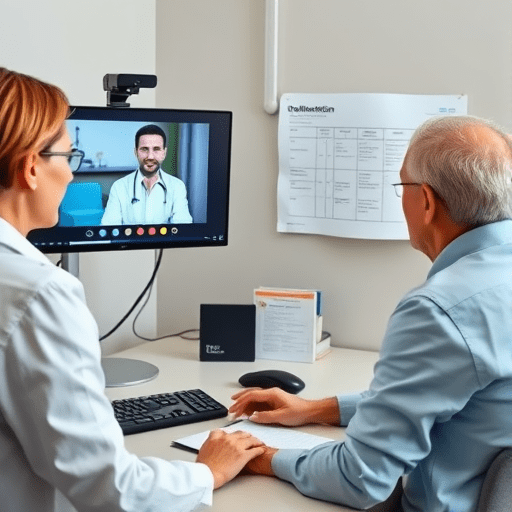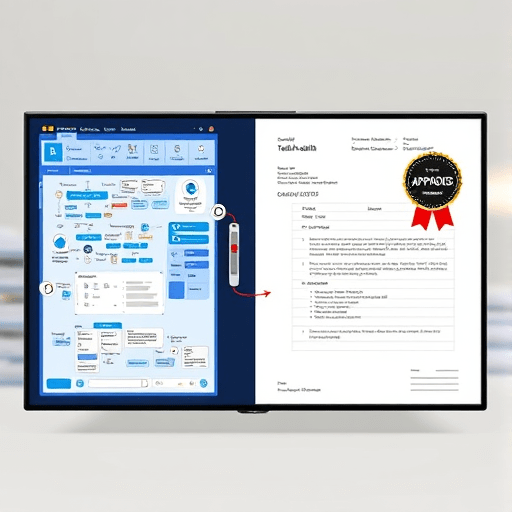
The “pilot graveyard” is an unfortunate reality in healthcare AI. Numerous models demonstrate breathtaking accuracy in controlled retrospectives, only to stumble when confronted with the messy, dynamic reality of patient care. Bridging this gap requires more than just robust software engineering; it demands a rigorous continuous validation framework for clinical AI. This framework moves beyond static benchmarks and embraces perpetual monitoring, specifically targeting the silent degradation of models caused by data drift. In this deep dive, we explore how health systems can transition from a successful pilot to a trusted, everyday clinical tool.
Why Pilot Success Rarely Translates to Real-World Safety
During a pilot, data is curated. It is cleaned, de-identified, and carefully labeled to mirror the “ideal” patient population. But the real world is not curated. A model designed to detect pneumothorax on chest X-rays might falter simply because the portable X-ray machine in the ICU produces slightly different pixel intensities than the fixed machines in radiology. This phenomenon, known as data drift, is the primary adversary of deployed AI.
Data drift manifests in three primary forms, each capable of degrading a model without a single line of code changing:
- Covariate shift: The input distribution changes. For example, new imaging hardware or different patient demographics alter the features the model receives.
- Label shift: The frequency of the target condition changes. For instance, during flu season, the prevalence of viral pneumonia increases, skewing the prior probabilities the model assumed.
- Concept drift: The definition of the condition itself evolves. Updated clinical guidelines, such as new criteria for sepsis, fundamentally change what the model is trying to predict.
Pilots rarely test for these shifts because they rely on historical, static datasets. The model is essentially taking a closed-book exam against the exact same questions it studied from. The real world is a pop quiz.
Detecting Data Drift: The Core of Post-Pilot AI Monitoring
Detecting data drift requires moving from sporadic manual audits to continuous, automated surveillance. The modern hospital data stack, leveraging interoperability standards like FHIR and DICOM, allows data science teams to compute real-time statistics on every incoming data batch. This is the heart of any data drift detection clinical settings rely on. Key techniques include:
- Population Stability Index (PSI): This metric quantifies the divergence between the feature distribution during training and the live production data. A PSI under 0.1 indicates no significant shift; 0.1 to 0.2 signals a moderate shift requiring investigation; and above 0.2 demands immediate action.
- Kolmogorov-Smirnov (KS) Tests: Used for continuous variables like lab values or vital signs, this statistical test determines if two samples come from the same distribution. It is exceptionally sensitive to subtle changes in median and variance.
- Embedding Distance Monitoring: For deep learning models using unstructured data (e.g., retinal scans or pathology slides), comparing the spatial distribution of the model’s internal embeddings against a reference set can reveal novel, unseen pathologies that cause silent failure.
- Workflow Log Auditing: A surprising number of failures stem from simple schema mismatches. Continuous validation must ensure the live input pipeline (null values, units of measurement, timestamp formats) matches the training pipeline exactly.
Building a Continuous Validation Framework for Clinical AI
Setting up continuous validation is not merely a technical task; it is an operational realignment. Based on recent ModelOps advancements and lessons from large academic medical centers, an effective framework relies on four interdependent pillars:
1. Shadow Mode Deployment
Before a model takes autonomous action, it runs in “shadow mode.” The model’s predictions are logged but ignored by clinicians. This phase is critical for comparing the live inference distribution against the training distribution without impacting patient safety. It provides the baseline for all future drift calculations.
2. Automated Ground Truth Labeling
Obtaining ground truth labels for live data is the most expensive bottleneck in continuous validation. Instead of relying solely on manual chart review, modern frameworks utilize Natural Language Processing (NLP) to read pathology reports, discharge summaries, and follow-up imaging notes to auto-generate “silver labels.” These labels—while not as perfect as a formal adjudication panel—provide near-real-time performance metrics that power the drift alarm bells.
3. Dynamic Re-Evaluation Dashboards
Clinical stakeholders need transparency. A live dashboard displaying the model’s current sensitivity, specificity, positive predictive value, and the current PSI for critical feature groups empowers trust and enables rapid human intervention. This dashboard should be accessible to the hospital’s AI governance committee, not just the data science team.
4. Structured Triggers for Human Review
The framework must define, a priori, what happens when drift is detected. If the PSI crosses 0.2, the model should automatically revert to a “suggestion mode,” stripping its outputs of any autonomous clinical decision-making authority. A machine learning engineer and a domain expert (e.g., a radiologist) are then paged to inspect the shift, retrain the model, or adjust the preprocessing pipeline.
Case Study: Rescuing a Radiology Triage Agent from Silent Failure
St. Catherine’s Health System, a three-hospital network processing over 500,000 imaging studies annually, serves as an instructive example. They developed a deep learning triage agent designed to flag potentially critical findings on head CT scans (e.g., intracranial hemorrhages) for immediate radiologist review.
The pilot was a resounding success. On the curated internal test set, the model achieved a 0.96 AUC. The validation committee, enthusiastic about the results, moved the model to production. Within two weeks, the system began flagging routine outpatient MRIs as “critical,” flooding the neurology team with false-positive alerts and risking alert fatigue.
The investigation revealed a textbook case of covariate shift. The model had been trained exclusively on images from 3T MRI machines located in the main campus radiology suite. However, the network’s emergency departments predominantly utilized 1.5T MRI scanners. While visually indistinguishable to the human eye, the pixel intensity distributions and signal-to-noise ratios from the 1.5T machines were mathematically foreign to the algorithm. The hospital had inadvertently fed the model a distribution it had never learned to handle.
To rescue the deployment, St. Catherine’s implemented the continuous validation framework. They set strict PSI thresholds on image acquisition parameters and pixel intensity histograms. They connected the system to the hospital’s imaging archive (PACS) to automatically pull “silver labels” from finalized radiology reports. Within 30 days, the model was retrained on a balanced dataset of 1.5T and 3T images. The continuous validation pipeline now continuously monitors scanner models and acquisition protocols, instantly alerting the team if the input distribution drifts again—a lesson that turned their pilot success into a sustainable practice.
The 2026 Playbook: Integrating Drift Detection with Regulatory Compliance
As regulatory bodies catch up with the rapid pace of AI, continuous validation is no longer just a best practice—it is becoming a legal imperative. In 2026, hospitals and AI vendors alike are aligning drift detection mechanisms with the FDA’s Predetermined Change Control Plans (PCCPs) for ML-enabled medical devices and the EU AI Act’s stringent post-market surveillance requirements.
Failing to monitor a model after deployment is now seen as an organizational risk, not just a technical one. Future-proofing your health system requires embedding logging capabilities that capture data provenance and model versions at a granular level from day one. The continuous validation framework you build today will become the evidence trail required by payers, regulators, and, most importantly, your patients.
Conclusion
The shift from pilot to practice is ultimately a shift in mindset. It requires accepting that an AI model is not a static product to be shipped, but a living system that needs nurturing, monitoring, and occasionally, correction. By building a continuous validation framework for clinical AI, health systems can ensure their models remain accurate, safe, and worth trusting in the chaotic, beautiful, and ever-changing landscape of patient care.