If you’ve ever tried to maintain a fixed 7 a.m. workout schedule and failed, you’re not lazy — your environment is. The idea is simple: use daily cues, not clock times, to trigger workouts. A cue can be a cup of coffee, a particular door, a notification, or even the moment you put on your shoes. Instead of forcing your body to respond to an arbitrary number on a clock, you attach exercise to something that already happens reliably in your day. This anti-routine approach works because it doesn’t demand predictability from your schedule — it works with the unpredictability.
Why Clock-Based Habits Fail When Life Is Unpredictable
Most fitness advice assumes you control your calendar. But the reality for many people is a chaotic mix of early meetings, late calls, school runs, travel, and last-minute obligations. A fixed time-based habit leaves no room for that. When you miss the 6 p.m. gym slot, the habit feels broken, and guilt takes over. The next day, you’re more likely to skip again because the mental cost of “starting over” is too high.
Clock-based routines also fail because they rely on motivation at a specific moment. You might feel great in the morning, but by the evening you’re exhausted. The clock doesn’t know how you feel; it just ticks. An anti-routine, by contrast, uses cues you already respond to every day. You don’t need to check the time or decide whether to go — you simply follow the trigger.
Think of it this way:
- A fixed time says “when” — and assumes everything else will line up.
- A daily cue says “after what” — and connects to something that already happens.
- A cue-based habit bends with your day instead of breaking when you miss one slot.
The Science of Cues: How to Anchor Exercise to Existing Moments
Your brain already runs on cues. You brush your teeth after waking up, check your phone when it buzzes, and pour coffee when the kettle boils. These are automatic sequences. You can insert a workout into an existing sequence without needing to remember a new schedule. This is sometimes called habit stacking: after this, I will do that. But the anti-routine version is looser. You’re not stacking exercise onto a specific hour; you’re stacking it onto a reliable moment in your flow.
For example:
- After you finish your first coffee, do ten minutes of mobility work.
- The moment you step through the front door, drop into a quick bodyweight circuit.
- Right after you close your laptop for the day, take a brisk walk.
- When you put on comfortable clothes, do a set of push-ups or squats.
The cue works best when it’s specific, visible, and happens daily. It doesn’t matter if the cue moves around the clock — what matters is that you notice it and use it.
Make a Cue Plan, Not a Timetable
A timetable tells you to exercise at 6 p.m. A cue plan tells you to exercise after the last call of the day. The first is rigid; the second is flexible. This is the core shift: stop asking yourself when you’ll work out and start deciding after what you’ll work out. That small reframe makes the habit far more portable. On days when the calendar flips upside down, your cue still appears — maybe later or earlier, but it appears.
Designing Your Personal Cue Stack
You don’t need a complex system to build an anti-routine. You need a short list of reliable cues and a tiny action that follows each one. Over time, those actions become automatic, and you can expand them without feeling overwhelmed.
Step 1: Identify Reliable Anchor Cues
Look at your day and find moments that almost never disappear. You always make tea. You always put on shoes to leave the house. You always close your laptop before bed. You always hear the kettle click. These are anchors. Write down three to five anchors that feel natural to you. The more often they happen, the better.
Step 2: Attach a Tiny Starting Action
The biggest mistake people make with cue-based fitness is attaching an ambitious workout to the cue. If the action feels too big, you’ll avoid the cue. Instead, attach a tiny starting action — one that takes less than two minutes. This could be one set of squats, a quick stretch, or a short walk around the room. The goal is not to get fit in two minutes; it’s to create a reliable response to the cue. Once the response becomes automatic, you can scale it up.
Step 3: Choose Movement That Matches the Cue
Match the type of movement to the energy and location of the moment. The cue “after I open my laptop” is perfect for desk stretches and posture drills. The cue “after I put away my lunch” works for a quick balance or strength move. The cue “after I step outside” is ideal for walking or jogging. When movement fits the context, it feels less forced and more like a natural part of the moment.
Examples of Anti-Routines for Real Lives
Still not sure where to start? Here are a few practical cue-based workout sequences for different kinds of unpredictable days.
For the Remote Worker with Back-to-Back Calls
- Cue: After you end a call longer than thirty minutes.
- Action: Stand, roll your shoulders, and do ten slow squats.
- Why it works: It breaks up sitting and resets your body without missing the next meeting.
For the Parent Who Never Knows When They’ll Have a Free Hour
- Cue: Right after you get the kids settled with an activity.
- Action: Do a quick circuit of push-ups, lunges, and planks for five minutes.
- Why it works: It uses a short, unpredictable window instead of waiting for a perfect block of time.
For the Frequent Traveler
- Cue: When you check into a hotel room.
- Action: Do a set of suitcase rows or hallway walks.
- Why it works: The cue is tied to travel, so you never need to find a gym or remember a different time zone.
How to Keep the Cue System Flexible Without Letting It Fade
An anti-routine is not a free-for-all. It still needs structure. But the structure is based on triggers, not timestamps. To keep the system alive, review your cues regularly. If a cue no longer happens — for example, you stopped making coffee after lunch — replace it. The system is only as strong as the triggers that support it.
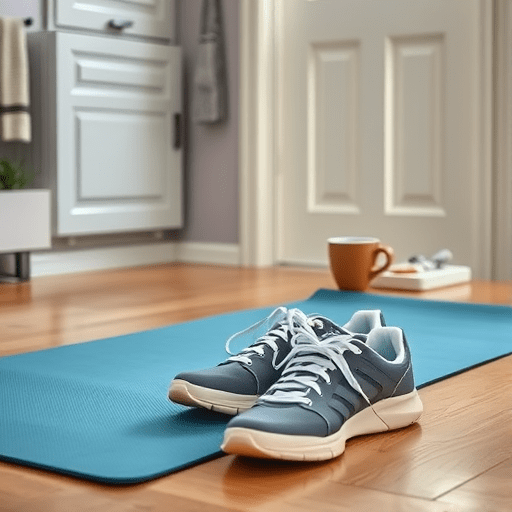
It also helps to make cues visible. Place a yoga mat next to the kettle. Put a resistance band in your bag. Set a phone reminder that says “Step 1: one set.” You want every cue to be hard to miss. This is especially important in chaotic seasons when you’re not thinking about fitness. The cue carries the decision, so your brain doesn’t have to.
Review Your Cues, Not Your Calendar
Once a week, ask yourself two questions. First: which cues actually appeared every day? Second: which cues led to a workout? If a cue appeared but you ignored it, simplify the action. Make it so small that it feels silly to skip. If a cue only happened twice, find a more frequent trigger. This review method keeps the anti-routine fresh without turning your fitness life into a rigid schedule.
The Anti-Routine Mindset
The real shift is believing that exercise doesn’t need a scheduled time slot to count. A five-minute session after a stressful call is valid. A quick stretch after you put down your grocery bags is valid. The anti-routine mindset celebrates every small movement that happens because a cue triggered it. This gives you more chances to move, not fewer, and it removes the all-or-nothing thinking that sabotages most fitness plans.
When you stop relying on the clock, you start noticing what already happens in your day. You already wake, eat, work, and pause. Attach movement to those moments, and you’ll find that the workout becomes part of your life rather than another appointment you’re late for.
An anti-routine isn’t about being chaotic. It’s about being present enough to spot the natural signals your day already gives you. Use daily cues, not clock times, to trigger workouts, and you’ll build a fitness habit that bends with your life — no schedule required.