In 2026, the most resilient API strategies are no longer built around a single, monolithic GraphQL endpoint. Instead, engineering organizations are turning to federated GraphQL schemas: a modular API-first blueprint that decouples services while preserving a unified graph for clients. This approach shifts the focus from schema stitching tricks to a deliberate ownership model—where each team owns the fields that correspond to its domain, and the supergraph simply becomes the connective tissue between them.
For many developers, the promise of GraphQL was always about giving clients the power to request exactly what they need. But as organizations grew, centralized schemas became battlegrounds. Teams fought over naming conventions, type extensions, and the accidental coupling of unrelated features. Federated GraphQL solves this not by asking teams to agree on a single schema, but by letting them own independent schemas that participate in a larger graph. The result is an API-first blueprint that scales with your company structure, not against it.
Why Monolithic GraphQL Schemas Break Under Organizational Scale
A single GraphQL schema starts beautifully. It is simple, fast to iterate, and perfect for a small product team. But once multiple squads begin adding types and resolvers to the same server, the limitations become visceral:
- Pull request conflicts are constant because everyone touches the same
schema.graphqlfile. - Deployments become risky because a change in one domain might break a query used by an unrelated team.
- Domain boundaries blur, and types like
Productend up containing fields from marketing, inventory, and pricing—each maintained by different teams with different release cadences.
This is the classic “shared database” problem applied to the API layer. The monolith may still be running, but the organizational friction around it is a clear signal that your architecture needs a boundary. Federated GraphQL provides that boundary by turning every service into a subgraph with explicit responsibilities.
The Core Principle: Field Ownership over Schema Fragmentation
Federation is often misunderstood as a way to spread your schema across multiple files. That is only a superficial description. The real value lies in field ownership—the idea that each field in your graph can be traced to exactly one team and one service. The federation specification calls this “the single responsibility principle” for GraphQL fields.
In practice, field ownership means your inventory service owns Product.availability, your pricing service owns Product.price, and your recommendations service owns Product.related. None of these services need to know how the others handle their fields because they communicate through a shared supergraph router. This is a radical departure from the traditional model where a central team mediates every schema change.
Field ownership also changes the conversation about schema design. Instead of asking “What should this GraphQL type look like?” you ask “Who should be allowed to change this field?” That question forces domains to remain independent and makes the API-first blueprint much easier to govern.
Building a Supergraph That Reflects Your Engineering Org
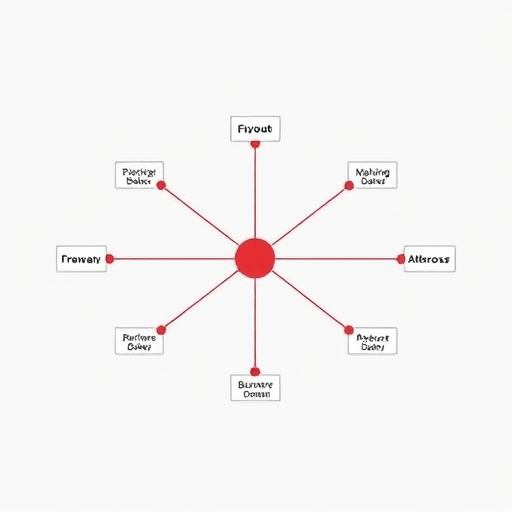
One of the most profound insights of federated GraphQL is that your graph architecture should mirror your organizational architecture. This is the “inverse Conway maneuver” applied to realtime data access. If you organize your engineering teams around domains—billing, users, catalog, fulfillment—then your supergraph should reflect those same domains as subgraphs.
Each subgraph exposes a partial schema and uses the @key directive to declare how entities can be resolved across services. For example:
- The identity subgraph defines
Userand owns fields likeemailandprofile. - The orders subgraph extends
Userwithorders, using the user’s ID to fetch order history. - The reviews subgraph extends
ProductwithreviewScore, even though it doesn’t own the product entity.
This is not just technically elegant; it is organizationally pragmatic. Teams can deploy their subgraphs independently, choose their own internal architecture, and even use different programming languages. The supergraph router handles the complex work of planning queries across subgraphs and resolving references, so clients still see one coherent API.
Schema Governance Without the Bottleneck
A common fear about federation is that it will lead to a chaotic, inconsistent graph. “If every team owns its fields, who ensures quality?” The answer is a well-defined governance layer that sits between the subgraphs and the router. This is not a return to centralized schema review; it is a set of automated checks and conventions.
Modern federation tools allow you to compose a supergraph from multiple subgraph schemas, and that composition step is the perfect place to enforce rules. Use build-time validation to catch:
- Duplicate field definitions, where two services try to claim the same field.
- Missing
@keydeclarations that break entity resolution. - Breaking changes that would affect existing client queries.
The goal is to make the supergraph safe by default. Instead of a weekly committee meeting to review schema changes, you can have an automated CI pipeline that checks schemas against governance policies. When a team pushes a new subgraph version, the system either composes cleanly or rejects the change with a clear explanation.
This kind of governance is perfect for API-first organizations because it keeps the contract explicit. The supergraph schema itself becomes the single source of truth—not a wiki, not a markdown document, but an executable artifact that every client can introspect.
Tooling and the Evolving Federated Ecosystem in 2026
The federated GraphQL ecosystem has matured significantly. The era of hand-rolling query planning is over; routers now handle performance and observability natively. In 2026, we see a few trends that are shaping how teams adopt federated schemas:
- Declarative composition: Tools like Rover and the latest Apollo Federation 3.0 release make it easier to define subgraph boundaries and versioning policies directly in code.
- GraphQL over HTTP/2 and WebSocket: Real-time subscriptions and streaming responses are now bundled into the supergraph router, so teams no longer need separate event infrastructure for live updates.
- Schema governance as code: The composition check is no longer just a compile step. It can be integrated into your deployment pipeline, your service mesh, and even your data contract testing.
These advances do not change the fundamental blueprint. Field ownership remains the cornerstone. But they do remove the operational overhead that once made federation feel like an enterprise-grade luxury.
A Practical Blueprint for Adopting Federated GraphQL
If you are ready to move beyond a monolithic GraphQL API, start small. Here is a step-by-step approach that fits the modular API-first blueprint:
- Identify your domain boundaries. Map your existing schema to your teams. Look for fields that change at different rhythms and place them in separate subgraphs.
- Extract one subgraph at a time. Do not try to federate everything at once. Start with a well-defined domain, like
UserorBilling, and wire it into a router. - Establish composition checks. Set up a CI step that composes the supergraph and verifies that existing client queries still work.
- Define field ownership rules. Write a short document or plugin that asserts “each field has exactly one owner.” This prevents accidental overlaps.
- Iterate. Let teams move their fields into their own subgraphs as they gain confidence. The router remains stable during the migration.
There is an important human side to this blueprint as well. Federation works best when teams trust each other. That trust is built through automatic guardrails, not through excessive process. The more you can bake safety into the toolchain, the less you need to rely on cross-team meetings to keep the graph healthy.
One helpful practice is to treat the supergraph schema as a living product. This means you should invest in tooling that lets you visualize the graph, inspect field ownership, and even simulate schema changes before they reach production. A small schema governance team can curate the supergraph, but every team feels a sense of ownership over their part of it.
Conclusion
Federated GraphQL schemas are more than a technical pattern—they are a modular API-first blueprint for aligning technology with organizational dynamics. By decoupling services through field ownership and a unified supergraph, teams can scale their schema operations without creating a new bottleneck. The federation model turns the API layer into a distributed system that is both flexible and resilient, enabling independent deployments while maintaining a coherent client experience. In a world where API boundaries increasingly define business capabilities, that might be the most valuable architectural decision your organization can make.