Mutation testing is quietly becoming one of the most practical ways to evaluate whether your test suite is actually doing its job. In 2026, with software delivery accelerating and test suites growing ever larger, the need to find gaps in unit and integration suites has never been more urgent. By injecting faults to detect weak assertions, mutation testing gives teams a direct line of sight into the quality of their test code, far beyond what coverage percentages alone can offer. This article explores the current state of mutation testing, how to apply it to modern integration suites, and why weak assertion detection matters more than ever.
Why Traditional Coverage Metrics Miss Weak Assertions
Coverage metrics—line coverage, branch coverage, function coverage—have long been the default proxy for test suite quality. But they all share a fatal blind spot: they tell you which code was executed, not whether the outcomes were verified. A test can call a function, execute every line, and then assert almost nothing. If that test passes with a trivial or tautological assertion, coverage reports still celebrate the result.
Weak assertions are exactly what mutation testing was designed to catch. Instead of asking “how much code did we run?”, it asks “what would happen if this code were wrong?” By inserting small faults, or mutations, into the production code, mutation testing forces your assertions to prove they can distinguish between correct and incorrect behavior. If a mutant survives—meaning the tests still pass—you’ve found a weakness in your assertions. In 2026, this distinction is not just academic; it is a practical tool for engineering teams that want to ship with confidence.
The Evolution of Mutation Testing Tools in 2026
For years, mutation testing was considered too slow and expensive for everyday use. The computational cost of generating and running thousands of mutants could turn a two-minute test suite into a two-hour marathon. But the tooling landscape has evolved dramatically. Modern frameworks like Stryker, PIT, and Mutation Testing for Go or Rust now use smarter mutant generation, caching, and incremental analysis to cut execution time drastically.
What is new in 2026 is the integration of machine learning into mutant selection. Instead of blindly mutating every arithmetic operator or conditional boundary, AI-assisted tools analyze your code patterns and test behavior to prioritize the mutants most likely to expose real-world defects. This makes mutation testing less of a brute-force exercise and more of a targeted fault injection strategy. Teams running these tools in their CI/CD pipelines now receive faster, more actionable feedback—often in minutes, not hours.
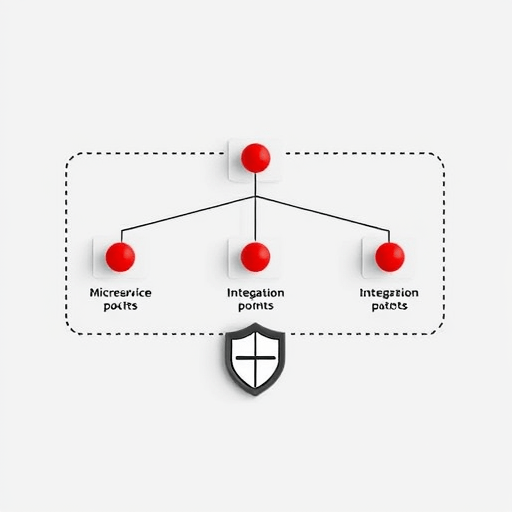
Another shift is the support for integration-level mutation testing. Historically, mutation testing lived in the unit-testing world. But as modern systems become more distributed, the gaps between components are where serious bugs hide. Tools have caught up, allowing you to inject faults at API boundaries, message queues, database calls, and even orchestration layers.
Designing Effective Mutations for Integration Suites
Integration tests verify that multiple units work together correctly. But they often suffer from the same weak-assertion problem as unit tests—perhaps even more so. Many integration tests focus on status codes or final database states while ignoring intermediate messages, timing behaviors, or partial side effects. Mutation testing at the integration level forces you to think about what assumptions those tests encode.
To get the most out of integration mutation testing, start by identifying the critical connectors in your system. These could be HTTP handlers, service-to-service boundaries, or even transaction scripts. For each connector, create mutations that reflect plausible faults: changing the order of operations, delaying a response, dropping a field, or altering a return value. The goal is not to simulate every possible bug but to probe the assertions that your integration tests make about these contracts.
One useful technique is to mutate a production dependency, such as an API client or a configuration loader, and watch how your integration suite reacts. If a mutated dependency still lets all tests pass, your suite is probably asserting only the happy path. Strong integration tests should fail when the contract changes in a meaningful way. In 2026, mutation testing is the most systematic way to verify that your integration suite enforces those contracts.
Detecting Weak Assertions: What to Look For
When you run a mutation testing session, the output is straightforward: killed mutants and surviving mutants. A killed mutant means at least one test failed because of the injected fault. A surviving mutant means your tests could not detect the change—the mutant was effectively invisible to your suite. Those survivors are your weak assertion alarms.
But not all survivors are equally important. Some may be the result of equivalent mutants—changes that do not alter observable behavior, like swapping i++ for i += 1. In 2026, many tools have better heuristics for identifying and suppressing equivalent mutants, but manual review is still required. Focus your energy on survivors that represent real logic changes: a missing else clause, an off-by-one boundary, a changed comparison operator, or a null check that was removed.
Once you have a list of surviving mutants, trace back to the tests that were supposed to cover that code. Ask yourself: Did the test assert the correct value? Did it check the side effect? Did it verify error handling? Often, the answer is no. This exercise transforms mutation testing from a mere quality score into a clear roadmap for improving your assertions.
Integrating Mutation Testing into CI/CD Pipelines in 2026
The best way to benefit from mutation testing is to make it part of your automated workflow. However, running a full mutation suite on every commit is still unnecessary and costly. In 2026, teams are adopting incremental mutation testing—running mutants only for code that has changed along with any dependent components. This approach gives you fast feedback while keeping the full mutation run for nightly or release-triggered jobs.
Your CI/CD configuration should treat mutation thresholds as quality gates. But be careful not to set arbitrary survival rates without context. Instead, define a policy: new or modified code must have a mutation score above a certain percentage, while legacy code is allowed to improve gradually. This prevents the pipeline from blocking critical fixes while still pushing the suite in the right direction.
Another best practice is to create a mutation testing report that is readable by humans. The report should highlight the most dangerous survivors first, group them by module or service, and link to the specific test cases that missed them. In 2026, well-designed dashboards make it easy for developers to see the difference between “all lines covered” and “all behavior verified.”
Finally, remember that mutation testing is a complement, not a replacement, for other quality practices. Pair it with property-based testing, fault injection, and contract testing to build a layered defense against weak assertions.
Common Pitfalls and How to Avoid Them
Even with modern tools, mutation testing has traps. The first is equivalent mutants, which we already mentioned. To avoid wasting time on them, use tools that let you mark or ignore equivalent mutants explicitly. Some platforms also use code similarity analysis to filter the most obvious equivalents automatically.
The second pitfall is flaky tests in your suite. Mutation testing assumes that a test result is deterministic. If your tests pass randomly due to timeouts, network races, or reliance on external systems, you will get a confusing mix of killed and surviving mutants. Stabilize your test environment before running mutation testing, or the results will be meaningless.
A third issue is mutant explosion. In a large codebase, the number of possible mutants can be enormous. Mitigate this by applying mutation testing to targeted modules first, especially those with high business impact or a history of regressions. You can also use statically derived mutant schemas to generate fewer, more representative mutants.
Finally, do not interpret a high mutation score as proof of correctness. Mutation testing validates that your tests can detect a finite set of injected faults. It does not prove that your system meets all requirements. Use it as an indicator of test quality, not as a substitute for code review, manual testing, or monitoring.
Conclusion
Mutation testing in 2026 is no longer an experimental technique reserved for researchers. It is a practical, increasingly automated way to find gaps in unit and integration suites, inject faults to detect weak assertions, and ultimately deliver more robust software. By running mutation testing in your CI/CD pipeline, focusing on integration-level faults, and acting on surviving mutants, you can catch the exact places where your tests are not as strong as they appear. The result is a test suite that earns its keep—not because it reports high coverage, but because it proves the behavior actually works.