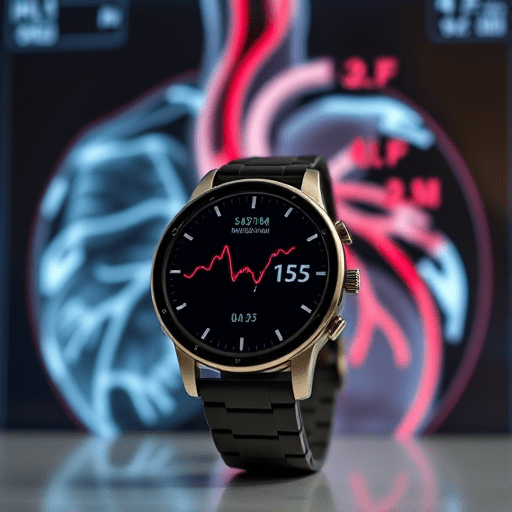
In 2026, the proliferation of wearable ECG monitors has turned continuous cardiac monitoring into a routine part of primary care and remote triage. Yet, for clinicians to rely on these devices in decision‑making, they must first confirm that the signals are clinically accurate and that patient data remain secure throughout collection, transmission, and storage. This article presents a detailed, step‑by‑step checklist—designed for clinicians—that balances technical validation, regulatory compliance, and privacy safeguards, ensuring that wearable ECG technology truly meets the standards of modern clinical practice.
1. Why Validation Matters in 2026
1.1 Clinical Accuracy Is Non‑Negotiable
Unlike the early days of portable ECGs, today’s wearables must detect subtle arrhythmias, measure heart‑rate variability, and deliver rhythm‑analysis algorithms with precision comparable to a 12‑lead ECG. Inaccurate readings can lead to missed diagnoses or unnecessary interventions. Therefore, a rigorous validation protocol is the first line of defense against clinical risk.
1.2 Regulatory Landscape Evolves Fast
The Food and Drug Administration (FDA) and European Medicines Agency (EMA) now require real‑world performance data for Class II and III devices. Devices classified as “high‑risk” must undergo pre‑market clinical trials and post‑market surveillance. Clinicians need to verify that the manufacturer’s submission aligns with the latest guidance, particularly the 2025 FDA “Continuous Monitoring” framework.
1.3 Building Patient Trust Through Transparency
Patients increasingly expect their data to be protected and used responsibly. A validated device coupled with robust privacy protocols fosters confidence, improving adherence to monitoring regimens and ultimately enhancing outcomes.
2. Technical Validation Checklist
2.1 Signal Fidelity and Noise Rejection
- Test signal‑to‑noise ratio (SNR) at multiple body positions and during movement.
- Validate motion‑artifact suppression algorithms against benchmark datasets.
- Confirm that the device’s impedance matching remains stable over a 30‑day period.
2.2 Algorithm Accuracy and Clinical Endpoints
- Verify arrhythmia detection sensitivity and specificity against a gold‑standard 12‑lead ECG reference.
- Benchmark heart‑rate variability metrics against established clinical software.
- Assess algorithm performance across diverse patient demographics (age, skin tone, comorbidities).
2.3 Calibration and Consistency
- Conduct serial calibration tests during device manufacturing and after each firmware update.
- Measure inter‑device variability across a batch of 10 units; acceptable variance should be <5%.
- Confirm that automatic calibration routines respond correctly to known reference signals.
2.4 Sampling Rate, Battery Life, and Interference
- Verify that the device samples at ≥250 Hz, sufficient for high‑resolution ECG.
- Ensure battery life supports at least 72 hours of continuous wear at standard usage.
- Test for electromagnetic interference (EMI) compliance with IEEE 1497 and FCC Part 15.
3. Clinical Validation Phases
3.1 Preclinical Bench Testing
Use phantom models and in‑silico simulations to establish baseline performance. Document all test conditions and outcomes in a validation report.
3.2 Pilot Clinical Trial
Enroll a cohort of 50–100 patients representing the target population. Compare wearable ECG outputs against simultaneous 12‑lead recordings. Record false‑positive and false‑negative rates for each diagnostic category.
3.3 Prospective Cohort Study
Expand to 200–300 patients over 12 months to capture longitudinal performance, device wear‑and‑tear, and real‑world adherence.
3.4 Post‑Market Surveillance
Implement a feedback loop that collects performance data from every deployed unit. Use the device’s telemetry to flag anomalous readings for clinician review.
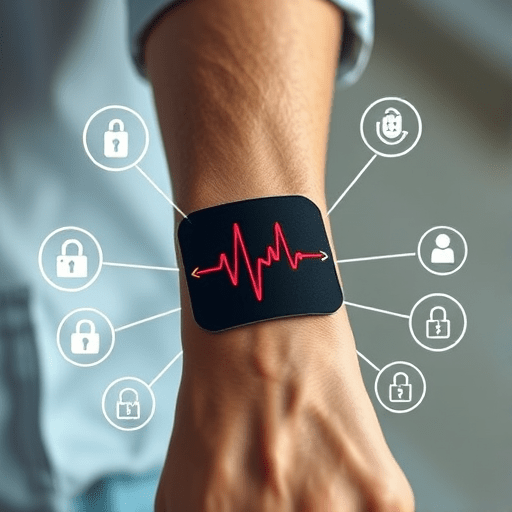
4. Data Privacy & Security Checklist
4.1 Encryption Standards
- All data must be encrypted in transit using TLS 1.3 or higher.
- On‑device storage should employ AES‑256 encryption with a unique device‑level key.
4.2 Secure Transmission and Storage
- Use secure APIs compliant with HIPAA/HITECH for uploading data to cloud servers.
- Ensure that servers reside in a Health Insurance Portability and Accountability Act (HIPAA)‑certified data center.
4.3 Consent Management and Audit Trails
- Collect explicit patient consent through a digital waiver that logs the time, device ID, and user credentials.
- Maintain immutable audit logs for all access events, accessible to clinicians and auditors.
4.4 Data Anonymization and De‑identification
- Strip or hash PHI before transmission to third‑party analytics platforms.
- Apply differential privacy techniques for aggregate reporting.
4.5 Access Controls and Role‑Based Permissions
- Limit data access to clinicians with a verified role and two‑factor authentication.
- Implement least‑privilege policies for staff interacting with the device’s management console.
4.6 Incident Response and Breach Notification
- Establish a 24/7 incident response team with predefined escalation paths.
- Document breach protocols in line with the 2025 GDPR‑ESR updates and local regulations.
5. Integration with EHR and Clinical Workflow
5.1 Interoperability Standards
Leverage HL7 v2.x or FHIR R4 for seamless data exchange. Ensure the device’s data bundle includes the Observation and DeviceMetric resources with proper coding (LOINC for ECG, SNOMED CT for arrhythmia types).
5.2 Data Formatting and Quality Flags
- Embed a quality‑score field (0–100) based on SNR and artifact detection.
- Attach diagnostic confidence levels for arrhythmia alerts (high, medium, low).
5.3 Clinician Review and Alert Management
Integrate device alerts into the clinician’s dashboard, allowing triage based on urgency. Incorporate “override” functionality with audit logging.
6. Ongoing Monitoring & Quality Assurance
6.1 Performance Audits
Schedule quarterly audits comparing device outputs to baseline benchmarks. Use automated tools to detect drift in signal quality.
6.2 Firmware Updates and Rollback Procedures
Validate every firmware update in a sandbox environment before rollout. Maintain rollback capabilities to the last stable version.
6.3 User Training and Competency Tracking
Provide comprehensive training modules for clinicians and patients. Track completion through a learning management system (LMS).
6.4 Patient Feedback Loop
Collect patient-reported outcomes (PROs) via the device app. Correlate PROs with objective data to refine usability and algorithm thresholds.
Conclusion
By systematically applying this validation and privacy checklist, clinicians can confidently incorporate wearable ECG monitors into their practice. The dual focus on technical accuracy and data security not only satisfies regulatory mandates but also safeguards patient trust—a cornerstone of modern healthcare delivery. With ongoing monitoring and a culture of continuous improvement, wearable ECG technology can evolve from a promising adjunct to a reliable, integral component of cardiovascular care.