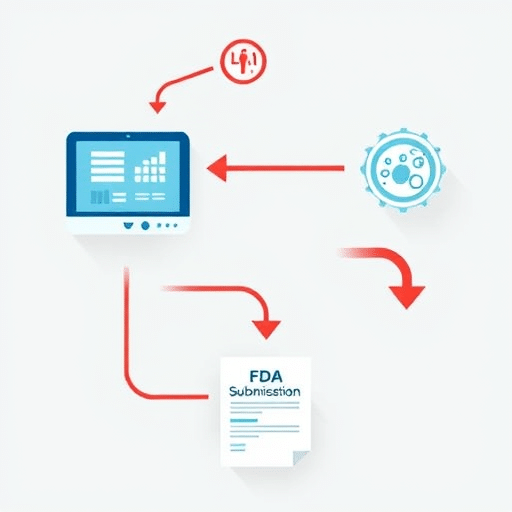
Remote patient monitoring (RPM) has become a lifeline for rural clinics where access to specialist care is limited. Using FHIR Resources to Standardize Remote Monitoring in Rural Clinics allows clinicians to capture, transmit, and interpret vital data in a consistent, interoperable format, even with modest technology budgets. By aligning patient device outputs with the HL7 FHIR (Fast Healthcare Interoperability Resources) model, rural providers can reduce data silos, streamline charting, and improve clinical decision‑making across the care continuum.
Why FHIR Matters for Rural Remote Monitoring
In 2026, the proliferation of affordable wearable sensors and low‑bandwidth IoT gateways has made RPM feasible everywhere. Yet the challenge remains: disparate devices produce proprietary formats that clinicians must translate manually. FHIR offers a common data language that translates device readings into Observation, Device, and Patient resources. This standardization removes the need for custom parsing scripts, lowers maintenance costs, and guarantees that future systems—whether regional health networks or national registries—can ingest the data without re‑engineering.
Key FHIR Resources for RPM in Rural Settings
- Patient – holds demographics and identifiers that enable patient‑centric reporting.
- Device – captures device make, model, serial number, and firmware details.
- Observation – records vitals such as blood pressure, heart rate, or glucose levels.
- DeviceUseStatement – links a specific device to a patient encounter or monitoring session.
- Immunization – useful for tracking vaccine boosters during RPM visits.
- MedicationStatement – logs medication adherence captured via smart pill bottles.
Mapping these resources accurately requires a clear understanding of their JSON structure and the required fields. The following sections walk through each step of the mapping process.
Step 1: Inventory Your Devices and Data Streams
Begin by cataloguing every device that feeds into your RPM workflow: pulse oximeters, BP cuffs, glucometers, and environmental sensors. For each device, note the following:
- Manufacturer and model
- Data transmission protocol (Bluetooth LE, LoRaWAN, Wi‑Fi)
- Sample rate and units of measurement
- Encryption and authentication methods
- Device software version
Documenting these details will inform the Device resource mapping and help you anticipate future upgrades.
Step 2: Build a FHIR Mapping Blueprint
Create a spreadsheet that pairs each raw data field with its corresponding FHIR element. For example, a pulse oximeter reading might produce:
- timestamp →
Observation.effectiveDateTime - SpO2 value →
Observation.valueQuantity(system:http://unitsofmeasure.org, code:[%]) - Heart rate →
Observation.component(code:http://loinc.org#8867-4) - Device serial →
Device.identifier
Keep a note of any valueSet or codeSystem references that will be required for later validation.
Step 3: Leverage FHIR Bundles for Efficient Transmission
Bundling multiple Observations into a single Bundle reduces network overhead—critical when rural clinics rely on 3G or satellite links. A typical bundle looks like this:
{
  "resourceType": "Bundle",
  "type": "transaction",
  "entry": [
    { "resource": { /* Patient JSON */ }, "request": { "method": "PUT", "url": "Patient/12345" } },
    { "resource": { /* Device JSON */ }, "request": { "method": "PUT", "url": "Device/ABCDE" } },
    { "resource": { /* Observation JSON */ }, "request": { "method": "POST", "url": "Observation" } }
  ]
}
Using a transaction bundle ensures atomicity: either all resources are written successfully, or none are, preserving data consistency.
Step 4: Validate with the FHIR Validation API
Many low‑resource clinics have limited development bandwidth. Use the public https://fhir.smarthealthit.org/4.0/StructureDefinition/ validation endpoint to check your JSON before sending it to the server. Automated scripts that hit the validation endpoint for each resource can catch missing mandatory fields or wrong coding schemes before data enters the EHR.
Step 5: Integrate with the Clinic’s EHR via a FHIR Client
Most modern EHRs expose a FHIR API. If your local EHR is legacy, consider a lightweight middleware (e.g., HAPI FHIR Server or a custom Node.js wrapper) that translates incoming bundles into the system’s native format. In rural settings, an edge device can run this middleware, buffering data during network outages and retrying when connectivity returns.
Addressing Common Low‑Resource Challenges
Limited Bandwidth and Intermittent Connectivity
Use compressed bundles (e.g., JSON with GZIP) and delta updates (only send changes since last sync). Incorporate local caching so devices store data until a connection is available, then push the entire bundle in one go.
Power Constraints in Rural Clinics
Many RPM devices run on battery or solar power. Design your integration to batch data and use low‑power transmission protocols like LoRaWAN or NB‑IoT. Keep the payload size below 1 kB to reduce airtime and cost.
Data Security and Privacy Compliance
Encrypt all data in transit with TLS 1.3 and at rest using AES‑256. Use OAuth 2.0 with scopes tailored to RPM (e.g., r_patient /w_observation) to limit access. In 2026, many rural providers will need to meet both HIPAA and local data sovereignty regulations; FHIR’s AuditEvent resource can help log every access for compliance reporting.
Case Study: A Rural Clinic in the Midwest
Springfield Rural Health partnered with a local university to pilot FHIR‑based RPM. They connected 15 home‑based patients to a central dashboard that aggregated Observations via a daily batch bundle. Within three months, readmission rates for heart failure dropped by 18%. The key to success was the adoption of a DeviceUseStatement to tie each observation to the correct patient and the use of Immunization records to flag overdue flu shots automatically.
Key Takeaways from the Case Study
- Centralizing data via FHIR bundles saves bandwidth and simplifies validation.
- Automatic linkages between device data and patient identifiers reduce charting errors.
- Embedding alerts for vaccination schedules demonstrates how RPM can extend beyond vitals monitoring.
Future Directions: AI, Predictive Analytics, and Interoperability
With FHIR as the backbone, rural clinics can now layer AI algorithms that predict exacerbations before they occur. By exposing Observations through a FHIR Observation endpoint, machine learning models can ingest real‑time data, generating risk scores that feed back into the clinic’s dashboard. Moreover, as 5G expands into rural regions, bandwidth constraints will ease, allowing near‑real‑time streaming of high‑resolution data streams (e.g., continuous ECG) directly into the EHR.
Conclusion
Implementing a FHIR‑based remote monitoring workflow in a low‑resource rural clinic is not just feasible—it is essential for delivering timely, high‑quality care. By systematically mapping device outputs to core FHIR resources, bundling data for efficient transmission, and validating against established standards, clinics can overcome connectivity and infrastructure hurdles while ensuring interoperability. The result is a scalable, secure, and future‑proof monitoring system that empowers clinicians to intervene earlier and improve patient outcomes.