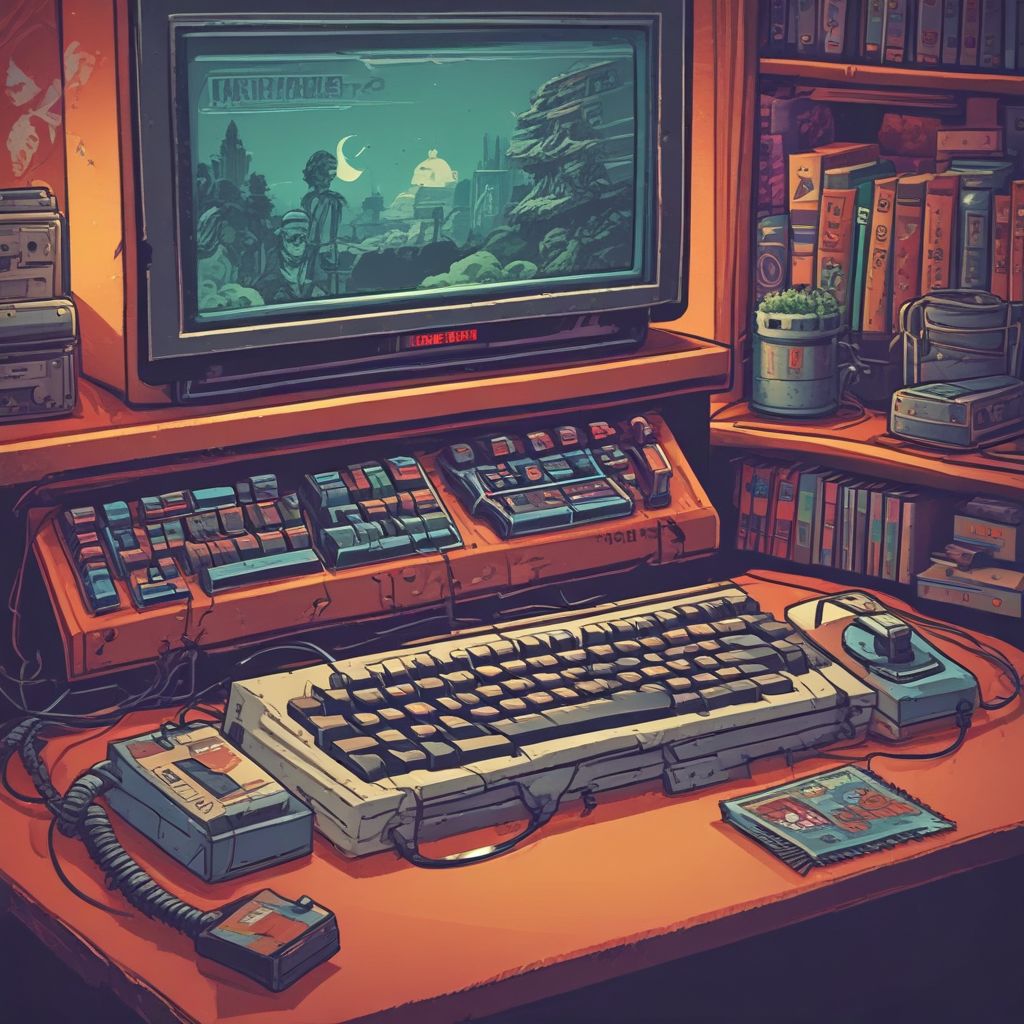
The rise of retro cartridge multiplayer hacks — a grassroots movement where modders turn single-player cartridges into secret multiplayer classics — reads like a technical fairy tale: soldering irons, logic analyzers, patching ROMs, and communities swapping ideas to resurrect couch co-op on hardware that never intended it. This investigation explores the techniques, tools, and communities behind those late-night experiments, and explains how a mix of hardware ingenuity and software creativity gave players new ways to share the same pixel-perfect memories.
Why single-player cartridges became multiplayer laboratories
Early consoles and handhelds were constrained by cost, silicon, and business decisions: many cartridges shipped without multiplayer support to save on chips, memory mappers, or licensing complications. Decades later, those constraints became a challenge and an invitation. For hobbyists the lack of official multiplayer wasn’t a dead end — it was a puzzle: could a single cartridge, designed for one player, be coaxed into driving multiple controllers or multiple consoles?
The motivations
- Preservation and experimentation: proving what the original hardware could have done.
- Community fun: creating new shared experiences from beloved classics.
- Education and craft: learning electronics, reverse engineering, and low-level programming.
Core techniques used by modders
At the heart of every successful cartridge multiplayer hack are three converging skills: reverse engineering, hardware adaptation, and code modification. Here are the main technical approaches modders use to convert single-player ROMs and cartridges into multiplayer experiences.
1. Bus hijacking and cartridge-level hardware mods
Cartridge PCBs talk to the console over address, data, and control lines. Some modders tap into those signals to inject or duplicate input streams. Techniques include:
- Wiring extra controller inputs to the console’s controller port while using the cartridge as the game ROM source.
- Adding small logic boards (CPLD/FPGA or microcontrollers) inside the cartridge to emulate a different mapper or to multiplex controller data.
- Piggyback adapters that sit between cartridge and console to intercept bus activity without permanently altering the PCB.
2. Homebrew adapters and FPGA bridges
FPGA-based adapters have become a favorite because they can precisely emulate hardware behaviors. By recreating mapper logic and timing, an FPGA bridge can:
- Provide extra controller ports or translate inputs for simultaneous play.
- Run a modified ROM image from an SD-backed cartridge while preserving original timing.
- Act as a “shim” that allows two consoles to share state via serial links, enabling competitive or cooperative play across systems.
3. ROM hacking and state-sharing
Software-side work is often simpler to start with: patching code to read multiple input sources, or to accept networked state from an adapter. Common methods:
- Binary patching to duplicate player sprites and input routines.
- Inserting cooperative AI or simple split-screen logic where memory constraints allow.
- Syncing save-RAM or ephemeral state between cartridges using physical link cables or custom radio/serial adapters for near-real-time multiplayer.
Notable examples and success stories
Across systems, a few standout projects illustrate the range of what the community has pulled off:
Handheld link reinvention
Game Boy and similar handhelds originally supported cable linking; modders took that further with splitters, hub adapters, and re-purposed serial lines to let more players share a single game cartridge or to create multi-console cooperative modes for titles that lacked native link support.
Console cartridge adapters
For home consoles, modders created cartridge passthroughs and internal daughterboards that either added extra controller inputs or converted single-player logic into multiplayer-friendly modes, especially for puzzle and arcade-style titles where duplicated sprites and input polling are viable.
Community-driven ROM patches
Beyond hardware, collaborative ROM hacks turned single-player campaigns into shared experiences by altering input routines, reallocating memory, and careful timing optimizations so the original look-and-feel remained intact while adding a second or third player.
The communities making it happen
These efforts are rarely solo missions. A distributed ecosystem of forums, Discord servers, mailing lists, and annual meetups (retrofests and maker fairs) sustain the work. Key community practices include:
- Open documentation: posting logic analyzer captures, schematics, and annotated PCB photos so others can reproduce the work.
- Firmware and patch sharing: releasing adapter firmware and ROM patches with clear instructions and warnings.
- Mentorship and collaboration: newcomers are paired with veterans for soldering, debugging, and ethical questions about reverse engineering.
Where knowledge flows
Sites like retro forums, GitHub repositories, and Discord channels serve as living knowledge bases. Contributors publish how-to articles, create printable PCB layouts, and stage livestreams that demystify tools like logic analyzers, oscilloscopes, and FPGA toolchains.
Legal, ethical, and preservation considerations
Modding and ROM patching live in a gray area. Respect for intellectual property matters: many communities insist on distributing only patch files or homebrew code, not copyrighted ROM images. Preservation advocates argue the work keeps hardware and gameplay alive for future generations, but practitioners emphasize responsible sharing and clear disclaimers.
Getting started: a practical roadmap
For curious tinkerers who want to try turning an old cartridge into a multiplayer experience, a pragmatic path looks like this:
- Learn the basics: soldering, logic levels (TTL/CMOS), and controller protocols for your target console.
- Study similar projects: collect schematics, bus traces, and community write-ups.
- Start small: modify an inexpensive cartridge or work with a donor board; prototype with a microcontroller before moving to FPGA.
- Document and share: publish captures and notes so others can reproduce and improve on your design.
Why this matters
Beyond the thrill of technical problem-solving, these projects reconnect modern players with the social habits of earlier gaming eras — putting people side by side on a couch, sharing a single cartridge, and creating unexpected shared stories. The work blurs lines between preservation, art, and engineering: a soldered wire is, in its way, an act of curation.
Conclusion: the movement that turned single-player cartridges into secret multiplayer classics shows that hardware limitations are often invitations to invent; through collective knowledge, careful engineering, and a love for couch co-op, modders have reimagined what retro systems can offer today.
Ready to dive in? Join a local retro community or online forum, grab a donor cartridge, and solder the first trace — the next secret multiplayer classic could be yours.