The Digital Storage Crisis
Humanity generates over 180 zettabytes of data annually. Traditional storage solutions—hard drives, tapes, and even cloud systems—face mounting challenges. Magnetic media degrade, optical disks fade, and solid-state drives require constant power. These methods also consume vast energy resources and real estate, making long-term preservation of critical information increasingly unsustainable.
Why DNA? The Natural Solution
DNA, the molecule that encodes life itself, offers a revolutionary alternative. A single gram of dried DNA can store approximately 215 petabytes of data—enough to hold the entire internet thousands of times over. Unlike silicon-based storage, DNA is inherently durable, resistant to electromagnetic interference, and stable for millennia under proper conditions.
Key Advantages of DNA Storage
- Extreme Density: Theoretical capacity exceeds 1022 bits per gram.
- Longevity: Properly preserved DNA remains intact for hundreds of thousands of years.
- Energy Efficiency: Passive storage requires no ongoing power or cooling.
- Error Resistance: Built-in redundancy through genetic coding mechanisms.
Building Synthetic DNA Data Lakes
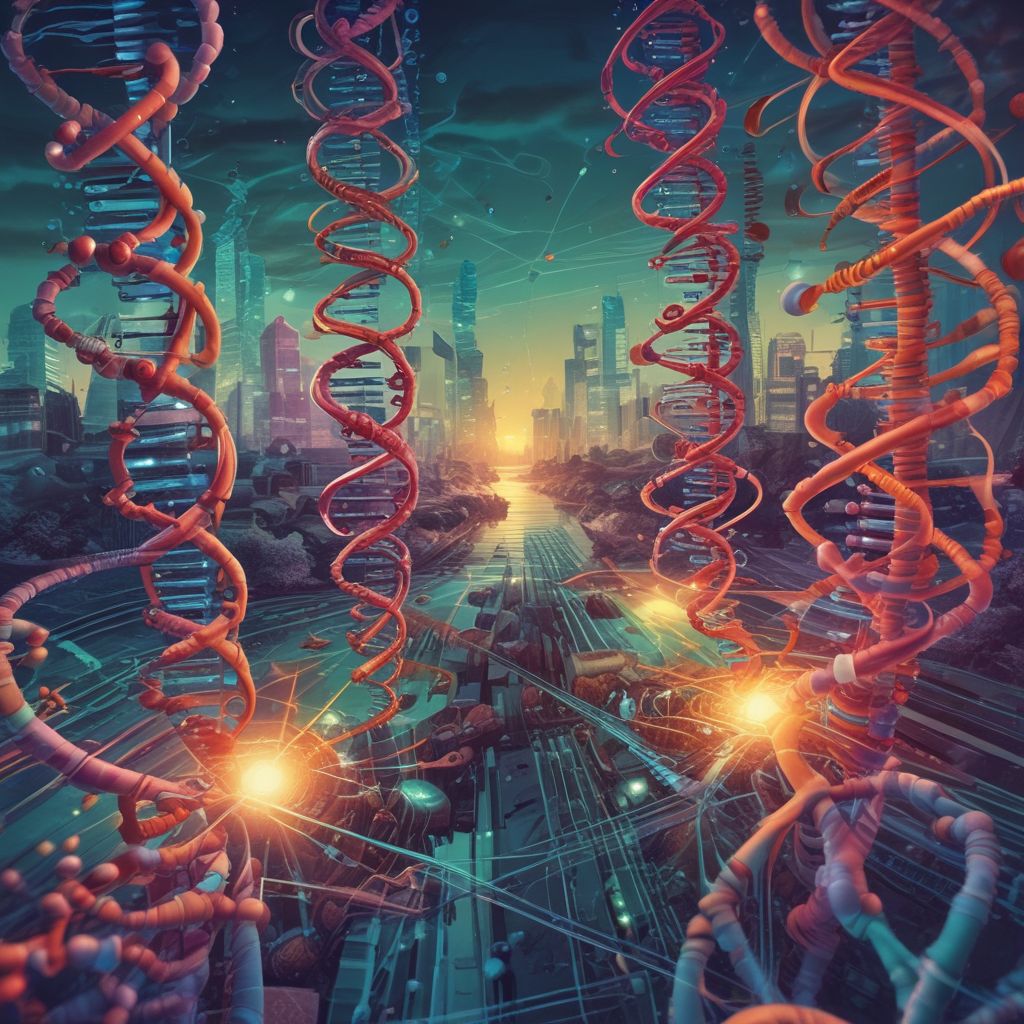
Synthetic DNA data lakes represent a paradigm shift in digital archiving. This approach combines bioinformatics, synthetic biology, and advanced sequencing technologies to create scalable, molecular-scale archives. The process involves converting digital data into synthetic DNA sequences, storing these sequences in engineered genetic constructs, and retrieving information when needed through rapid sequencing.
The Three-Stage Process
1. Digital-to-DNA Encoding
Bioinformatics algorithms convert binary data into synthetic DNA sequences. Each file is fragmented into small chunks and mapped to unique DNA strands using error-correcting codes. These sequences are designed to avoid natural DNA motifs that could interfere with replication or sequencing.
2. Synthesis and Storage
Automated DNA synthesizers assemble the encoded sequences into physical strands. These strands are then integrated into circular plasmids or viral vectors for stable storage. The synthetic DNA is dried and stored in vacuum-sealed capsules, often alongside error-correction tags and indexing metadata.
3. Retrieval and Decoding
When data recovery is required, stored DNA samples undergo high-throughput sequencing. Bioinformatics pipelines align the resulting reads, correct errors using built-in redundancy, and reconstruct the original digital files with near-perfect fidelity.
Bioinformatics: The Critical Bridge
Bioinformatics serves as the essential interface between digital information and biological storage. Advanced computational methods enable efficient encoding, error correction, and rapid decoding of vast datasets.
Core Bioinformatics Challenges
- Error Correction: Developing algorithms that identify and fix sequencing errors without excessive computational overhead.
- Indexing Systems: Creating metadata frameworks that allow swift location of specific data fragments within petabytes of stored information.
- Efficiency Optimization: Balancing storage density with practical synthesis and sequencing speeds.
Real-World Applications
Synthetic DNA data lakes are already transforming several industries:
Healthcare Archives
Hospitals and research institutions preserve genomic datasets, patient records, and clinical trial data in molecular form. This ensures secure, long-term access to critical medical information while complying with strict privacy regulations.
Cultural Heritage Preservation
Libraries and museums archive rare manuscripts, historical recordings, and indigenous knowledge in DNA form. This approach protects irreplaceable cultural artifacts from physical deterioration or disaster.
Scientific Research
Research collaborations store massive datasets from particle physics experiments, astronomical observations, and environmental monitoring. DNA storage provides a permanent, accessible archive for future generations of scientists.
Challenges on the Path Forward
Despite its promise, DNA data storage faces significant hurdles:
Scalability and Cost
Current synthesis and sequencing technologies remain expensive compared to conventional storage. Large-scale deployment requires dramatic cost reductions through automation and process optimization.
Standardization
The industry lacks universal protocols for encoding, indexing, and error correction. Establishing shared standards is essential for interoperability across different systems and providers.
Retrieval Speed
While storage is passive, data retrieval currently takes hours or days due to sequencing bottlenecks. Advances in nanopore and other rapid sequencing technologies aim to address this limitation.
The Future of Molecular Archives
As bioinformatics continues to evolve, synthetic DNA data lakes will become increasingly practical and accessible. Emerging technologies promise to accelerate adoption:
CRISPR-Based Storage
Using gene-editing tools to integrate data directly into living cells creates self-replicating archives that maintain and propagate stored information.
Hybrid Storage Systems
Combining DNA storage with traditional media creates tiered architectures. Frequently accessed data resides on faster storage, while archival copies rest in DNA form.
Global Data Trusts
International consortia could establish secure, decentralized DNA data lakes for preserving humanity’s most valuable knowledge across political and geographic boundaries.
Conclusion
Synthetic DNA