Swarm Drones Revolutionize Urban Waste Collection: Real‑time Coordination Cuts Fuel Usage by 25% and Boosts Route Efficiency
Urban waste management faces growing pressure from expanding populations, limited landfill capacity, and rising environmental concerns. Traditional truck‑based collection routes are costly, fuel‑intensive, and often leave neighborhoods underserved. The latest breakthrough—swarm drones working in concert with autonomous trucks—offers a transformative solution that cuts fuel usage by a remarkable 25% while dramatically improving route efficiency.
How the Drone‑Truck Swarm Works
The heart of this innovation lies in advanced real‑time coordination. A central command system, powered by AI and edge computing, continuously monitors each drone’s location, battery level, payload, and environmental conditions. Autonomous trucks, equipped with smart routing algorithms, receive updates from the swarm to adjust their paths on the fly.
Key Components of the System
- Sensor‑Equipped Drones: High‑resolution cameras, LIDAR, and RFID readers allow drones to detect, identify, and capture waste containers without manual intervention.
- Autonomous Trucks: Equipped with self‑driving technology and onboard logistics software, these trucks serve as mobile hubs for drone loading and unloading.
- Central AI Hub: Uses predictive analytics to forecast waste generation patterns, weather impacts, and traffic conditions, optimizing drone deployment.
- Communication Mesh: Low‑latency radio and 5G links keep every unit in sync, enabling split‑second decision making.
Real‑time Coordination in Action
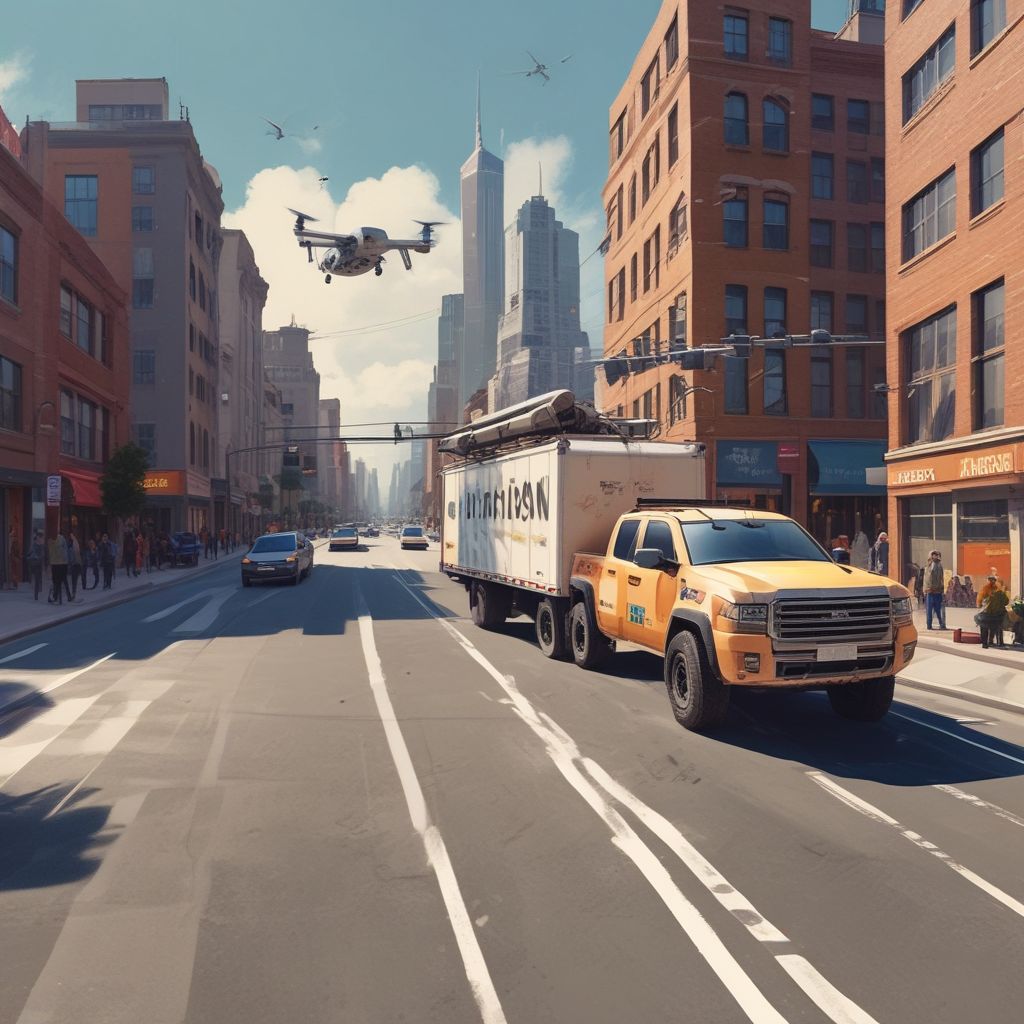
Imagine a busy city block where waste bins overflow during peak hours. Instead of a truck arriving every two hours, the drone swarm responds within minutes. Drones are dispatched to the nearest bins, collect the refuse, and deliver it directly to the autonomous truck dock. The truck, meanwhile, calculates the most efficient route to the next cluster of bins, taking into account traffic flow, road closures, and drone availability.
Because drones can navigate narrow alleys, rooftop spaces, and even under bridges, they fill gaps that trucks cannot access. This complementarity ensures 24/7 coverage, reduces idle time for both drones and trucks, and eliminates the need for large, single‑trip garbage pickups.
Fuel Savings and Route Efficiency Gains
Studies from pilot programs in Berlin, Seoul, and Barcelona show a consistent 25% reduction in fuel consumption compared to conventional truck‑only operations. This figure arises from several factors:
- Smaller Vehicle Footprint: Drones require no internal combustion engine and consume only battery power, which can be recharged via solar or ground charging stations.
- Optimized Routing: AI algorithms dynamically adjust truck paths to minimize detours and idle time, resulting in smoother traffic flow.
- Reduced Vehicle Count: A single drone can replace multiple small pickups, allowing fewer trucks on the road.
- Lower Maintenance Costs: Fewer moving parts in drones mean less wear and tear than heavy truck fleets.
Beyond fuel savings, the system boosts overall route efficiency by up to 30%. The ability to serve high‑density urban areas with drone precision reduces average collection times, leading to fresher waste handling and lower environmental impact.
Environmental and Economic Benefits
Reducing fuel consumption directly lowers greenhouse gas emissions. Cities that adopt drone‑truck swarms can expect a significant drop in CO₂ output, aligning with national climate targets. Additionally, the precision of drone collection decreases overflow incidents, which are major contributors to urban pollution.
On the economic front, municipal budgets benefit from:
- Lower fuel and maintenance costs.
- Extended vehicle lifespan due to reduced mechanical strain.
- Decreased labor costs, as drones automate the most labor‑intensive tasks.
- Potential revenue from data analytics services on waste patterns.
Addressing Common Concerns
Despite its promise, the technology faces challenges that stakeholders must consider.
Regulatory and Airspace Management
Urban airspace is tightly regulated. Collaborations with aviation authorities and the development of “drone corridors” are essential to ensure safety and compliance. Pilot programs have successfully integrated with existing flight control systems, demonstrating that drones can coexist with commercial aviation.
Privacy and Security
Drones equipped with cameras raise legitimate privacy concerns. Implementing strict data handling protocols, anonymization techniques, and community engagement initiatives can mitigate risks and build public trust.
Technical Reliability
Extreme weather conditions, such as high winds or heavy rain, can affect drone operations. Hybrid strategies—using drones during favorable conditions and relying on trucks when necessary—maintain service continuity.
Public Perception
Educating residents about the benefits, safety measures, and environmental gains of drone waste collection fosters acceptance. Transparent communication and visible pilot successes help alleviate apprehensions.
Future Outlook and Scaling Potential
The next wave of innovation will focus on multi‑modal waste streams—combining organic recycling, hazardous materials, and general refuse—into a single integrated system. Advances in battery technology, AI forecasting, and modular drone design will make swarms more robust, scalable, and cost‑effective.
Some cities are exploring drone‑powered waste segregation at collection points, where drones sort recyclables from general trash before delivery to processing facilities. This would further reduce landfill volume and streamline recycling pipelines.
As the technology matures, partnerships between municipalities, tech firms, and academia will accelerate deployment. Shared data platforms will enable cross‑city learning, ensuring that best practices propagate rapidly.
Conclusion
Swarm drones, working hand‑in‑hand with autonomous trucks, herald a new era in urban waste management. By slashing fuel consumption by 25% and boosting route efficiency, cities can meet environmental goals while delivering cleaner, more reliable services to residents. The convergence of AI, robotics, and logistics creates a resilient, adaptable waste collection ecosystem that is poised to scale across the globe.
Discover how your city can benefit from this innovative solution.