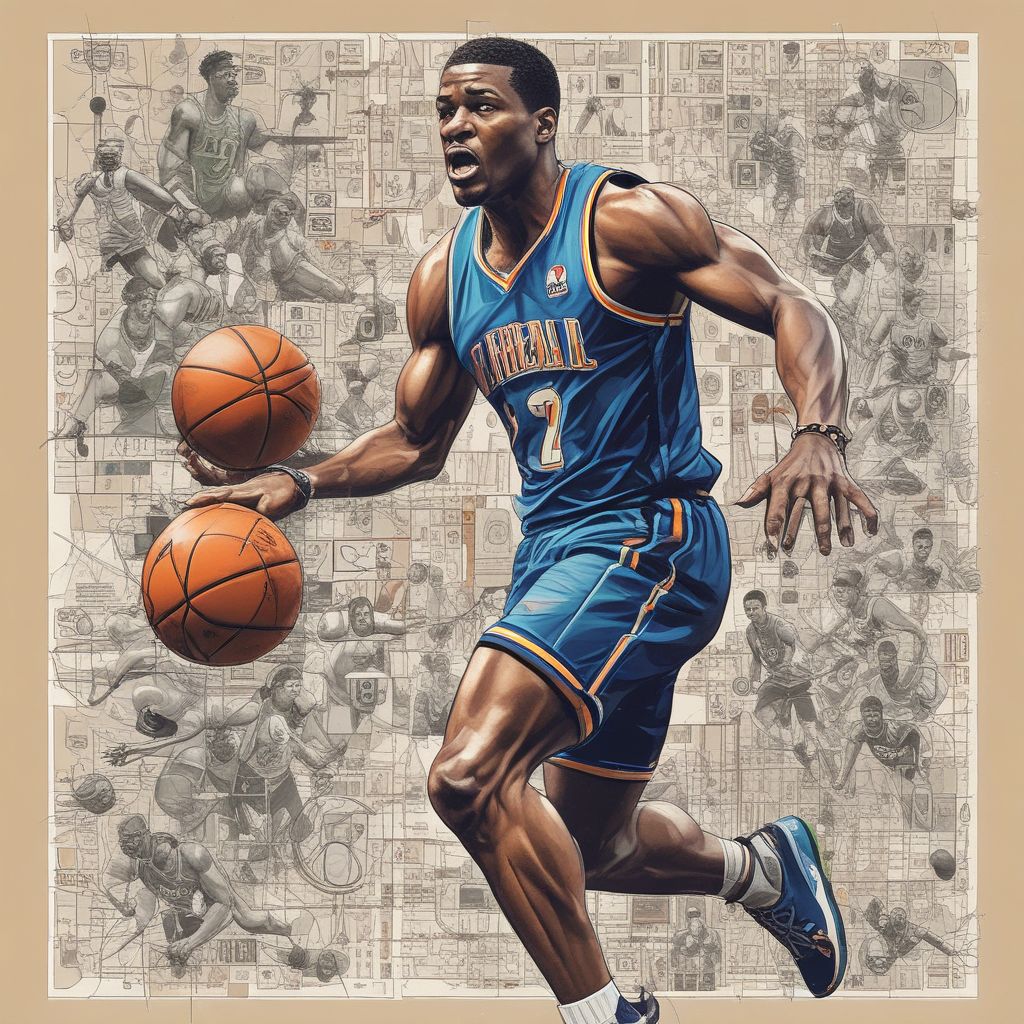
The phrase “Shot Clock to Play Clock” captures a growing cross-sport trend: basketball’s sophisticated pace and spacing analytics are being translated into the NFL’s play-calling language. Teams are mining tempo, possession and spatial data to change when they speed the game up, when they stall, and how they manage fourth downs and the final minutes—using the play clock as a tactical tool rather than merely a procedural limit.
Why the NBA-to-NFL Analogy Matters
The NBA led the analytics revolution with metrics that quantify every possession, every second, and every spatial relationship on the floor. With player-tracking and advanced metrics, coaches learned to optimize possessions for expected points per possession and to control tempo to force opponents out of rhythm. The NFL now has comparable tools—player-tracking via Next Gen Stats, play-level expected points models, and win-probability analytics—so the lessons about tempo and spatial leverage are migrating across sports.
From micro-possession to macro-gameplan
In basketball, an offensive possession is a discrete unit bounded by the shot clock; teams plan each possession to maximize expected points while managing time. In football, a play is the discrete unit, and the play clock creates a visible decision window. Translating NBA thinking means viewing sequences of plays as possessions where tempo, spacing, and substitution patterns change the opponent’s defensive alignment and the expected value of each play.
Key Metrics Translated from Hardwood to Gridiron
- Pace → Snap Rate: How quickly a team snaps the ball after the previous play. Faster snap rates can prevent defensive substitutions and exploit mismatches; slower snaps let a team huddle, substitute and control the clock.
- Possessions → Drives and Play Sequences: Rather than treating drives as monolithic, analytics evaluate short sequences—third-and-long series, hurry-up mini-drives, two-minute packages—each with its own expected value.
- Spacing → Formation Geometry: Player-tracking allows teams to measure how wide or compact a formation is and how that affects coverage leverage and passing lanes, similar to floor spacing in basketball.
- Player Impact per Possession → EPA (Expected Points Added) per Play: Just like offensive rating in basketball, teams calculate how many points a given play or package adds, adjusted for down, distance, and field position.
How Play-Calling Changes on Game Day
Coaches are increasingly treating the play clock as a tactical lever. That manifests in several practical ways:
- Tempo Threats: Using no-huddle sequences selectively to get favorable matchups before a defense can substitute—especially effective late in drives and following timeouts.
- Clock Engineering: Intentionally snapping quickly to prevent the defense from setting up big personnel or formation changes, or snapping late to bleed clock when protecting a lead.
- Sequence Optimization: Designing short, high-EPA sequences that change game state (e.g., move from 3rd-and-long to 1st-and-goal) rather than single-play heroics.
- Spatial Diversification: Using motion, shifts and wider splits in passing concepts to create isolation matchups and force coverage rotations—an NFL version of “spacing the floor.”
Fourth-Down Decisions Rewired
Basketball analytics teach coaches to think about every possession’s value; borrowing that logic, NFL decision-makers use tempo and possession metrics to re-evaluate fourth-down choices. Instead of a binary punt-or-go decision based solely on yardline and distance, front offices now layer in:
- Expected points for conversion vs. expected points against if the opponent receives the ball quickly in tempo mode,
- Probability that a quick, aggressive approach will prevent the defense from subbing in a specialized punting or rushing package, and
- Win-probability shifts conditioned on time remaining and projected play-calling sequences.
Late-Game Clock Management: Play Clock as a Strategic Asset
Minute-by-minute clock management is where the Shot Clock to Play Clock mind-set shines. In the NBA, teams manage the 24-second shot through possession design; in the NFL, coaches design how long to use from the 40-second play clock to influence not just time of possession but the opponent’s ability to respond.
Practical tactics include:
- Snapping quickly after scores to limit opponent substitutions and create hurried mismatches;
- Using late-snap plays that force defenses to commit to a long-yardage mindset while minimizing time taken off the clock;
- Combining tempo with timeout allocation to create artificial stoppages that benefit the offense (e.g., using quick snaps to make the opponent burn timeouts earlier).
Real-World Constraints and Risks
Translating basketball analytics isn’t plug-and-play. Football has static formations, a different substitution model, and more discrete stoppages. Overusing tempo risks fatigue for offensive linemen and limits play design complexity; conversely, over-managing the clock can make an offense predictable. Data must be blended with player conditioning, game context, and opponent tendencies.
Organizational Requirements
Clubs that succeed at this translation invest in a few areas:
- Advanced tracking and a data science team able to synthesize spatial and temporal data into play-level recommendations;
- Coaching staff willing to experiment in controlled environments (preseason, scripted sequences in practice);
- Play-callers trained to integrate analytic nudges into on-field decisions without losing the ability to improvise.
What a “Shot Clock to Play Clock” Playbook Looks Like
An operational playbook includes:
- Pre-defined tempo packages (e.g., rapid attack, medium pace, clock-control) mapped to game states and field position;
- Spatial templates that exploit coverage tendencies revealed by tracking data;
- A fourth-down decision matrix that includes tempo-related variables and the opponent’s substitution likelihood;
- Late-game scripts that combine snap timing, timeout usage, and formation spacing to maximize win probability.
Conclusion
Bringing basketball’s pace and spacing analytics into the NFL—aptly summarized as “Shot Clock to Play Clock”—is reshaping modern play-calling by turning the play clock into a proactive, strategic instrument. When teams pair spatial tracking with play-level expected value models and disciplined execution, they unlock new ways to control tempo, optimize fourth-down choices, and manage the final minutes of a game.
Want to see how these analytics could change a specific team’s play-calling? Explore your team’s Next Gen Stats and imagine a tempo blueprint tuned to their personnel.