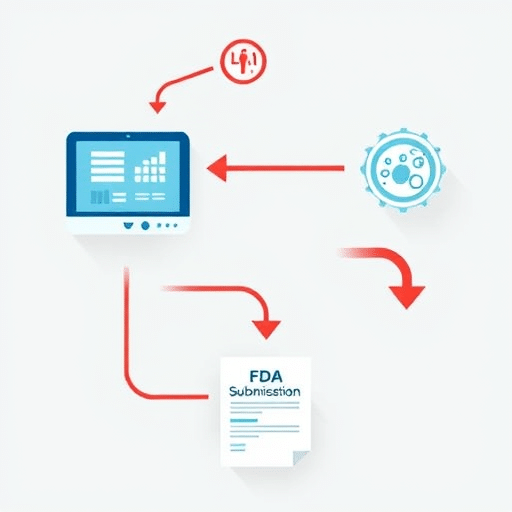
Wearable devices—smartwatches, fitness trackers, and medical patches—have become indispensable tools for personal health monitoring. By 2026, the volume of data generated by these devices will eclipse the total of all other electronic health records (EHRs) combined. This surge presents an unprecedented opportunity for better care, but it also introduces serious privacy risks. In this guide we walk through a practical, compliance‑ready workflow for securely storing and sharing wearable health data from the first data point to the final shared report, ensuring end‑to‑end encryption, HIPAA‑aligned permissions, and cloud service compliance.
1. Understand the Data Landscape: Types, Volume, and Sensitivity
Wearables collect a wide range of data: heart rate, blood oxygen saturation, sleep stages, location, and even electrocardiogram (ECG) waveforms. While some metrics are low‑risk, others—like continuous ECG or detailed sleep patterns—are highly sensitive. Classifying data into public, restricted, and high‑risk categories helps determine the appropriate security controls.
- Public data (e.g., step count) may be shared with fitness apps or friends with minimal safeguards.
- Restricted data (e.g., blood pressure logs) requires user consent and role‑based access.
- High‑risk data (e.g., continuous ECG, sleep apnea events) mandates full HIPAA compliance, encryption at rest and in transit, and audit‑ready logs.
Document the classification matrix and embed it in the data model that will drive all subsequent security decisions.
2. Adopt End‑to‑End Encryption for Data in Transit
Wearables typically transmit data over Bluetooth Low Energy (BLE) or via the manufacturer’s proprietary protocol to a paired smartphone. The first line of defense is to enforce TLS 1.3 or higher on the smartphone’s API gateway, and to apply application‑level encryption on the device itself.
2.1 Device‑Side Encryption
Manufacturers can embed a lightweight AES‑256 GCM engine within the firmware, keyed per user. The key can be derived from a secure user PIN or biometric token stored in the secure enclave of the smartphone. If the wearable is lost or stolen, the key never leaves the device, rendering intercepted data unreadable.
2.2 Secure Pairing Protocols
Implement Out‑of‑Band (OOB) pairing methods such as NFC or QR codes that exchange public keys before any BLE session starts. This mitigates Man‑in‑the‑Middle (MitM) attacks and ensures the smartphone only accepts data from the authenticated wearable.
3. Store Data with Layered, Policy‑Based Encryption
Once data lands on the server, it must be protected at rest with multiple layers of encryption and fine‑grained policy controls.
3.1 Encrypt at Rest with Customer‑Managed Keys (CMK)
Choose a cloud provider that supports Customer‑Managed Encryption Keys (CMEK). With CMK, the encryption key never leaves the organization’s control. AWS Key Management Service, Azure Key Vault, and Google Cloud KMS all provide fine‑grained key rotation, access control, and audit logs.
3.2 Data‑Level Encryption for High‑Risk Fields
Beyond bucket‑level encryption, apply field‑level encryption for high‑risk data elements (e.g., ECG waveforms). Libraries like libsodium or OpenSSL can encrypt individual JSON fields before storage. Store the resulting ciphertext in a separate column that is indexed only for queries that do not require decryption.
3.3 Encryption‑as‑a‑Service (EaaS) and Tokenization
For compliance with privacy by design principles, consider tokenization for data that is processed by third‑party analytics services. Replace sensitive values with deterministic tokens that can be reversed only with a secure key.
4. Choose a HIPAA‑Aligned Cloud Service: A 2026 Checklist
While most major cloud providers offer HIPAA‑compliant options, the 2026 compliance landscape demands stricter controls. Below is a checklist to evaluate any provider:
- Business Associate Agreement (BAA) signed and updated annually.
- Data Residency—data stored in the same geographic region as the patient’s state or country.
- Encryption Standards—AES‑256 at rest, TLS 1.3 in transit, CMK support.
- Audit Logging—immutable logs with tamper‑evidence and automated alerts for suspicious access.
- Zero‑Trust Architecture—micro‑segmentation, identity‑centric access controls.
- Incident Response—defined breach notification timelines and third‑party forensic support.
For example, AWS’s Amazon HealthLake now offers built‑in FHIR compliance and automated audit trails, while Azure’s HealthVault integrates with Azure AD for granular consent management.
5. Implement Granular Permission and Consent Management
HIPAA’s minimum necessary principle requires that only those who need access to a patient’s data have it. A robust consent engine can enforce this at runtime.
5.1 Role‑Based Access Control (RBAC) with Attribute‑Based Extensions (ABAC)
Define roles (patient, clinician, researcher) and attach attributes (time of day, location, device type). Use policies that combine RBAC and ABAC to enforce that a researcher can only see aggregated sleep data, not raw ECG.
5.2 Dynamic Consent Workflows
Integrate a consent layer that prompts patients for granular approvals before data is shared. Use JWT tokens signed by the patient’s device that encode the scope and duration of consent. Revoke or extend consent by updating the token’s claims.
5.3 Audit Trails and Transparency Dashboards
Expose a patient‑viewable dashboard where users can see who accessed which data, when, and for what purpose. This not only satisfies regulatory requirements but builds trust in the ecosystem.
6. Secure Data Sharing Protocols: FHIR and Interoperability
Fast Healthcare Interoperability Resources (FHIR) has become the de‑facto standard for health data exchange. In 2026, FHIR is extended with privacy tags that indicate consent status.
6.1 FHIR Data Bundles with Consent Headers
When a clinician requests a patient’s data, the server returns a FHIR bundle where each Resource includes a meta field specifying the consent level. The client application can then decide to render or redact data accordingly.
6.2 WebAuthn and OAuth 2.0 for Secure Authorization
Use WebAuthn for multi‑factor authentication on web portals, and OAuth 2.0 with PKCE for mobile apps. The access tokens should be short‑lived (e.g., 5 minutes) and include scopes that map to the consented data.
7. Continuous Monitoring, Threat Detection, and Incident Response
Security is not a one‑off setup. Implement a Security Operations Center (SOC) that monitors for anomalous access patterns, such as multiple failed login attempts or data exfiltration from the high‑risk bucket.
- SIEM Integration—log all API calls, encryption events, and user activities into a Security Information and Event Management system.
- Machine Learning Anomaly Detection—train models on normal access patterns and trigger alerts for deviations.
- Incident Response Playbooks—pre‑define steps for containing breaches, notifying patients, and patching vulnerabilities.
8. Testing and Validation: Penetration Tests and Audits
Regular penetration testing and third‑party audits are essential. Adopt the following cycle:
- Quarterly Penetration Tests focused on the wearable data pipeline.
- Annual HIPAA Compliance Audits with external auditors.
- Continuous Vulnerability Scanning of cloud infrastructure and on‑premises gateways.
Document all findings and remediation timelines to maintain a living security posture.
9. Future‑Proofing: Edge Computing and Federated Learning
By 2026, many wearables will offload preliminary analytics to edge nodes (smartphones, local gateways). Use secure enclaves on the edge to process data, generate summary statistics, and send only aggregated results to the cloud. Federated learning models can improve health algorithms without transmitting raw data, reducing exposure risk.
Implement Secure Multi‑Party Computation (SMPC) for collaborative analytics across multiple providers, ensuring that raw data never leaves the local environment.
10. Summary
Securely storing and sharing wearable health data in 2026 demands a multi‑layered approach: device‑level encryption, cloud‑native CMK, granular consent management, and continuous monitoring. By combining these controls with a HIPAA‑aligned cloud service and interoperable FHIR protocols, organizations can protect patient privacy while unlocking the full potential of wearable technology. The workflow outlined above offers a practical, compliance‑ready blueprint that balances security, usability, and regulatory adherence for the next generation of health data.