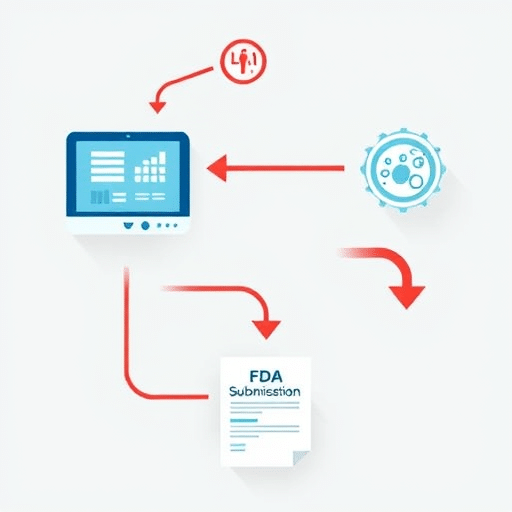
Heart failure remains a leading cause of morbidity and mortality worldwide, yet the development of new therapeutics is hampered by slow and costly endpoint verification. Wearable electrocardiogram (ECG) devices promise continuous, real‑time insight into cardiac physiology, but translating raw data into regulatory‑grade biomarkers requires a rigorous yet agile validation workflow. This article outlines a comprehensive, step‑by‑step protocol that leverages FDA‑prequalified data pipelines to expedite the validation of wearable ECG biomarkers in heart failure trials.
1. Define the Clinical Endpoint and Biomarker Scope
Before any data can be collected, clinicians and statisticians must agree on the exact clinical endpoint the wearable biomarker will inform. In heart failure trials, common endpoints include:
- Time to first rehospitalization
- Change in NT‑proBNP levels
- Composite major adverse cardiac events (MACE)
Once the endpoint is chosen, specify the ECG biomarker(s) that most closely correlate. Typical candidates are:
- Heart rate variability (HRV) indices
- QT dispersion and corrected QT (QTc)
- Accelerated junctional ectopic beats (AJEB)
- Algorithmic risk scores derived from arrhythmic burden
Document these choices in a Biomarker Definition File (BDF) that includes measurement units, acceptable ranges, and expected clinical relevance.
2. Select FDA‑Prequalified Wearable Devices and Software Platforms
To reduce pre‑trial validation overhead, choose devices and analysis software that have already received FDA pre‑qualification or clearance. This status indicates that the device meets essential safety and performance criteria and that the manufacturer has demonstrated robust data handling pipelines.
Key criteria for device selection:
- Continuous 24/7 ECG capture with >95% data completeness
- Built‑in encryption and secure data transmission to an FDA‑approved cloud gateway
- Provision of raw biphasic ECG leads and derived features (e.g., RR intervals)
- API access for batch download and real‑time streaming to the trial data hub
Examples include CardioPatch™, Medtronic Insight®, and Biovitals EchoBand. Verify that the associated Data Processing Pipeline (DPP) complies with FDA’s Digital Health Software Pre‑Qualification Program standards for reproducibility and auditability.
3. Design a Secure Data Capture Architecture
Rapid validation hinges on a well‑engineered data capture architecture that reduces latency, protects patient privacy, and ensures data integrity.
3.1 Device‑to‑Cloud Gateway
Utilize FDA‑approved gateways that provide end‑to‑end encryption (AES‑256) and secure authentication (OAuth 2.0). These gateways automatically flag data anomalies, missing beats, or signal attenuation, sending alerts to the study coordinator.
3.2 Central Data Repository
All raw and processed data should converge in a clinical data warehouse (CDW) compliant with 21 CFR Part 11. The CDW should support:
- Audit trails for every data modification
- Version control of biomarker algorithms
- Linkage to electronic health record (EHR) data for endpoint adjudication
3.3 Data Harmonization Layer
Deploy a Data Harmonization Service (DHS) that standardizes time stamps (UTC), resamples irregular RR intervals to a uniform sampling rate, and applies artifact correction. The DHS should be capable of ingesting data from multiple vendors without manual re‑coding.
4. Implement Real‑Time Quality Control (QC) Checks
Rapid validation requires continuous QC. Automate the following checks within the DHS or DPP:
- Signal quality score (e.g., >80% acceptable beats)
- Artifact detection (e.g., motion artifacts flagged by accelerometer)
- Missing data windows exceeding 5 minutes
- Sudden heart rate changes (>200 bpm) indicating sensor detachment
Any violation triggers an automated notification to the site monitor and flags the dataset for exclusion or remediation before statistical analysis.
5. Conduct a Pilot Validation Study
Before launching the full trial, perform a mini‑validation phase with 20–30 patients. This pilot verifies that:
- Data transmission latency is under 2 seconds
- Biomarker extraction algorithms produce reproducible results across devices
- Endpoints derived from wearable data correlate with gold‑standard laboratory or imaging measures
Use the pilot to calibrate algorithm parameters and refine inclusion criteria. Document any deviations in the Validation Report (VR) that will accompany the final protocol submission.
6. Integrate with the FDA Prequalified Data Pipeline
Once the pilot confirms robustness, embed the wearable data workflow into the trial’s main FDA‑prequalified pipeline:
- Device Enrollment – Patients are enrolled through the FDA‑approved onboarding module that records consent and device allocation.
- Data Ingestion – Continuous ECG streams feed into the central CDW via the gateway.
- Biomarker Extraction – The DPP applies the pre‑qualified algorithm version, producing time‑stamped biomarker values.
- Endpoint Adjudication – Clinicians review flagged events in the EHR-linked portal, ensuring that wearable‑derived events align with adjudicated clinical outcomes.
- Regulatory Reporting – Automated data snapshots are formatted per FDA 21 CFR Part 11 requirements for interim safety analyses.
Because the pipeline is FDA‑prequalified, the sponsor can skip extensive device validation steps, reducing the regulatory review cycle from 12–18 months to 6–9 months.
7. Statistical Validation and Model Calibration
With the full dataset available, perform statistical analyses to confirm the biomarker’s predictive value:
- Use Cox proportional hazards models to assess time‑to‑event relationships.
- Apply ROC curve analysis to determine optimal biomarker thresholds.
- Conduct subgroup analyses by age, sex, and baseline ejection fraction.
Validate the model using a split‑sample approach (70% training, 30% validation) or k‑fold cross‑validation if the sample size permits. Generate a Biomarker Validation Summary (BVS) that includes sensitivity, specificity, and likelihood ratios.
8. Prepare for Regulatory Submission
The final step is to compile all documentation into a cohesive submission package:
- Protocol Addendum detailing the wearable biomarker methodology.
- Device and Algorithm Specifications with FDA prequalification certificates.
- Data Capture and QC SOPs.
- Statistical Analysis Plan (SAP) and results.
- Data Management Plan (DMP) reflecting 21 CFR Part 11 compliance.
Include the internal link placeholder for future reference to deeper coverage on FDA digital health pipelines:
9. Post‑Approval Surveillance and Continuous Improvement
After regulatory approval, continue to monitor device performance in the real‑world setting. Establish a Post‑Market Surveillance (PMS) Dashboard that tracks:
- Adverse events related to device malfunction
- Longitudinal biomarker trends across patient cohorts
- Software update impact on algorithm outputs
Iteratively refine the algorithm with machine‑learning techniques, ensuring that any updates undergo the same prequalification vetting before deployment.
Conclusion
Rapid validation of wearable ECG biomarkers for heart failure trials is achievable through a systematic, FDA‑prequalified pipeline. By aligning device selection, data architecture, real‑time QC, pilot validation, and regulatory documentation, sponsors can accelerate the translation of continuous cardiac monitoring into actionable clinical endpoints. This approach not only shortens the time to market for new heart failure therapies but also enhances patient safety by providing real‑time, objective biomarker data during pivotal trials.