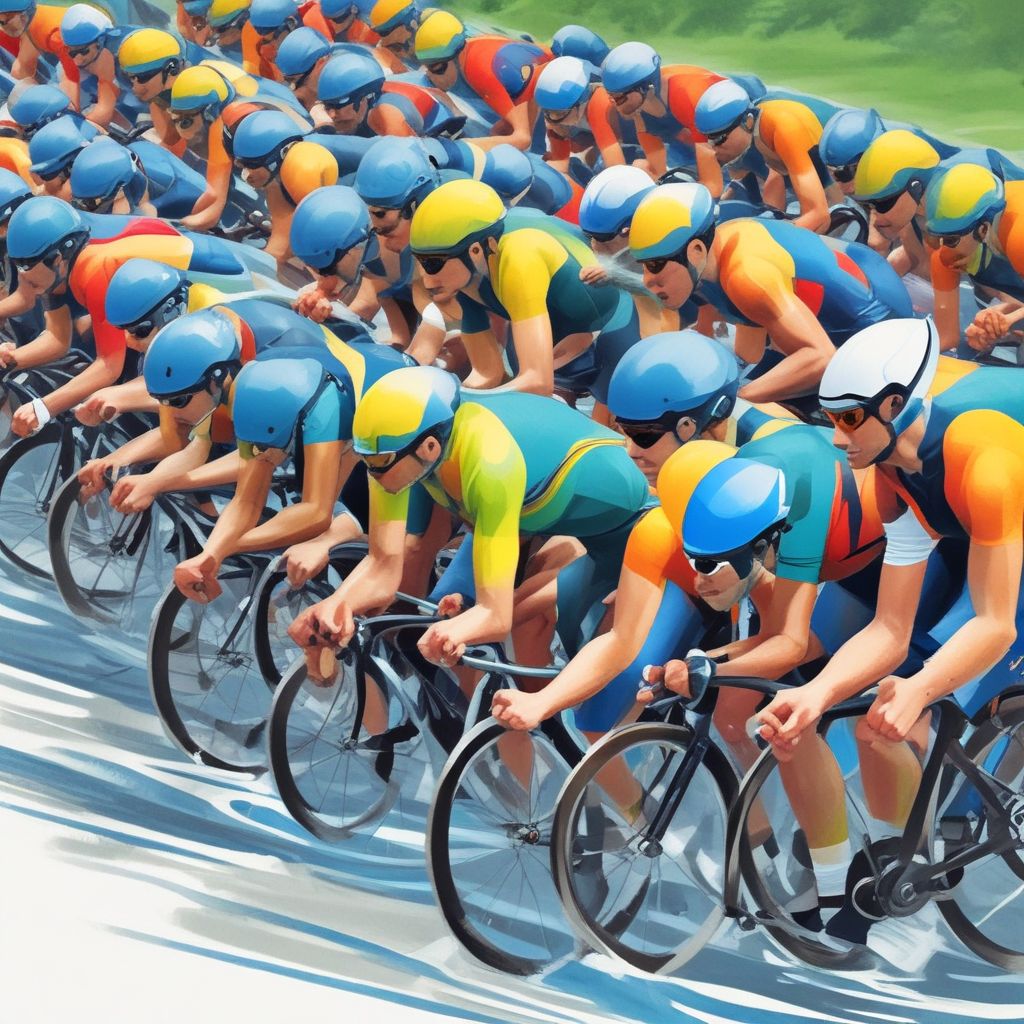
Peloton science for open-water swimming brings cycling’s well-studied drafting and cooperative-formation tactics into the aquatic world to help swimmers conserve energy, increase average speed, and improve safety in group swims. By examining fluid dynamics, formation geometry, and measurable physiological gains, swimmers can borrow proven peloton tactics—spacing, rotation, and paceline-style cooperation—and adapt them to water to swim smarter, not just harder.
Why Cyclists and Swimmers Share a Tactical Playbook
At first glance, cycling and swimming look different: one happens on two wheels, the other in a fluid medium. But both involve moving through a resistive environment where an object (bicycle or human body) creates a wake that teammates can exploit. In cycling, the peloton’s coordinated formations reduce drag and allow the group to travel faster with less energy per rider; in open water, the same physics applies, just with different scales, forces, and safety considerations.
The Fluid Mechanics Behind Drafting
Drafting exploits low-pressure wake regions and reduced relative flow behind a lead object. In water, this means:
- Wake and slipstream: A lead swimmer displaces water, creating a lower-resistance zone directly behind and slightly to the sides.
- Boundary layers and vortices: The interaction of a swimmer’s body and the surrounding water generates vortices that teammates can ride to reduce their own drag.
- Distance-dependent benefit: The closer and more aligned a trailing swimmer is to the leader (without compromising safety), the more drag reduction they experience.
How Much Energy Can Drafting Save?
Field tests and laboratory studies of drafting in aquatic settings report measurable energy savings: trailing swimmers can conserve oxygen uptake and reduce metabolic load compared with swimming alone. Typical reported ranges vary with speed, spacing, and technique, but many practical tests show energy reductions commonly in the 10–25% range for well-executed drafting—enough to change race outcomes or make longer group swims far more comfortable.
Formations and Tactics: Translating Peloton Geometry to Water
Not all peloton formations translate directly to open water, but core ideas do.
Single-File Drafting
Best for narrow stretches or point-to-point swims; swimmers line up directly behind a leader at a short, safe distance. Benefits: maximal drag reduction for the second swimmer and reduced lateral interference. Drawback: only a few swimmers can fully benefit at once.
Staggered (Echelon) and Pack Formations
When crosscurrents or variable sighting are factors, a shallow staggered formation or loose pack allows multiple swimmers to gain partial drafting benefits while maintaining sightlines and maneuverability. In this setup, swimmers trade off closer drafting positions and looser slots to accommodate waves and wind.
Rotations and Cooperative Pacing
Borrow the peloton’s rotation model: strong swimmers take the lead for short, planned intervals, then rotate to the back to recover in the draft. Planned rotations keep average speed steady, distribute fatigue, and maintain group cohesion—essential for long-distance swims and relay-style training.
Practical Rules for Safe, Effective Drafting
- Spacing: Keep an arm’s length to a meter-and-a-half behind the lead swimmer—close enough to draft, far enough to avoid contact.
- Communication: Call rotations and hazards clearly; a simple tap or a short vocal cue can avoid collisions.
- Planned rotations: Pre-agree on rotation frequency (e.g., every 3–5 minutes) and a clear hand signal or lane change pattern.
- Sighting and alignment: Periodic front glances or side-sighting keep the formation on course without disrupting the draft.
- Respect race rules: In competitive events, drafting rules vary—always know local regulations and race-specific drafting allowances before applying tactics.
Measuring Gains: What to Track and How
To know whether peloton-style tactics are working, measure objective metrics:
- Pace consistency: GPS pace or split times show whether rotation and drafting maintain higher average speeds with less variance.
- Physiological load: Heart rate and perceived exertion during lead vs. draft positions quantifies energy savings.
- Stroke metrics: Stroke rate and stroke length sensors (or coach observation) reveal if drafting preserves technique under fatigue.
Combining these data points helps teams refine spacing, rotation length, and the order of swimmers to maximize group efficiency.
Training Drills to Practice Drafting
Start in a controlled environment before taking tactics to open water:
- Pool follow-the-leader: One swimmer leads at race pace while a second swims 0.5–1.0 meters behind; swap roles each lap and record heart rate changes.
- Rotation sets in open water with buoy markers: Practice short lead intervals with prearranged transitions around a buoy to simulate turns and wind changes.
- Pack sighting drills: Swim in small groups focusing on minimal sighting frequency while maintaining alignment and spacing.
Safety, Etiquette, and Ethical Considerations
Drafting introduces proximity risks—collisions, interference, and reduced visibility—so respect these guardrails:
- Avoid sudden positional changes; announce shifts and turns early.
- Prioritize weaker swimmers and permit safe passing lanes.
- Use a safety kayaker or spotter for larger groups and long-distance outings.
- In competition, follow event-specific rules—what’s tactical in training may be illegal in a race.
When Peloton Science Isn’t the Answer
Conditions like heavy chop, strong crosscurrents, or crowded race starts can negate drafting advantages or make formations unsafe. In those cases, focus on individual course strategy, drafting opportunistically rather than mandating formation, and always put safety ahead of marginal speed gains.
Conclusion: Peloton science for open-water swimming offers a practical, physics-backed framework to increase speed, save energy, and manage group fatigue. With attention to spacing, rotation, communication, and safety, swimmers can adopt cycling’s cooperative advantages in water to swim faster together and finish stronger.
Ready to try peloton-style drills at your next practice? Gather a small group, plan simple rotations, and track pace and heart rate to see the savings for yourself.