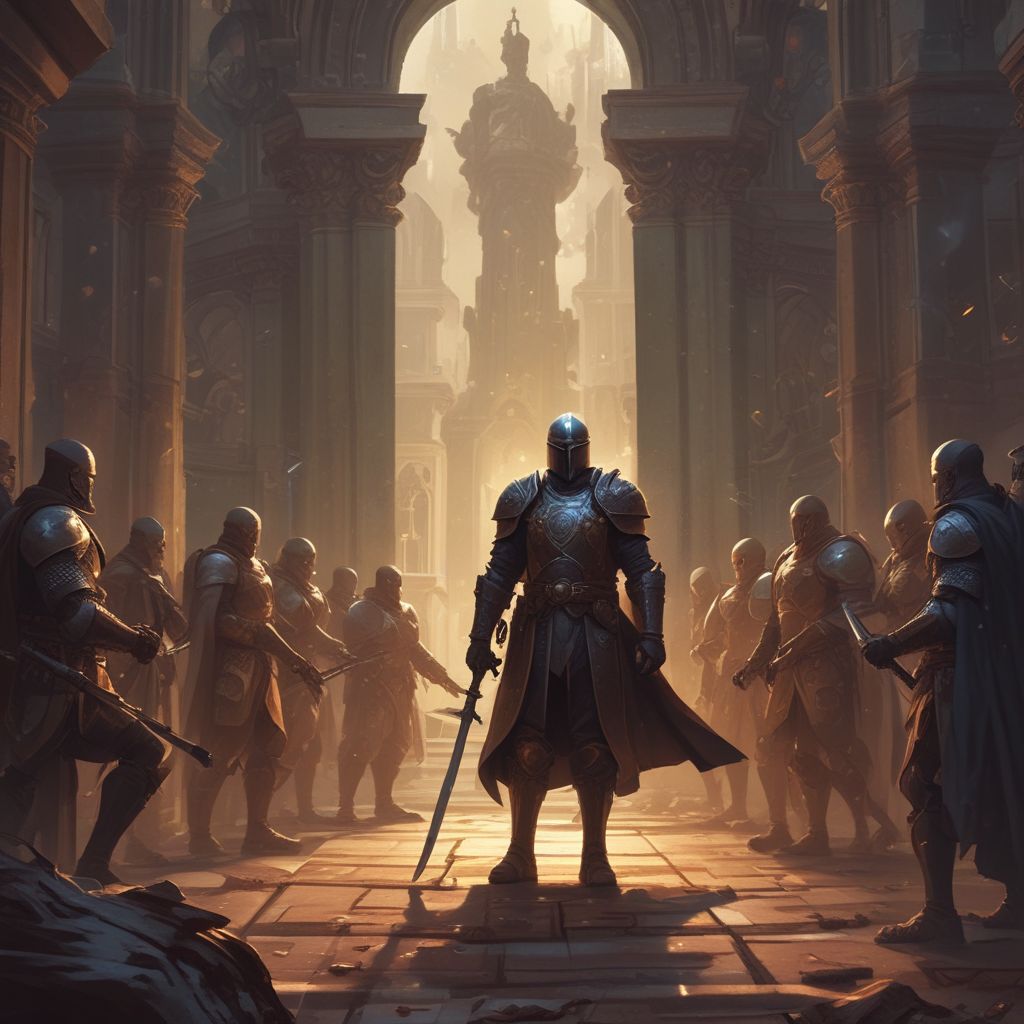
The phrase morale-driven narratives captures an emerging design goal: systems that let factions and commanders in grand strategy games experience emotional arcs—grief, pride, doubt—that meaningfully alter strategy and story from the battlefield to the council chamber.
Why morale matters: from numbers to narratives
Traditional grand strategy treats morale as a numeric modifier attached to armies or provinces; morale-driven narratives treat it as a dynamic storyteller, where emotional states influence decisions, unlock narrative beats, and create emergent role-playing opportunities. When an empire grieves—after a catastrophic loss, a betrayal, or the death of a beloved leader—the ripple effects should change not just combat effectiveness but diplomatic posture, internal politics, and the player’s emotional investment.
Player experience benefits
- Emotional resonance: Players remember scenes where a faction mourns or a commander breaks, not just the numerical loss.
- Emergent storytelling: Unexpected character arcs and faction identities arise from systemic interactions rather than handcrafted cutscenes.
- Strategic depth: Emotional states create soft constraints and incentives that change priorities and open new tactical options.
Core mechanics for morale-driven narratives
A practical system is built from a few composable layers that translate events into feelings, and feelings into actions.
1. Emotional vectors
Represent morale as multidimensional vectors (e.g., Pride, Fear, Grief, Resolve) instead of a single scalar. Each vector accumulates from events, time, and social context and decays or compounds based on mitigation systems (rituals, propaganda, victory parades).
2. Memory and salience
- Event memory: store a concise list of recent high-salience events (defeats, betrayals, heroic stands) with weights.
- Salience decay: older events fade unless reinforced by storytelling triggers (memorials, monuments).
3. Behavioral policy layer
Translate emotional states into altered decision weights for AI or player-facing options: grieving factions may favor defensive posture, seek reparations, or prioritize ceremonial actions. Commanders with high Fear may avoid risky maneuvers; those with high Resolve may gain temporary bonuses but become inflexible.
Design patterns to make emotions meaningful
Event-to-Beat mapping
Create templates that map clusters of events into narrative beats. Example: “Hero Falls” + “Public Outcry” + “Enemy Triumph” → “National Mourning” beat, which opens memorial events, populist politicians, and creative protest mechanics.
Agency windows
Offer players momentary narrative choices when emotional thresholds are crossed: how to honor the dead, whether to execute a scapegoat, or whether to refuse peace out of pride. These are short, consequential decisions that shape long-term faction identity.
Visible social signals
Use UI cues—banners, leader portraits showing grief, modified diplomatic dialogue—to make emotional states legible and consequential. Players should be able to see how their actions have changed the mood across regions and people.
Balancing narrative and gameplay
Emotional systems must be predictable enough to plan around, yet messy enough to feel organic. Balance considerations include:
- Feedback clarity: provide players with transparent indicators explaining why a faction feels a certain way.
- Recovery paths: always include mechanics for recovery (rituals, victories, reforms) so players aren’t permanently handicapped by a single catastrophic event.
- Exploit mitigation: guard against trivial loops where players farm grief or pride for power by making narrative currency costly or one-shot.
Technical architecture: a lightweight emotional engine
Implement morale-driven narratives with modest technical complexity by layering three systems:
- Event bus: central system that records significant events with metadata (who, where, magnitude).
- Emotion accumulator: subsystem that maps events to emotional vector deltas and stores per-entity memory.
- Policy adapter: small rule engine that translates emotional thresholds into changed AI weights, unlocked events, or UI triggers.
Persistence is simple: serialize emotional vectors and key memory entries into save files; recompute derived states on load to avoid floating-point drift.
Examples and prototype beats
Concrete prototypes make the idea tangible:
- Province Mourning Cycle: After a siege, a province enters “Mourning”, decreasing tax output but increasing recruitment loyalty for a new charismatic leader—tradeoff that rewards patient rebuilding.
- Commander Arc: A general with rising Grief might demand vengeance, generating raze-or-spare choices that shift international opinion; if unresolved, grief could become paranoia and rebellion risk.
- Faction Identity Drift: Repeated sacrifices shift a faction’s identity (e.g., from Merchant Republic to Militarized State), changing available technologies, diplomatic bonuses, and aesthetic flags.
Playtesting tips
- Run blind AI-only simulations to surface pathological loops.
- Test with playbooks: give testers specific roles (e.g., “The Mourning Regent”) and ask them to pursue narrative goals, then collect where mechanics felt unfair or unclear.
- Iterate UI affordances until players can easily trace cause and effect for emotional shifts.
Ethical and narrative considerations
Mourning and grief are sensitive themes—handle them with nuance. Avoid trivializing real-world suffering by grounding fictional grief in meaningful mechanics (rituals, remembrance) and by giving players respectful options like commemoration rather than spectacle.
Practical roadmap for designers
- Define core emotional vectors and their gameplay impact.
- Prototype a single beat (e.g., “The Fallen Hero”) with event mapping and player choice.
- Expand to faction-level memory and test interaction across multiple beats.
- Polish UI signals and recovery mechanics, then run extended playtests.
Morale-driven narratives are a promising route to fuse the macro-level chess of grand strategy with the micro-level intimacy of RPG character arcs: they let empires grieve, commanders change, and stories emerge from rules rather than being simply authored.
Conclusion: Designing systems where morale and memory reshape strategy makes gameplay more human, unpredictable, and emotionally rich—when empires grieve, players can craft true epic arcs that change both map and mind.
Try prototyping a morale-driven beat this week: pick one event, map its emotional vector, and add one player choice that changes the faction’s identity.