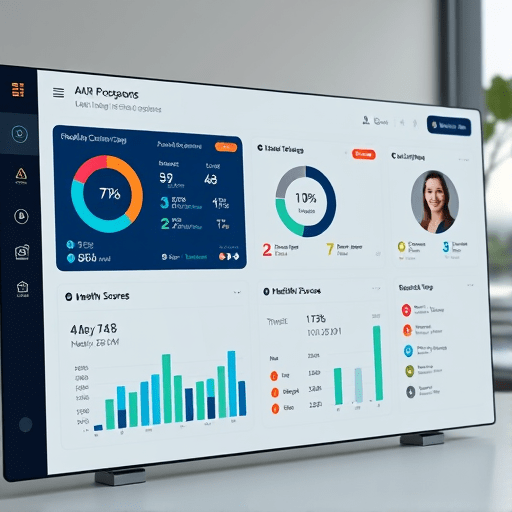
The fastest low-risk path to sustainable growth is often not building one giant headquarters-style operation, but embracing Modular Market Replication — packaging GTM, ops, and hiring into plug‑and‑play modules that can be cloned across markets. Modular Market Replication lets companies deploy repeatable mini-businesses that combine a tested go-to-market playbook, a lean operations blueprint, and a hiring kit so teams can launch quickly with predictable outcomes.
Why the single-HQ model is increasingly fragile
Traditional scaling assumes central command and control: bigger HQ, bigger teams, bigger bets. That approach concentrates risk (all eggs in one headquarter) and requires heavy capital to duplicate success in new regions. It also slows local responsiveness; markets with different customer behaviours, costs, or regulations are poorly served by one-size-fits-all central systems.
Common failure modes
- High up-front capital expenditure with long payback periods.
- Slow market adaptations because changes must pass through HQ.
- Operational complexity that compounds as you scale.
- Hiring bottlenecks and inconsistent local execution.
What is Modular Market Replication?
Modular Market Replication reframes growth as a cloning problem: design a compact, self-contained unit — a module — that includes sales & marketing (GTM), operations, hiring & onboarding, and the minimal technology and finance tracking necessary to run profitably. Once a module proves repeatable and profitable in pilot markets, replicate it across geographies like a franchise, but with modern playbooks and central guardrails instead of heavy-handed control.
Core idea: plug‑and‑play modules
- GTM module: target segments, acquisition funnels, messaging, pricing, and initial demand channels.
- Ops module: fulfillment process, service standards, supplier contracts, and SOPs.
- Hiring module: role templates, interview scorecards, onboarding checklists, and ramp plans.
- Tech & analytics module: pre-configured dashboards, integrations, and KPIs.
- Finance & governance module: unit economics, reporting cadence, and compliance checklist.
How to build a repeatable module
Designing a module is part product development, part operations engineering. The goal is to reduce ambiguity so every new mini-business can be launched predictably with minimal bespoke work.
Step-by-step blueprint
- Identify the smallest viable unit that delivers customer value and revenue (e.g., a regional direct-sales pod, a branded kiosk, a localized SaaS sales team).
- Document every end‑to‑end process involved in launching and running that unit — from lead capture to delivery and support.
- Codify the GTM playbook: ICP, acquisition experiments, creative templates, and conversion scripts.
- Create a hiring and onboarding kit with role descriptions, interview rubrics, training modules, and a 30/60/90 day success plan.
- Automate repetitive workflows and package tech templates: CRM settings, tagging rules, analytics panes, and billing flows.
- Pilot the module in one or two markets and iterate until unit economics are stable and replicable.
Rollout strategy: safe, capital-efficient expansion
Replace large capital outlays with staged replication. Start with a minimum viable clone; scale only when KPIs meet the acceptance criteria. This reduces cash burn, shortens learning cycles, and lets the organization prune non-performing modules quickly.
Governance: balance autonomy and standards
- Central ensures standards: brand, KPIs, core tech stack.
- Local adapts execution: channel mix, local partnerships, and minor product tweaks for cultural fit.
- Measurement: strict SLA and KPI reporting that feed a central dashboard for early detection of drift.
Real-world examples and analogies
Think of fast‑casual restaurant chains, but reimagined for modern startups: instead of owning every regional outlet, you ship an operational “box” that includes recipes, supply lines, staff training, and the marketing playbook. In SaaS, this might look like replicating a localized presales pod — a 4-person team with a scripted outreach playbook and a templated demo funnel — across 20 markets.
Companies that have used modular approaches tend to accelerate break-even time per region, preserve unit economics, and increase optionality: if a market underperforms, it’s cheaper to close one mini-business than unwind a full HQ expansion.
Risks and how to mitigate them
Modular replication lowers many risks but introduces others: brand fragmentation, operational drift, or inconsistent quality. Mitigate these by:
- Setting clear, measurable KPIs for each module and enforcing automated reporting.
- Running periodic audits and mystery-shopping to ensure standards.
- Maintaining a small central team responsible for continuous improvement of module templates.
- Implementing a “sunset” policy to quickly decommission underperforming clones.
KPIs to track for each mini‑business
- Customer acquisition cost (CAC) and CAC payback period
- Unit economics: contribution margin per module
- Time-to-ramp for new hires (30/60/90 outcomes)
- Operational SLA compliance and Net Promoter Score (NPS)
- Replication velocity (how many modules launched per quarter) and failure rate
When to choose modular replication
Choose Modular Market Replication if your product or service can be delivered through clearly defined, repeatable operations and your growth goal is to expand quickly across diverse local markets while minimizing capital exposure. It’s especially effective for businesses with replicable unit economics, local market variance that matters, and a leadership team ready to codify playbooks rather than micromanage locations.
Conclusion
Modular Market Replication transforms expansion from a monolithic bet into a portfolio of repeatable, measurable mini-businesses. By packaging GTM, ops, and hiring into plug‑and‑play modules, organizations unlock faster launches, lower risk, and capital-efficient growth while preserving the ability to adapt locally.
Ready to design your first module? Start by mapping the smallest viable unit of value and build the GTM, ops, and hiring blueprints that make it cloneable.