When you’re over 55, staying mobile and confident in your own body becomes a priority. Traditional self‑defense courses often focus on striking, which can strain joints and muscles that are already aging. Brazilian Jiu‑Jitsu (BJJ) offers a low‑impact, leverage‑based alternative that empowers women to defend themselves safely at home without a gym. This guide distills essential BJJ concepts into quick, practical drills tailored for senior fitness, so you can master the art and feel secure in any situation.
1. Why BJJ is the Ideal Self‑Defense for Women 55+
BJJ relies on technique, timing, and body mechanics rather than brute strength. For women in the 55+ age bracket, this means:
- Joint‑friendly moves: BJJ’s emphasis on joint locks and pressure points reduces the risk of injury compared to high‑impact striking.
- Adaptable intensity: Techniques can be performed at a pace that matches individual fitness levels.
- Real‑world application: The groundwork and positional control taught in BJJ mirror many street‑situation scenarios.
By integrating BJJ into a home‑based routine, you can build resilience, improve balance, and cultivate confidence—all essential for effective self‑defense.
2. Setting Up Your Safe Practice Space
Before you begin, create a space that supports movement and minimizes injury risk:
- Flooring: Use a padded yoga mat or a dedicated BJJ mat. A minimum of 4 inches of cushioning helps absorb impact during sprawls or falls.
- Clear boundaries: Remove sharp objects, furniture with edges, and ensure ample room (at least 6 feet square) for full‑body movements.
- Visibility: Good lighting prevents missteps, especially if you’ll practice in the evenings.
- Equipment: A light resistance band or towel can aid grip drills; a chair can serve as a prop for balance exercises.
These simple steps convert any living room into a private, safe BJJ training zone.
3. Warm‑Up: Mobilizing Joints for Longevity
A structured warm‑up is crucial for preserving joint health. Aim for 10–12 minutes of dynamic movement that targets the hips, shoulders, spine, and ankles:
- Hip circles: 10 reps each direction.
- Shoulder rolls: 15 reps forward and backward.
- Spinal twists: 10 reps on each side, seated or standing.
- Ankle pumps: 20 reps to improve dorsiflexion.
Follow this with 3–4 minutes of gentle shadowboxing—no punches, just arm swings and footwork—to elevate heart rate and prepare the nervous system for the drills ahead.
4. Low‑Impact Techniques: From Grip to Ground Control
4.1 The “Shoulder Press” Grip
In many street encounters, an assailant may grab your sleeve or collar. The shoulder press grip allows you to neutralize the grab while staying balanced:
- Stand upright, feet shoulder‑width apart.
- When a hand reaches for your sleeve, place your free hand on the attacker’s elbow, pressing gently toward their shoulder.
- Simultaneously, shift your weight onto the other foot, keeping hips low.
- Use the pressing force to create a counter‑balance, reducing the attacker’s ability to pull you off balance.
Practice this move with a partner or against a wall, focusing on maintaining a steady base.
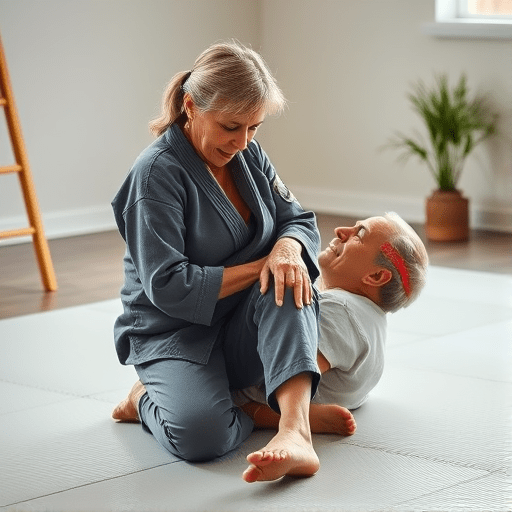
4.2 The “Hip Escape” to Guard
Should an attacker land on top of you, a hip escape is essential. This BJJ staple is gentle on joints yet effective in restoring guard:
- From a side‑on position, place your forearm under the attacker’s arm.
- Use your hips to slide sideways, keeping your back flat against the floor.
- Push the attacker’s elbow away, creating space.
- Pull the attacker into a closed guard by sliding your legs around their torso.
Repeat this drill 8–10 times per side, concentrating on smooth hip movement and controlled breathing.
4.3 The “T‑Guard” for Upper‑Body Control
While standing, the T‑guard helps you maintain proximity to an aggressor without exerting excessive force:
- Sit on the floor with one leg straight and the other bent, forming a “T” shape with your hips.
- Place your forearm under the attacker’s shoulder.
- Press the attacker’s wrist against your forearm, creating leverage.
- Use your body weight to limit their forward motion.
Practice this position against a resistance band to build core stability and upper‑body strength.
5. Home‑Based Drill Routine (15‑Minute Session)
Combine the techniques above into a single, time‑efficient workout that you can perform daily. Follow the structure below:
- 2 minutes – Warm‑up (dynamic joint mobilization).
- 3 minutes – Shoulder Press drill (20 reps, 10 per side).
- 3 minutes – Hip Escape drill (12 reps total).
- 3 minutes – T‑Guard drill (12 reps, 6 per side).
- 2 minutes – Cool‑down (gentle stretches, deep breathing).
Keep a stopwatch handy to maintain rhythm and progressively increase repetition counts as confidence grows.
6. Adapting BJJ for Joint Health and Strength
As you practice, you’ll notice certain movements that strain knees or wrists. Here’s how to adjust:
- Wrist Support: Use a light wrist brace or avoid deep wrist flexion during grip drills.
- Knee Flexion Limit: Perform hip escapes with knees slightly bent, avoiding full 90° angles that may compress cartilage.
- Progressive Loading: Start with body weight only; add light dumbbells or resistance bands once you master technique.
- Balance Enhancement: Incorporate single‑leg stands on a cushion to strengthen stabilizers.
These modifications preserve joint integrity while allowing technique proficiency to flourish.
7. Mental Readiness: The BJJ Mindset for 55+ Women
Technique alone isn’t enough; mindset is equally vital. BJJ training fosters:
- Situational Awareness: Practicing drills encourages you to anticipate movement and react swiftly.
- Confidence: Mastery of leverage builds self‑assurance that you can neutralize threats.
- Patience and Discipline: Progress is incremental; regular practice reinforces resilience.
To reinforce mental readiness, pair drills with mindfulness exercises—focus on breath, maintain a calm center, and visualize positive outcomes.
8. Integrating BJJ with Other Home Fitness Practices
Combine BJJ drills with complementary exercises to create a holistic routine:
- Cardio: 10 minutes of low‑impact walking or cycling to boost endurance.
- Strength: Body‑weight squats or chair dips to support joint stability.
- Flexibility: 10 minutes of yoga flows, emphasizing hip opening and spinal mobility.
Mixing these elements ensures a balanced approach that addresses strength, flexibility, and cardiovascular health—all essential for effective self‑defense.
9. Common Mistakes to Avoid
- Over‑extension: Trying to perform moves faster than your body can handle leads to strain.
- Ignoring pain: Stop immediately if you feel sharp or persistent discomfort.
- Relying on striking: BJJ’s core focus is grappling; avoid shifting focus to punches or kicks that may increase injury risk.
Stay mindful of these pitfalls and adjust your training intensity accordingly.
10. Progress Tracking and Goal Setting
Record your daily practice in a simple log:
- Technique name, number of reps, time taken.
- Any discomfort noted.
- Personal insights (e.g., felt more confident during drills).
Review your log weekly to identify patterns, set realistic milestones (e.g., increase hip escape reps by 5 each week), and celebrate progress.
Conclusion
Brazilian Jiu‑Jitsu offers a powerful, joint‑friendly platform for women over 55 to master self‑defense at home. By focusing on low‑impact grips, controlled escapes, and a balanced mindset, you can build confidence and resilience without the need for a gym or expensive equipment. Consistent practice, thoughtful adjustments for joint health, and a supportive training environment will help you become proficient in BJJ techniques that translate to real‑world safety. Stay patient, stay steady, and remember that every movement brings you closer to a stronger, safer you.