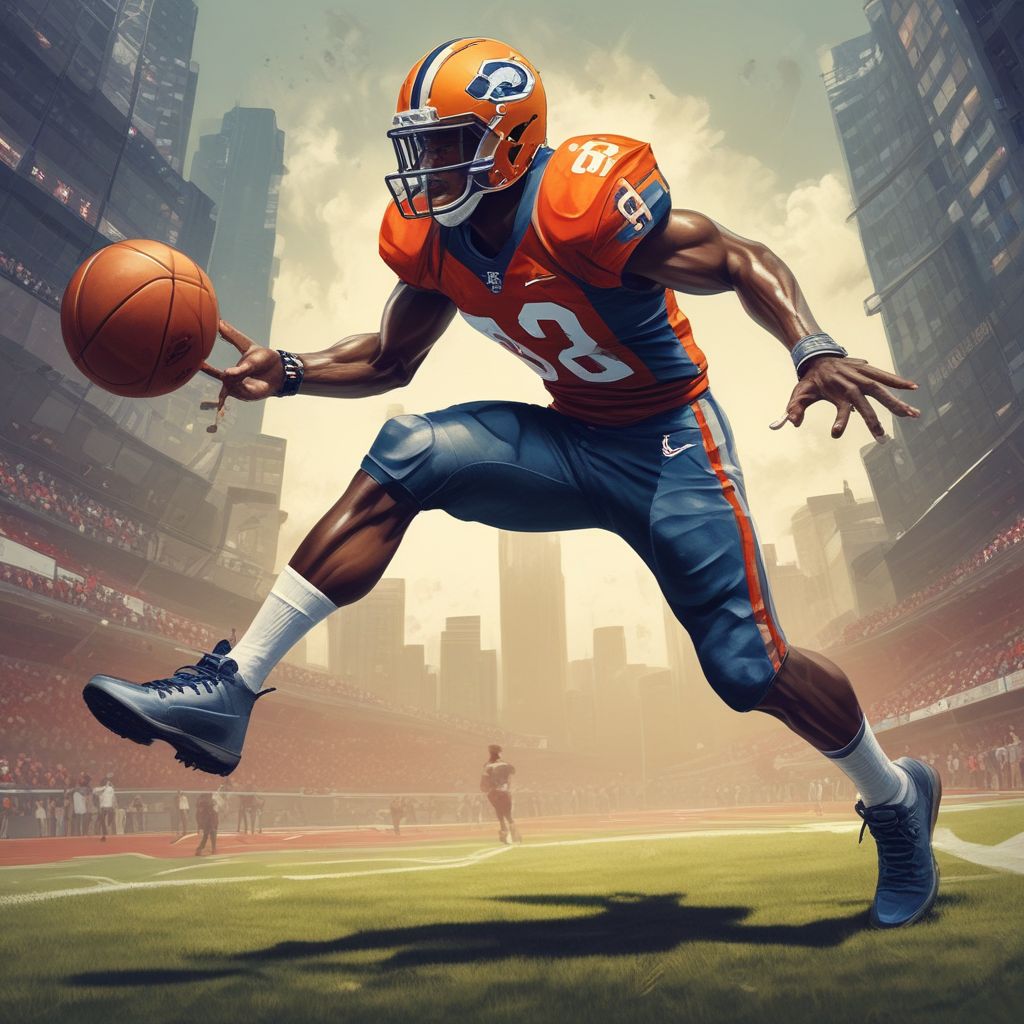
The rise of hybrid athletes is changing how NFL teams scout, draft, and develop pass-catchers — and basketball skills are at the heart of that shift. From rim-finishing body control to elite spatial awareness and explosion off the floor, basketball-born traits are translating directly to routes, contested catches, and yards after the catch, convincing front offices to value multi-sport prospects like never before.
Why Basketball Produces Excellent Receiver Traits
Basketball is a sport of short bursts, contact in the air, and constant spatial adjustments — all elements that mirror the modern receiver position. Several basketball-specific skills map neatly onto football needs:
- Verticality and timing: Jumping for rebounds and finishing above defenders builds timing and body control useful for contested catches.
- Footwork and lateral quickness: Guards develop micro-adjustments in tight spaces that translate to sudden route breaks and release techniques.
- Hand-eye coordination: Catching passes in traffic and handling the ball at speed improves soft hands and catch radius.
- Spatial awareness: On-court vision — recognizing seams, screens, and defensive rotations — correlates to reading zone coverage and finding soft spots.
- Competitive toughness: Boxing out or absorbing contact on drives conditions players to win contested situations on the football field.
Scouting: What Front Offices Are Looking For
Scouts and analytics teams are increasingly flagging former basketball players in the pool of potential breakout receivers. When evaluating hybrid athletes, personnel departments focus on a blend of physical and behavioral indicators:
- Movements over measurables: Beyond 40 times and verticals, evaluators watch how a prospect uses their body — angling, securing contact, and finishing catches.
- Playmaker instincts: Soccer-style vision on the court often signals high football IQ and route improvisation.
- Durability and contact tolerance: Basketball players used to physical play and frequent collisions often adjust faster to position-level contact in football.
- Training background: Multi-sport resumes with elite basketball experience are now flagged as upside assets rather than red flags for lack of football reps.
Drills Borrowed from Basketball That Build Receiver Excellence
Coaches at all levels are importing basketball drills to fast-track the development of hybrid athletes. The most effective drills emphasize air control, body positioning, and contested-catch technique.
Box-Out Catch Drill
- Objective: Teach receivers to use hips and hands to create separation in the air.
- How to run it: Pair two receivers; snap a high pass to the target while the defender attempts to box out. Emphasize landing with balance, high-pointing the ball, and securing it through contact.
“Rim” High-Pointing Drill
- Objective: Improve timing and vertical finishing against tight coverage.
- How to run it: Use a bounce pass machine or live QB to lob passes at different heights; the receiver practices using one or two hands to finish, focusing on extension and catching at the peak of the jump.
Close-Quarter Footwork Circuit
- Objective: Translate basketball micro-footwork into sharper releases and abrupt route breaks.
- How to run it: Incorporate ladder work, cone shuffles, and short-area catch-and-turns. Add a defensive hand shield to mimic press coverage and force the receiver to use footwork, not speed alone, to create space.
Training Programs for Transitioning Multi-Sport Athletes
Successful transition programs balance basketball skill refinement with football-specific conditioning and playbook acclimation. A weekly plan for a multi-sport prospect typically includes:
- 2 days of route-tree and catch simulations focusing on contested catches and release techniques
- 2 days of basketball-style plyometrics and vertical training
- 1 day of strength and contact conditioning emphasizing core, grip, and neck strength
- 1 film study session focused on reading coverage and route leverage
Front offices sometimes assign development coaches who split their calendars between basketball-cued drills and traditional receiver reps, accelerating learning while reducing injury risk from overuse.
Front-Office Shifts Favoring Multi-Sport Prospects
The NFL’s scouting DNA is evolving. A few notable trends illustrate how organizations are adapting to the hybrid athlete model:
- Data-driven trait modeling: Teams are mapping basketball movement signatures (e.g., change-of-direction force, contested vertical timing) to predictive receiver success models.
- Cross-sport scouting pipelines: Scouts now attend high school and college basketball games to track athletes who may project as receivers, tight ends, or H-backs.
- Patience with football reps: Clubs show a greater willingness to draft players with limited college football experience if athletic traits and coachability check boxes.
- Investment in development: Teams are funding specialized coaches, equipment, and inter-sport training partnerships to convert raw athleticism into NFL-level technique.
Case Studies: Success Stories and What They Teach
Several NFL receivers with basketball backgrounds illustrate the payoff. These athletes often share a similar arc: late football specialization, explosive athleticism, and rapid skill acquisition once in a pro environment. Their common lessons for talent evaluators:
- Multi-sport experience often correlates with fewer chronic injuries and higher adaptability.
- Basketball instincts accelerate learning of body-to-body contested scenarios.
- With targeted coaching, raw vertical and hand-eye coordination convert to reliable production on the field.
Implementing a Scouting and Development Checklist
For coaches and front offices building a hybrid-athlete pipeline, a practical checklist helps standardize evaluations:
- Confirm basketball experience and any leadership roles (team captain, go-to finisher).
- Measure sport crossover metrics: vertical timing, hand-eye drills, lateral quickness under fatigue.
- Assess coachability via interviews and past development history.
- Create a 12-week transition plan addressing technique, physicality, and playbook assimilation.
When executed well, this blueprint minimizes risk and maximizes upside — turning multi-sport athletes into high-ROI NFL playmakers.
Conclusion
Basketball skills are more than a novelty on a prospect sheet; they’re a measurable advantage that produces hybrid athletes primed for today’s NFL receiver role. Scouts, coaches, and front offices that embrace cross-sport evaluation and basketball-informed drills gain a competitive edge in identifying and developing the next generation of elite pass-catchers.
Explore a tailored hybrid-athlete training plan for your program and see how basketball-driven drills can unlock new levels of receiver performance.