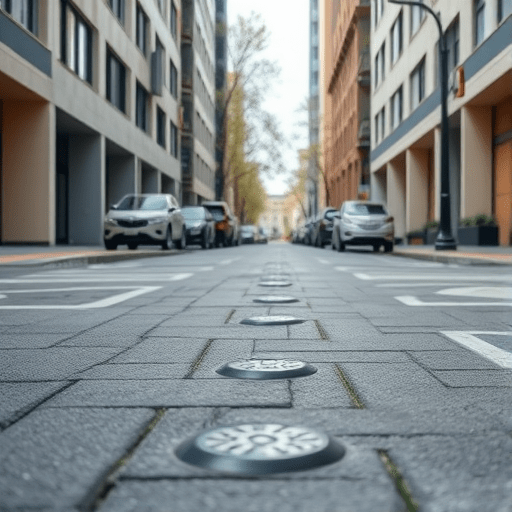
Human-in-the-Loop Digital Twins are transforming how planners evaluate city design by combining biosensor-fed models and AI avatars to simulate emotional responses and predict well‑being impacts of urban planning decisions. This approach places the human experience at the center of digital modeling, using real physiological and behavioral data to create richer, more actionable simulations that anticipate how people will actually feel in redesigned public spaces.
What is a Human-in-the-Loop Digital Twin?
A Human-in-the-Loop Digital Twin is a virtual replica of a physical environment—such as a street, park, transit hub, or neighborhood—that integrates continuous human feedback into its models. Unlike traditional digital twins that rely solely on structural, traffic, or environmental data, the human-in-the-loop variant streams biosensor inputs (heart rate variability, galvanic skin response, eye-tracking, posture) and subjective reports into machine learning systems to model emotional and cognitive responses over time.
Key components
- Physical model: High-fidelity 3D or GIS-based representation of the urban space.
- Biosensor network: Wearables, ambient sensors, and mobile devices that capture physiological signals linked to stress, comfort, and engagement.
- AI avatars: Synthetic agents driven by behavioral and emotional models that represent diverse user personas.
- Human-in-the-loop feedback: Continuous calibration from real participants to validate and update model predictions.
- Decision dashboard: Visual analytics that translate emotional predictions into actionable design changes.
How biosensor-fed models improve predictions
Biosensor-fed models add a layer of objective, time-series human data that captures immediate physiological responses to environmental stimuli. For example, a spike in skin conductance when a person enters a noisy underpass signals momentary stress—data that can be correlated with microclimate, lighting, or spatial configuration. Feeding these signals into machine learning models improves sensitivity to design elements that matter for well‑being but are invisible to conventional metrics like footfall or travel time.
Benefits of biosensor integration
- Detects subtle stressors (noise, crowding, microclimate) before they become systemic problems.
- Enables personalized well‑being predictions for different demographic and health profiles.
- Provides temporally dense data that captures context-dependent responses (time of day, weather, event).
AI avatars: modeling diverse urban experiences
AI avatars act as embodied simulations of people with varying preferences, mobility needs, and emotional baselines. They navigate the digital twin using policies informed by real-world behavior, and their simulated physiological signals are tuned by biosensor-derived models. When many avatars with different profiles traverse a proposed design, planners get an ensemble of emotional outcomes rather than a single average—revealing equity gaps and design trade‑offs.
What avatars reveal
- How older adults or neurodivergent users experience wayfinding and sensory load.
- Where parental caregivers feel unsafe or excluded in playground layouts.
- Which commuting routes increase stress for cyclists versus drivers at peak hours.
From simulation to policy: practical workflows
Implementing a human-in-the-loop digital twin involves iterative cycles that combine fieldwork, modeling, and stakeholder review:
- Baseline sensing: Deploy biosensors and collect subjective surveys to build initial emotional response models.
- Avatar calibration: Train AI avatars using the biosensor-informed behavioral models to represent key user segments.
- Scenario simulation: Run design variations through the twin, capturing emotional metrics (stress index, comfort score, engagement duration).
- Stakeholder validation: Present results to residents, health experts, and planners; incorporate qualitative feedback.
- Refinement and deployment: Iterate until performance targets (reduced stress hotspots, improved inclusivity metrics) are met, then apply designs to the physical environment and continue monitoring.
Case study: reimagining a transit plaza
Consider a mid-sized city planning to redesign a busy transit plaza. Traditional models highlighted circulation improvements, but residents reported feeling anxious and overwhelmed during peak times. A Human-in-the-Loop Digital Twin was built using wearable heart rate monitors and smartphone-based noise sampling. AI avatars modeled commuters, elderly passengers, and parents with strollers. The simulations showed that small changes—additional seating with visual screening, redistributed vendor stalls, and calming planting strips—reduced simulated stress peaks by 28% for elderly avatars and increased dwell-time comfort across all personas. The city piloted these changes and observed matching reductions in reported discomfort and a rise in perceived safety.
Ethics, privacy, and inclusivity
Collecting biosensor data and simulating emotions raises important ethical questions. Strong privacy safeguards, transparent consent processes, data minimization strategies, and community governance are essential. Equally critical is representing diverse populations: if biosensor datasets or avatar behaviors skew to one demographic, design recommendations will perpetuate inequities. Human-in-the-loop systems should include fairness audits, open model descriptions, and accessible opt-out mechanisms.
Best practices
- Use federated or encrypted data collection to protect sensitive signals.
- Engage community stakeholders early and share simulation assumptions and results in plain language.
- Include marginalized voices in avatar persona design and sampling strategies.
- Publish model performance metrics and error bounds for emotional predictions.
Challenges and future directions
Technical challenges remain: translating raw biosignals into robust emotional states, accounting for cultural variations in emotional expression, and integrating long-term well‑being effects (e.g., chronic stress) into models. Future directions include multimodal sensor fusion (audio, visual, physiological), real-time adaptive environments that respond to collective emotional states, and regulatory frameworks that require human-centric impact assessments for major urban projects.
Designing cities that care
Human-in-the-Loop Digital Twins enable planners to move beyond throughput and aesthetics, toward measurable well‑being outcomes. By combining biosensor-fed models and AI avatars, cities can predict who benefits from a design change and who may be left behind—turning empathy into quantifiable design criteria and creating spaces that genuinely support human flourishing.
Conclusion: Integrating biosensor-fed models and AI avatars into Human-in-the-Loop Digital Twins offers a practical, ethically mindful path for predicting and improving well‑being impacts of urban design. When applied responsibly, these systems help planners craft public spaces that are not only efficient but emotionally intelligent.
Explore how this approach could reshape your next project—contact a human-centered urban design team to start a pilot today.