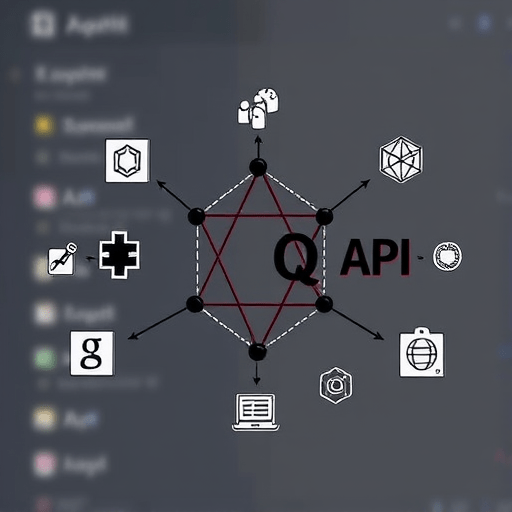
In 2026, many enterprises still operate a diverse ecosystem of REST microservices while adopting GraphQL for its flexible query capabilities. The challenge is to bridge these worlds without rewriting or decommissioning existing services. This article shows you how to fuse GraphQL federation with legacy REST APIs, focusing on schema stitching, authentication, and contract testing to create a robust, future‑proof API layer.
Why GraphQL Federation Still Matters in 2026
GraphQL federation allows you to compose a single, unified schema from multiple data sources, each responsible for its own domain. In 2026, the benefits are amplified by the proliferation of cloud-native microservices and the need for rapid feature delivery. Federation gives you:
- Decoupled ownership: Teams can develop and deploy their REST services independently.
- Incremental migration: Existing APIs can be wrapped in GraphQL adapters, preserving legacy investments.
- Fine‑grained access control: GraphQL’s request‑level authorization integrates seamlessly with OAuth or JWT strategies.
- Real‑time collaboration: A single schema document becomes the source of truth for front‑end teams.
Because federation is essentially a schema‑level composition, you can add or retire services without breaking downstream consumers, a critical feature for companies scaling globally.
Mapping REST Endpoints to a Federated Schema
The first step is to translate each REST endpoint into GraphQL types and resolvers. While this can be done manually, 2026 tooling has matured to automate much of the process.
Service Discovery and OpenAPI Integration
Leverage OpenAPI 3.0 specifications to generate GraphQL schemas. Most modern API gateways expose an OpenAPI endpoint; you can feed this into a code‑gen tool (e.g., openapi-to-graphql) that produces:
- GraphQL type definitions mirroring the REST payloads.
- Resolver stubs that make HTTP calls with
fetchoraxios. - Built‑in error handling and mapping of HTTP status codes to GraphQL errors.
For services that lack OpenAPI docs, a lightweight introspection step can still generate type skeletons by inspecting runtime responses.
Declarative Schema Stitching with @key and @requires
Once each REST wrapper exposes a sub‑schema, you stitch them together using Apollo Federation’s directives. A typical @key declaration looks like this:
type User @key(fields: "id") {
  id: ID!
  name: String
  email: String
}
The @requires directive resolves cross‑service fields without double‑fetching:
type Order @key(fields: "id") {
  id: ID!
  total: Float
  user: User @requires(fields: "userId")
}
In 2026, a new @transform directive allows inline data shaping, reducing the need for complex resolver logic. Use these directives to compose a cohesive global schema that respects ownership boundaries.
Handling Authentication Across Microservices
Authentication becomes tricky when multiple REST services expose sensitive data. The goal is to centralize auth while ensuring each service receives only the tokens it needs.
Centralized Auth Gateways
Deploy an API gateway (e.g., Kong, Ambassador, or Apigee) that handles OAuth 2.0 or OpenID Connect flows. The gateway validates the client’s token, fetches user claims, and injects a short‑lived access_token into the request header. Your GraphQL gateway then passes this token to downstream REST services.
Propagating OAuth Tokens
Each REST wrapper should include a middleware that extracts the Authorization header from the GraphQL context and forwards it. Example using Node.js:
async function resolver(parent, args, context) {
  const token = context.headers.authorization;
  const response = await fetch("https://orders.example.com/api", {
    headers: { Authorization: token }
  });
  return await response.json();
}
For services that only accept JWTs, include a token transformation step: parse the OAuth token, map the relevant claims, and sign a new JWT.
Token Rotation and Revocation
Implement automatic token rotation at the gateway level. When the gateway detects a 401 Unauthorized from a downstream service, it can silently request a new token using the refresh token, update the cache, and retry the GraphQL request. This eliminates user disruption and keeps the federated layer resilient.
Contract Testing in a Federated Environment
Contract tests ensure that your GraphQL layer remains compatible with the underlying REST services, especially when multiple teams own different endpoints.
Schema Compliance Tests
Use graphql-federation-validator to run static checks on your stitched schema. Verify that:
- All
@keyfields are present and unique. - Type extensions correctly reference base types.
- Directive usage follows federation best practices.
Integrate these tests into your CI pipeline to catch breaking changes before deployment.
Integration Tests with Mock REST Responses
Mocking external services reduces flakiness. In 2026, tools like msw (Mock Service Worker) can intercept HTTP calls within the resolver functions, returning deterministic data. Example test flow:
- Start the GraphQL gateway.
- Use
mswto mock REST endpoints for/usersand/orders. - Send a GraphQL query that spans both services.
- Assert that the response matches the expected composite shape.
Running these tests nightly guarantees that any changes in the REST layer are immediately detected, preventing downstream regressions.
Deployment Strategies for Federated GraphQL
A federated GraphQL layer introduces new deployment considerations: versioning, observability, and canary releases.
Canary Releases and Feature Flags
Deploy a new schema version to a small subset of users using feature flags (e.g., LaunchDarkly). Because GraphQL queries are explicit, you can serve a different resolver set based on the flag, allowing safe experimentation.
Observability & Tracing
Integrate OpenTelemetry into your GraphQL gateway. Each resolver should emit spans that trace the downstream REST call, including latency, status code, and error messages. Aggregated traces reveal bottlenecks at the microservice level and help in root‑cause analysis.
Common Pitfalls and How to Avoid Them
- Over‑stitching: Adding too many fields from every service bloats the schema. Keep the global schema lean by exposing only business‑critical fields.
- Inconsistent naming: REST services often use snake_case while GraphQL prefers camelCase. Use a naming convention layer during code generation to standardize.
- Missing backward compatibility: Removing a field breaks downstream consumers. Adopt a deprecation strategy: mark fields as
deprecatedwith a removal date before dropping them. - Token leakage: Ensure tokens are never logged or cached insecurely. Use secure storage mechanisms and set proper CORS policies.
By anticipating these issues, you maintain a healthy GraphQL federation that evolves with your microservice landscape.
In 2026, GraphQL federation with legacy REST APIs is no longer a niche trick but a mainstream pattern for scalable, maintainable APIs. By systematically mapping endpoints, centralizing authentication, rigorously testing contracts, and adopting smart deployment practices, you can deliver a seamless, future‑proof API layer that satisfies both technical teams and end‑users.