In 2026, Kubernetes clusters face ever‑increasing demands for agility and cost efficiency. A common pain point is pod churn—the constant cycle of terminating and recreating pods during auto‑scale events—which can lead to latency spikes, higher resource consumption, and unpredictable cost. By turning to distributed tracing as the intelligence layer behind auto‑scaling, teams can align scaling decisions with real‑world performance metrics rather than generic CPU or memory thresholds. This guide walks you through a tracing‑driven workflow that cuts pod churn while keeping response times in check.
1. Understand the Root Causes of Pod Churn
Pod churn usually originates from one of three scenarios:
- Over‑aggressive scaling thresholds: Traditional HPA configurations trigger scaling based on a single metric, such as CPU, often leading to premature pod starts or stops.
- Misaligned service latency: When application latency spikes, scaling may react to a metric that lags behind actual user experience.
- Transient spikes and noise: Short bursts of traffic can trigger scaling, causing pods to be spun up and then torn down almost immediately.
Distributed tracing provides a fine‑grained view of request paths, enabling you to pinpoint whether latency is due to genuine load or temporary spikes, and whether those spikes warrant an auto‑scale event.
2. Set Up a Unified Tracing Stack
Before scaling can become tracing‑aware, you need a consistent tracing ecosystem. In 2026, the most common stack consists of:
- OpenTelemetry Collector: The sidecar that aggregates traces from all services.
- Jaeger or Tempo: The backend that stores and visualizes traces.
- Grafana Tempo Data Source: Enables metric extraction directly from trace data.
- Prometheus with Traces Exporter: Converts trace statistics into Prometheus metrics.
Deploy the Collector as a DaemonSet to capture traces from every node, then export trace summaries to Prometheus. This creates a unified metric stream that can be queried in HPA configuration.
3. Derive Latency‑Based Metrics from Traces
Tracing data contains every request’s start, finish, and intermediate span durations. Convert this raw data into actionable metrics:
- Response Time Percentile (e.g., 95th): Compute the 95th percentile of request latency over a rolling window. This metric reflects the user experience more accurately than raw average latency.
- Error Rate Ratio: Capture the ratio of failed spans to total spans to gauge service health.
- Span Count per Second: Acts as a proxy for request throughput.
PromQL queries like histogram_quantile(0.95, sum(rate(trace_latency_seconds_bucket{service="orders"}[1m])) by (le)) can feed these metrics into your auto‑scaling logic.
4. Design Tracing‑Driven Horizontal Pod Autoscaler Rules
Once you have latency‑derived metrics, you can craft HPA rules that respond to real user experience. Replace generic thresholds with custom Prometheus expressions:
- Latency HPA:
max(1, ceil(sum(rate(span_count_total{service="orders"}[1m])) / 10))— scales up when request rate per pod exceeds 10, but only if latency remains below the 95th percentile threshold. - Grace Period: Use
--horizontal-pod-autoscaler-sync-periodto reduce scaling granularity; a 30‑second sync period prevents rapid pod churn. - Cooldown Window: Set
--horizontal-pod-autoscaler-stabilization-windowto 2 minutes so scaling decisions consider recent trends rather than instantaneous spikes.
These rules let you balance responsiveness with stability, ensuring that auto‑scaling acts only when user‑visible latency degrades.
5. Implement Predictive Scaling with Trace‑Based Forecasting
Distributed tracing can also inform predictive scaling. By aggregating trace durations and correlating them with external metrics (e.g., calendar events, marketing campaigns), you can forecast future load:
- Historical Trend Analysis: Store trace statistics in a time series database and train a lightweight ARIMA model to predict next‑hour latency.
- Anomaly Detection: Use OpenTelemetry metrics to flag sudden deviations in latency percentiles, prompting pre‑emptive scaling.
- Integration with Event Schedulers: Hook the forecast model into Kubernetes EventBridge or Argo Events to trigger
kubectl scalecommands ahead of expected load.
Predictive scaling reduces pod churn by keeping the cluster provisioned for upcoming demand, eliminating the need for reactive spin‑ups.
6. Optimize Pod Initialization Time
Even with perfect scaling, pod churn can still hurt performance if new pods take too long to become ready. Mitigate this with:
- Image Layer Caching: Use
kubelet --image-service-endpointto pull layers from a local registry. - Readiness Probes tuned to Tracing: Set readiness probes that wait for a minimum trace latency before declaring a pod ready.
- Sidecar Pre‑warm: Deploy a lightweight sidecar that pre‑fetches configuration data and warms caches before the main container starts.
Reducing warm‑up time lowers the cost of pod churn and smooths user experience during scale‑up events.
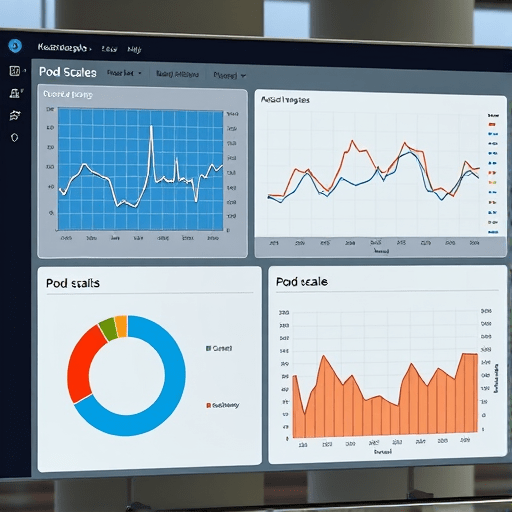
7. Monitor the Impact with Trace Dashboards
Use Grafana dashboards to observe the interplay between tracing metrics and scaling decisions:
- Scaling Trend Panel: Visualize pod count against latency percentiles to ensure scaling aligns with performance.
- Churn Frequency Panel: Show a heatmap of pod restarts over time; aim for <1 restart per pod per day.
- Cost‑Per‑Latency Panel: Correlate cloud resource costs with latency improvements to validate ROI.
Set alerts for spikes in churn frequency or latency percentiles that exceed your SLA, enabling rapid response.
8. Fine‑Tune with A/B Experiments
Iteratively refine HPA rules by running A/B experiments:
- Control Group: Traditional CPU‑based scaling.
- Experiment Group: Tracing‑driven latency scaling.
- Metrics: Compare average response time, pod churn, and cost per request.
Use the experiment results to calibrate percentile thresholds, cooldown windows, and predictive model parameters. A/B testing ensures that changes yield measurable benefits rather than speculative optimizations.
9. Integrate with CI/CD for Continuous Improvement
Embed tracing‑based scaling tests into your CI/CD pipeline:
- Simulate Load: Use k6 or Vegeta to generate traffic, collect traces, and feed into a test HPA.
- Deploy a Test Cluster: Spin up a sandboxed cluster with the same tracing stack.
- Run Post‑Deployment Tests: Verify that the new scaling rules do not introduce higher churn or latency.
Automating this loop guarantees that every code change is evaluated against real‑world tracing data before hitting production.
10. Maintain Compliance and Security in Tracing Data
Tracing data often contains sensitive request payloads. In 2026, best practices include:
- Data Masking: Configure OpenTelemetry Collector to redact or anonymize fields before export.
- Secure Transport: Use mutual TLS for all trace data transmission.
- Access Controls: Restrict Prometheus and Grafana dashboards to authorized teams.
Compliance with GDPR and CCPA not only protects users but also ensures that your tracing‑driven scaling strategy remains legal and ethical.
By replacing blunt, CPU‑centric scaling with nuanced, trace‑derived decision logic, Kubernetes clusters in 2026 can drastically reduce pod churn. This results in smoother user experiences, predictable performance, and tighter cost controls. Adopt the steps above, iterate with data, and keep your cluster lean and responsive.