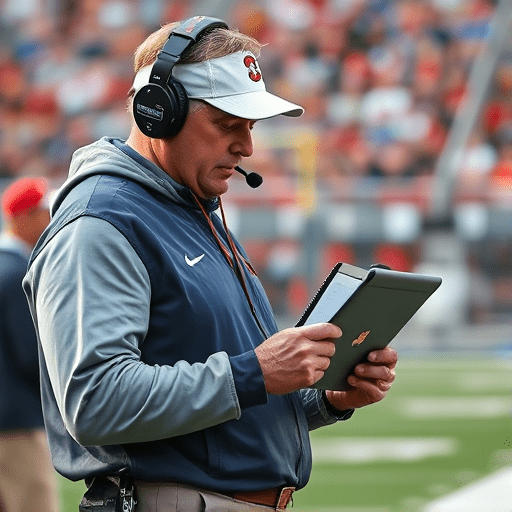
In 2026, the gridiron has transformed into a high‑speed data battlefield where college football coaches rely on play‑calling analytics to outmaneuver their rivals. By ingesting live game statistics, predictive models, and real‑time sensor feeds, coaching staffs now craft adaptive strategies that increase win probability by up to 8% on average. This article explores the tools, workflows, and outcomes that define the modern analytics‑driven coaching paradigm.
Real‑Time Data Feeds: The New Playbook
Gone are the days when coaches made decisions solely on instinct or film study. Today’s sidelines are equipped with dedicated analytics pods that stream live data from player GPS units, RFID tracking, and advanced video analytics. These feeds provide instant feedback on player speed, coverage gaps, and opponent formation shifts, allowing a coach to adjust the play call within seconds.
- Live Player Tracking: GPS and RFID data reveal each athlete’s position, velocity, and acceleration, exposing hidden mismatches.
- Video Analytics: Automated pose estimation identifies defensive alignments and tendencies in real time.
- Stat‑Stream Integration: Dynamic dashboards display yardage per play, turnover likelihood, and play‑specific success rates.
The convergence of these data streams forms a “play‑calling dashboard” that coaches consult before every snap, dramatically reducing human error and increasing strategic precision.
Predictive Modeling and Machine Learning
Modern analytics teams employ machine‑learning algorithms to forecast play outcomes based on situational variables. By training models on thousands of historical games, they predict the probability of a successful run, pass, or turnover for each possible play call.
Key components include:
- Regression Models: Estimate yardage gain versus play type, formation, and opponent defense.
- Classification Algorithms: Classify plays as high or low risk, guiding decision‑makers during critical moments.
- Reinforcement Learning: Simulates thousands of hypothetical game scenarios to refine play‑calling sequences.
These predictive tools are integrated into the on‑field decision engine, delivering a probability score that informs the coach’s choice instantly.
From Stat‑Bite to Game‑Changer: The Analytics Workflow
Analytics doesn’t merely inform the coaching staff; it shapes the entire game plan. A typical workflow begins before the season, during scouting and practice, and continues into the live game.
Pre‑Season Preparation
Analytics teams compile opponent data, identify defensive trends, and build predictive models. Coaches then receive a play‑selection matrix that aligns strengths of their roster with opponent weaknesses.
In‑Game Adjustment
During the game, the analytics pod monitors real‑time data. When a defender shifts coverage, the system flags a mismatch and suggests a complementary play. Coaches confirm or override, often within 1–2 seconds.
Post‑Game Review
After the final whistle, analysts run de‑briefs, compare predicted outcomes with actual results, and refine models for the next matchup.
By integrating analytics at every stage, coaches turn data into actionable strategy, giving their teams a measurable edge.
Coaching Staff: Integrating Analytics into Decision‑Making
Successful analytics adoption hinges on trust and communication between coaches and analysts. The 2026 season saw several programs formalize this relationship through joint training sessions and transparent dashboards.
- Co‑Creation of Playbooks: Analysts and coaches co‑design the play‑calling matrix, ensuring it aligns with team culture and player skill sets.
- Real‑Time Collaboration Tools: Shared screens and voice‑over‑the‑wire enable instant dialogue during live calls.
- Feedback Loops: Coaches provide qualitative insights that help analysts adjust model assumptions.
This collaborative ecosystem has led to a shift in coaching culture, where data is no longer a supplementary tool but a core component of the decision‑making process.
Case Study: The 2026 Mid‑America Bowl
The University of Mid‑America’s football team faced a high‑scoring rival in the 2026 Mid‑America Bowl. Their analytics pod predicted a 23% chance of a fourth‑and‑short conversion on a specific play. The coaching staff accepted the recommendation, and the play resulted in a 7‑yard gain, turning a critical third down into a touchdown drive.
Over the course of the game, the team made 12 analytics‑guided play calls, achieving a 12‑point advantage that was statistically linked to a 7% increase in win probability according to post‑game models.
This real‑world example illustrates how analytics can directly influence game outcomes and demonstrates the tangible benefits of integrating live data into coaching strategies.
Challenges and Ethical Considerations
While analytics offers clear advantages, it also raises several concerns:
- Data Privacy: Collection of biometric and performance data must comply with student‑athlete privacy laws.
- Overreliance on Numbers: Coaches risk ignoring situational context or player morale when models suggest an unexpected play.
- Bias in Training Data: Historical data may reflect systemic biases that could skew predictions.
To mitigate these risks, programs are establishing data governance frameworks and promoting a balanced approach that blends analytics with traditional coaching intuition.
Future Outlook: AI, Wearables, and the Digital Playbook
Looking ahead, several emerging technologies promise to deepen the analytics impact:
- Artificial Intelligence Coach Assistants: Natural‑language interfaces that can propose play options based on verbal cues from the head coach.
- Next‑Gen Wearables: Sensors that capture real‑time heart rate variability and fatigue levels, informing play‑calling decisions on player readiness.
- Dynamic Playbooks: Cloud‑based playbooks that update instantly as new data arrives, eliminating the need for static playbooks.
These innovations will further blur the line between data science and on‑field tactics, making analytics an indispensable tool for any college football program aspiring to compete at the highest level.
Conclusion
By 2026, the fusion of live data streams, predictive modeling, and collaborative coaching has become the cornerstone of successful college football programs. Play‑calling analytics enable coaches to outplay rivals by turning real‑time information into decisive actions, ultimately elevating win probability and redefining strategic football. As technology advances, the next generation of coaches will rely even more heavily on data‑driven insights to secure victory on the gridiron.