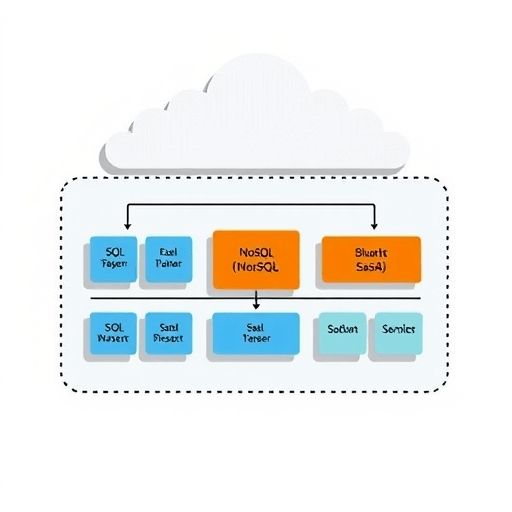
Choosing SQL or NoSQL for performance & cost in multi‑tenant SaaS is no longer a binary decision. By 2026 the market has matured around serverless, distributed, and hybrid database models that let you scale tenants independently while keeping operational spend predictable. The key is to match your workload’s read/write patterns, consistency needs, and budget constraints to the right data store. In this practical guide, we break down the criteria that matter most—latency, throughput, storage economics, and data integrity—so you can design a cost‑efficient, highly performant architecture that stays future‑proof.
The 2026 Landscape of Multi‑Tenant Databases
In 2026, most SaaS vendors leverage a mix of relational, document, key‑value, and graph databases, each managed as a service or through a self‑hosted cluster that exposes a serverless interface. Cloud providers now offer built‑in tenant isolation via namespace or schema separation, reducing the operational overhead that once made multi‑tenant deployments a headache. Serverless offerings like MySQL Aurora Serverless v2 or MongoDB Atlas Serverless provide dynamic scaling, automatically spinning up resources only when traffic spikes. This elasticity is a game changer for cost control, but it also requires a clear understanding of how each data model behaves under load.
Performance Metrics That Matter
Throughput vs. Latency
- High‑throughput workloads—think bulk imports, analytics pipelines, or event streams—benefit from NoSQL’s horizontal partitioning. Document or key‑value stores can shard millions of records across thousands of nodes.
- Low‑latency CRUD—critical for dashboards or real‑time collaboration—often leans toward relational models that enforce ACID guarantees and support index‑based lookups.
- Hybrid use‑cases may run heavy analytics in a NoSQL layer while serving transactional reads from a SQL layer via materialized views.
Consistent Reads vs. Eventual Consistency
SQL databases provide strong consistency by default, which simplifies business logic but can impose higher read latency under heavy load. NoSQL stores often default to eventual consistency, offering lower read latency at the cost of temporary data staleness. 2026 vendors now allow per‑tenant consistency tuning—e.g., Redis Enterprise can switch between strong and eventual modes on a per‑key basis—allowing you to expose a consistent API while still benefiting from lower latency where it matters.
Cost Factors: Subscription, Storage, and Operational
Cost is the triple‑bottom line for SaaS: upfront subscription fees, storage expenses, and operational overhead. Modern cloud offerings use a pay‑as‑you‑go model that can reduce waste but also introduces volatility if you don’t monitor usage patterns.
Subscription Tiers
- SQL services like Azure SQL Managed Instance charge per vCore and per storage GB, while NoSQL services often bill by throughput units and per‑GB stored.
- Serverless models remove idle resource charges but can generate a spike when scaling up, so you need a predictive model of peak loads.
- Vendor‑specific discounts (e.g., reserved capacity, multi‑year commitments) can shift the balance in favor of one technology over another.
Storage Economics
NoSQL document stores typically store data in JSON blobs, which can be more storage‑efficient for unstructured attributes but may waste space for fixed schemas. Relational databases enforce strict schemas, leading to higher storage consumption for sparse columns but better compression. In 2026, column‑store technologies (e.g., Aurora PostgreSQL with Citus) offer a middle ground, providing relational semantics with column‑wise compression that cuts storage costs by up to 40% for analytical workloads.
Operational Overhead
Managed services reduce the need for database administrators, but they also require you to master new monitoring dashboards and query optimizers. Serverless offerings let you scale without provisioning, but they can generate hidden costs for data transfer between tiers. Choosing a vendor with native multi‑tenant monitoring—such as Datadog Cloud Integration for Azure or Prometheus + Grafana for GCP—simplifies capacity planning and anomaly detection.
Consistency Models in Practice
Data consistency is not a binary choice; it is a spectrum that can be tailored per table, partition, or even per tenant. In 2026, many providers expose strong consistency, bounded staleness, and read‑your‑writes as options you can toggle via configuration.
Schema‑Based Consistency
SQL databases guarantee ACID transactions out of the box. If your SaaS relies on complex joins, foreign keys, or transactional guarantees (e.g., billing or inventory), a relational database may be the only viable option. However, even within SQL you can choose read‑committed or snapshot isolation to trade off between strictness and performance.
Document‑Store Consistency
NoSQL stores often provide read‑your‑writes at a single node level, while writes may propagate asynchronously across replicas. For applications where temporary staleness is acceptable—like analytics dashboards or notification feeds—eventual consistency can dramatically reduce latency. When staleness is unacceptable, most NoSQL vendors allow you to configure session consistency or strong consistency for critical documents.
Hybrid Approaches: When to Combine SQL and NoSQL
Modern SaaS solutions increasingly adopt a hybrid architecture. By storing transactional data in a relational database and analytical data in a column‑store or document store, you can achieve both performance and cost efficiency. For example, a SaaS CRM might use Aurora PostgreSQL for core customer records while pushing aggregated metrics to an ElasticSearch cluster for fast faceted search.
- Use case 1: Billing and subscriptions—transactional, ACID‑required—stored in SQL.
- Use case 2: User activity logs—high write volume, eventual reads—stored in NoSQL.
- Use case 3: Feature flag configuration—fast read, sparse updates—stored in Redis or DynamoDB.
Internal data pipelines can materialize read‑optimized views or use change data capture (CDC) to keep NoSQL caches in sync with the SQL source. This approach provides the best of both worlds: strong consistency for critical paths and elasticity for analytic or semi‑structured data.
Choosing the Right Vendor
When evaluating vendors, focus on three dimensions: elasticity, consistency options, and cost transparency. Compare the following:
- Elasticity: Does the service automatically scale up/down without downtime? Can you pre‑allocate capacity to avoid cold starts?
- Consistency controls: Are you able to enforce per‑tenant consistency levels? Does the vendor provide a simple UI or API to change these settings on the fly?
- Cost transparency: Is the pricing model clear? Do you have dashboards that break down costs by tenant, by operation type, and by region?
Vendor lock‑in is another factor. For example, moving a complex relational schema from Aurora PostgreSQL to Google Cloud Spanner can be non‑trivial. Consider building your architecture with vendor-agnostic connectors—like Airbyte or Fivetran—to reduce migration risk.
Implementation Checklist
- Define tenant isolation strategy (schema, namespace, or database per tenant).
- Map workloads to data models based on latency, consistency, and write volume.
- Set up cost alerts for storage, throughput, and data transfer.
- Deploy a monitoring stack that aggregates metrics across all database services.
- Implement automated scaling rules using the provider’s serverless APIs.
- Establish a data migration plan that includes rollback procedures and data validation.
- Document tenant-level access controls and audit trails.
- Plan for eventual consistency conflicts by designing idempotent operations.
Common Pitfalls and How to Avoid Them
- Over‑scaling on demand: Without a predictive model, serverless can overspend during traffic spikes. Mitigate by profiling peak loads and setting soft limits.
- Ignoring storage costs: Column‑store compression is often under‑utilized. Run a one‑off audit to compress legacy data.
- Forgetting consistency requirements: Even a single table that requires ACID can cripple performance if forced into a NoSQL store. Keep such tables in SQL.
- Vendor lock‑in via proprietary extensions: Prefer ANSI‑SQL compatible engines and avoid vendor‑specific functions unless essential.
- Missing tenant isolation: A multi‑tenant design that shares a single schema can lead to accidental data leakage. Use schema or database per tenant unless you have a proven isolation mechanism.
By aligning your performance, cost, and consistency goals with the appropriate data model and vendor capabilities, you can deliver a SaaS experience that scales gracefully in 2026 and beyond. A thoughtful mix of SQL for transactional integrity and NoSQL for elastic, cost‑effective analytics offers the best of both worlds—ensuring that your tenants get fast, reliable service without the hidden costs that traditionally plagued multi‑tenant deployments.