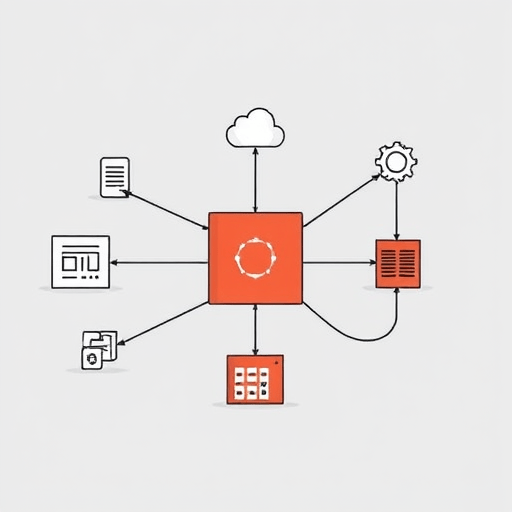
The future of reliable CI lies in Causal Self‑Healing Test Automation — a paradigm that combines runtime telemetry and causal AI to automatically diagnose flaky tests and generate targeted repairs so CI stays green without manual triage. Teams plagued by intermittent failures and noisy pipelines can use this approach to restore developer focus, reduce mean time to repair, and prevent blocked releases.
Why flaky tests are a hidden tax on engineering velocity
Flaky tests — tests that nondeterministically pass or fail — erode trust in CI, force costly manual triage, and create hidden delays. Traditional approaches (quarantine tests, add retries, or ignore failures) treat symptoms instead of causes. Causal Self‑Healing Test Automation seeks to close the loop: detect flaky behavior, infer the causal drivers using telemetry, and apply precise fixes or mitigations automatically.
Core components of a causal self‑healing system
Building a reliable self‑healing pipeline requires integrating several pieces of telemetry, analysis, and actuation. The high‑level components are:
- Runtime telemetry collection: logs, traces, metrics (CPU, memory, network), environment snapshots, and test harness data captured at failure time.
- Event correlation and storage: indexed, time‑aligned event stores and observability backends to correlate test results with runtime signals.
- Causal inference engine: algorithms that distinguish correlation from causation and identify the most likely root causes for flakiness.
- Repair generator: a module that proposes targeted repairs (test stabilization, wait/retry adjustments, mock isolation, or code fixes) and optionally creates PRs or automated patches.
- Policy & human feedback loop: guardrails to validate automated fixes, collect reviewer feedback, and improve the causal model over time.
What runtime telemetry to capture (and why it matters)
Not all telemetry is equally useful for diagnosing flakes. Prioritize signals that expose timing, state, and environment differences between runs:
- Execution traces: distributed traces showing the exact call path and latencies leading up to the assertion.
- System metrics: CPU, memory, disk I/O, and network metrics at test runtime to detect resource contention.
- Logs with structured context: timestamps, correlation IDs, and environment tags to align with traces and metrics.
- Test harness state: fixture inputs, random seeds, DB snapshots, and mock configuration.
- Infrastructure metadata: container image, node labels, kernel version, and CVE patch level for environmental drift detection.
How causal AI finds root causes (not just correlations)
Causal AI combines statistical modeling with interventions to infer cause-effect relationships. Practical approaches for flaky test diagnosis include:
- Counterfactual reasoning: “Had network latency been lower, would the test have passed?”—simulated via trace replays or synthetic perturbations.
- Instrumented interventions: run tests under controlled changes (e.g., pin dependency versions or inject higher latency) to measure outcome shifts.
- Graphical causal models: build dependency graphs where telemetry nodes link services, resources, and assertions to find minimal sets that explain failures.
- Probabilistic scoring: assign likelihoods to candidate root causes and rank them for repair prioritization.
Generating targeted repairs automatically
Once the causal engine proposes a high‑confidence root cause, the system can create targeted repairs that are less risky than broad, blanket changes:
- Test-level fixes: add deterministic seeding, reduce dependence on wall‑clock timing, or switch brittle network calls to deterministic mocks.
- Test harness changes: add retries with exponential backoff, introduce idempotency guards, or ensure proper cleanup of shared state.
- Infrastructure adjustments: pin image versions, increase resource limits, or isolate tests to dedicated runners.
- Suggested code changes: minimal patches identified by static analysis combined with causal signals (example: add null checks or use backoff wrappers).
Repairs should be proposed as small, reviewable PRs; optionally run in canary mode to validate stability before merging automatically.
Practical implementation roadmap
Teams can adopt causal self‑healing incrementally by following a phased rollout:
- Baseline observability: ensure traces, structured logs, and metrics are available and correlated with test IDs.
- Failure replay & data collection: capture failing runs and replay them in a sandbox for controlled experiments.
- Lightweight causal models: start with simple heuristics (resource spikes, timing variance) and expand to causal graphs.
- Automated repair experiments: implement safe, reversible repairs like retry wrappers or test isolation; measure outcomes.
- Human‑in‑the‑loop to automated mode: initially require human approval for PRs, then progressively increase automation for high‑confidence fixes.
Measuring success
Key metrics to track progress:
- Flake rate: frequency of nondeterministic test failures per build.
- Mean time to repair (MTTR): time from flaky detection to validated repair (manual vs automated).
- Automated remediation rate: percentage of repair proposals merged without human triage.
- CI pass stability: percentage of pipelines passing for N consecutive runs.
- False positive rate: proportion of automated fixes that introduced regressions or were rejected by reviewers.
Best practices and pitfalls to avoid
Adopt these practices to ensure effectiveness and avoid common mistakes:
- Prefer minimal, reversible changes: automated fixes must be small and easily reverted.
- Guard with policies: require test coverage or a confidence threshold before auto-merging fixes.
- Continuously validate models: feed reviewer feedback and post‑merge results back into the causal engine.
- Avoid masking real issues: do not use retries or suppression as permanent bandaids for systemic bugs.
- Respect security and secrets: telemetry must be sanitized and stored per compliance rules.
Real‑world example
Consider a web UI test that intermittently fails on assertion “element not found.” Telemetry shows network latency spikes and a background GC on the browser runner. A causal model links elevated GC pauses to rendering delays that cause the element to appear late. The repair generator proposes: increase the test’s explicit wait with a short retry, pin the browser image to a stable version, and add a small health probe before starting the test runner. After running in canary, flake rate drops dramatically and the suggested PR is merged automatically for similar future fixes.
Conclusion: Causal Self‑Healing Test Automation turns flaky test chaos into actionable knowledge by combining runtime telemetry and causal AI to diagnose and repair problems automatically. When implemented responsibly, it reduces manual triage, improves CI stability, and lets engineering teams ship with confidence.
Ready to see it in action? Start by capturing richer runtime telemetry for a single flaky test and run a causal analysis experiment this week.