# How to Plan a Carbon-Neutral Road Trip: The 2026 Beginner’s Guide to EV Rentals and Offset Apps
Planning a carbon-neutral road trip in 2026 isn’t just about choosing an electric car and calling it a day. It’s about understanding the full footprint of your journey: the energy used to build the vehicle, the electricity that charges it, and the unavoidable emissions from tires, brakes, and battery production. If you’re ready to plan a carbon-neutral road trip without the guesswork, this guide will walk you through the EV rental decisions and offset apps that actually matter. The good news? With today’s technology, it’s easier—and more affordable—than ever to hit the road with a clear conscience.
## Why a Carbon-Neutral Road Trip Starts Before You Drive
A common misconception is that renting an EV automatically makes your trip carbon-neutral. In reality, an EV still has a carbon shadow—it just lives in different places. Manufacturing a battery, especially a large one, requires mining and processing lithium, cobalt, and nickel. Then there’s the electricity mix. If your road trip crosses regions where the grid runs on coal or natural gas, charging at those stations adds emissions. Finally, tires shed microplastics and brake dust releases particulates—both of which contribute to your vehicle’s total impact.
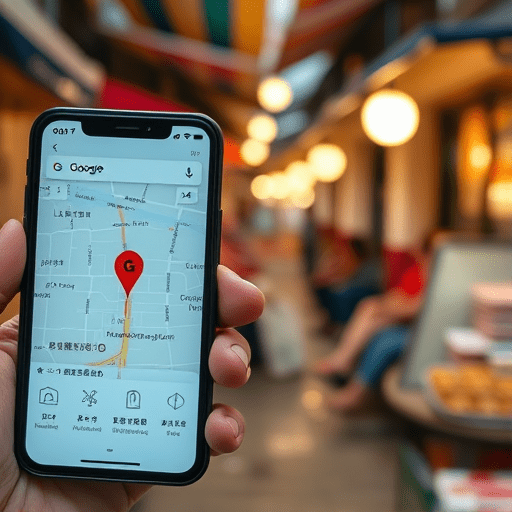
None of this should discourage you. Instead, it means a genuine carbon-neutral trip has three layers: minimizing energy waste while driving, choosing renewable-powered charging when possible, and offsetting the remaining life-cycle emissions with certified programs. That’s where the “offset apps” come in. In 2026, these tools have matured beyond simple calculators—they let you track, verify, and retire carbon credits directly from your phone.
## EV Rental Tips: Choosing the Right Electric Car for Your Route
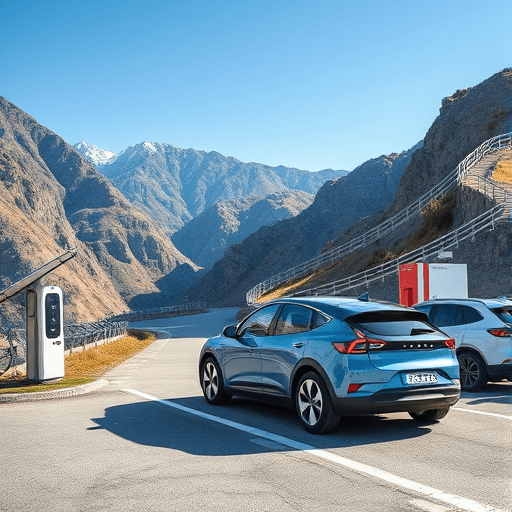
Not every EV is ideal for a long road trip. Rental fleets now offer everything from compact city cars to long-range SUVs, and your choice will determine your charging stops, comfort, and ultimately your carbon footprint. Here’s how to pick the best electric rental for a carbon-neutral plan.
### Think Range in Terms of 10%, Not 100%
Most EV rentals advertise a range number—say, 300 miles. But that’s a lab-tested estimate. On a road trip, you’ll lose range to highway speeds, headwinds, heating or AC, and elevation climbs. A better rule of thumb is to expect only 70–80% of the advertised range in real conditions. For a beginner, choose an EV with at least 250 miles of EPA-rated range if you plan to drive over 200 miles per day. That gives you enough buffer to skip stressful “pencil-thin” charging windows.
### Match Battery Size to Your Driving Style
Larger batteries (80–100 kWh) provide more range but add weight, reducing efficiency per mile. Smaller batteries (60–75 kWh) are often lighter and more efficient for solo travelers or couples with light luggage. If you’re comfortable with slightly more frequent, shorter charging stops, a smaller battery can actually lower your overall emissions—because you’re carrying less mass and using less electricity per mile.
### Check the Charging Network Before You Rent
Your EV rental is only as good as the charging network you can access. In North America and Europe, the landscape has changed quickly. In 2026, most major rental companies offer cars compatible with Tesla’s Supercharger network (via NACS adapters) or the Combined Charging System (CCS). Before booking, map your route on an app like PlugShare or A Better Routeplanner. Look for charging stations that sit within 15 minutes of your planned rest stops—not just along the highway. Many beginner road-trippers underestimate how much easier a trip becomes when you can grab lunch or a coffee while the battery goes from 20% to 80%.
### Don’t Pay for Extra Range You Don’t Need
If your road trip is under 150 miles, a standard-range EV will do—and you’ll likely save money on rental fees and energy use. For longer trips, choose a long-range model. But for a first attempt at a carbon-neutral trip, aim for a route that works with the vehicle, not the other way around. The beginner’s secret is to design a loop with a few obvious charging towns, then let that shape your itinerary.
## Charge Smarter: Minimizing Energy Waste Along the Way
Once you’ve got your rental EV, your next goal is to waste as little energy as possible. This is the part of a carbon-neutral road trip that many people overlook. It’s not just about the source of electricity; it’s about how efficiently you use it.
– Drive at or just below highway limits. Speeds above 65 mph cause drag, and every 10 mph increase can reduce efficiency by up to 14%. Slower driving also reduces the frequency of charging stops, which further shrinks your life-cycle emissions.
– Use “eco mode” and adaptive cruise control. These systems smooth acceleration and braking, recovering more energy through regenerative braking.
– Preheat or precool the cabin while plugged in. Running climate control from shore power lets you start with a comfortable cabin without draining battery range.
– Plan charging at midday, when solar energy can be more abundant on many grids. That’s not universal, but in sunny states, off-peak afternoon charging can use a higher share of renewable electricity than evening or night.
– Avoid charging to 100% unless absolutely necessary. Charging from 20% to 80% is faster and puts less strain on the battery. It also keeps regenerative braking more efficient, because a full battery can’t absorb as much energy.
These micro-habits may feel minor, but over a 600-mile trip, they can add up to double-digit percentages of energy saved—and that’s energy that never needs offsetting.
## The Selection Gap: Why Offsets Matter Even in an EV
Here’s the part that makes 2026’s carbon-neutral road trips different: offsets are no longer the main act, but they still play a supporting role. You can drive a rented EV on a completely renewable-powered charging network, and your trip will still generate emissions from tire wear, brake dust (less, but not zero), and the manufacturing tailpipe of the car itself. Vehicle production accounts for roughly a third of an EV’s total lifetime emissions—and when you rent, you’re borrowing a slice of that manufacturing footprint.
This is what the best offset apps are designed to handle. Rather than being a guilt payment, they let you take responsibility for the parts of the trip you can’t yet eliminate. For a beginner, the key is to use offsets that are verified, transparent, and easy to tie to a specific journey.
## Three Offset Apps That Make It Easy
In 2026, the app ecosystem for carbon accountability is more accessible than ever. Here are three offset apps that stand out for road trips—each with a different approach.
### Capture
Capture is a subscription-based app that focuses on monthly carbon budgets. You enter your travel details—flights, driving distance, even hotel stays—and it calculates a rough footprint. Then you fund a portfolio of carbon removal and reduction projects automatically. What makes Capture great for a road trip is its ability to handle “one-off” additions. Let’s say your EV rental trip totals 1,200 miles. You can add that exact mileage as a project, and Capture will suggest a monthly amount to offset it. It’s as close to a “set it and forget it” experience as you’ll find.
### Cool Effect
Cool Effect is not exclusively a road-trip app, but it has one of the most vetting-friendly interfaces for travelers who want to see exactly where their money goes. The app lets you browse verified carbon offset projects—renewable energy in India, clean cookstoves in Africa, reforestation in the Americas—and fund them with a few taps. For a carbon-neutral road trip, you can use Cool Effect to offset the estimated emissions from your rental EV’s manufacturing by choosing a project that fits your values. It’s less automated than Capture, but more hands-on and educational. Beginners often appreciate seeing the project-level details before committing.
### Joro
Joro blends a personal carbon tracker with an offset marketplace. You link your credit card, but you can also manually add trips, including EV charging sessions. Joro calculates your carbon footprint using location-specific electricity emission factors, which means it can tell you how “dirty” or “clean” a particular charging stop was. That’s a powerful feature for a road trip, because it helps you identify which routes and charging networks have the lowest environmental impact. At the end of the trip, Joro offers verified offsets for the residual emissions. It’s the closest thing to a complete carbon dashboard for your journey.
## Build a Simple Road-Trip Carbon Budget
You can combine the EV rental tips and offset apps into a straightforward carbon budget. Here’s a beginner-friendly approach:
1. **Estimate your driving emissions baseline.** Start with a conservative figure: an average gasoline car emits about 400 grams of CO2 per mile. If your route is 1,000 miles, that’s about 400 kg of CO2.
2. **Calculate your EV’s marginal emissions.** For an EV on a typical mixed grid, that number drops to roughly 100–150 grams per mile, including charging losses. So your 1,000-mile trip might produce 150 kg of CO2.
3. **Add a manufacturing share.** If the EV you rent has a battery production footprint of, say, 10 tons of CO2, and the vehicle has a 10-year lifetime of 150,000 miles, then your rental square footage might carry about 5–10 kg per 1,000 miles—depending on how many miles you put on it. Most offset apps using your daily mileage handle this automatically.
4. **Offset the remainder.** Use one of the three apps above to retire the equivalent number of carbon credits. For a 1,000-mile EV trip, a realistic offset cost is somewhere between $10 and $25. That’s probably less than what you’d spend on a single restaurant meal during the trip.
By tracking your mileage, charging locations, and the apps’ project types, you’ll know exactly what your carbon-neutral status means—and you’ll also learn which parts of your driving habits matter most.
## Conclusion
A carbon-neutral road trip in 2026 is less about perfection and more about deliberate choices. Renting the right EV for your route, driving efficiently, and using offset apps for the unavoidable shares of manufacturing and charging are all pieces of a reliable system. Capture, Cool Effect, and Joro offer different levels of automation and transparency, so you can pick one that fits your comfort level. Once you’ve completed a trip with this framework, you’ll likely find that the habit sticks—not because it’s perfect, but because it makes you think about every mile in a way that’s both responsible and rewarding.