In 2026, telehealth platforms that integrate a smart billing UI capable of displaying real‑time claim status directly within patient portals can reduce claim denials by as much as thirty percent. By giving patients and clinicians immediate visibility into the payment process, the UI eliminates uncertainty, streamlines follow‑up, and forces both sides to act on denials before they become entrenched. This article explores concrete design patterns, data flows, and compliance considerations that enable a telehealth UX to become a denial‑reducing powerhouse.
Real‑Time Claim Tracking
At the heart of denial reduction lies instantaneous claim tracking. A UI that fetches claim status from the clearinghouse’s API and pushes updates through WebSockets or Server‑Sent Events keeps the portal in sync with backend processes. The dashboard should differentiate between “submitted,” “under review,” “approved,” and “denied” states with color coding, timestamps, and action links. A simple timeline view lets users see exactly when a claim was sent, when a denial reason surfaced, and what remediation steps are required.
Data Visualization Dashboard
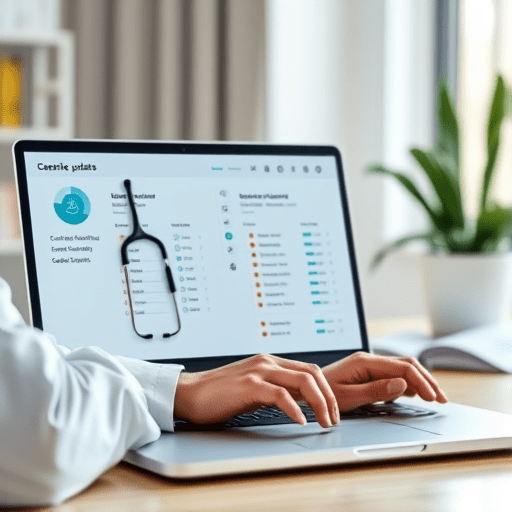
Visual cues turn raw data into actionable insight. Use line charts to illustrate denial trends over time, bar charts for denial categories, and pie charts for payer mix. Interactive elements—such as hover tooltips that reveal the ICD code linked to a denial—enable clinicians to quickly diagnose coding errors. Moreover, a real‑time countdown clock can show the time left before a claim is deemed “stale,” nudging users to act before the window closes.
Patient Portal Integration
Embedding billing intelligence directly in the patient portal removes friction and fosters trust. Patients can view their claim history, upload missing documents, and even schedule follow‑up calls with billing representatives. By aligning billing status with telehealth visit records, clinicians can pre‑emptively flag potential denial risks and advise patients before a claim is even submitted.
Seamless Claim Status Updates
Push notifications should be concise and context‑aware. For example, a “claim denied due to missing diagnosis code” notification could link straight to a form pre‑filled with the required ICD code. This reduces back‑and‑forth emails and speeds remediation. Implement a “One‑Click Appeal” button that auto‑generates a standardized appeal packet, saving time for both provider and payer.
Smart Billing Workflows
Smart billing workflows automate many of the manual steps that historically lead to denials. Integrate eligibility verification at the point of care: as soon as a provider selects a service code, the UI queries the payer’s eligibility service. If the patient’s plan does not cover a procedure, the UI offers an alternative code that aligns with coverage, instantly notifying the clinician of the change. This proactive correction reduces the “code mismatch” denials that can account for up to 25% of rejections.
Automated Eligibility Checks
Eligibility checks should run in the background while the clinician completes the visit notes. The system can display a low‑visibility banner indicating “Coverage verified” or “Coverage missing.” If coverage is missing, an automated recommendation engine suggests comparable, covered services. Coupling this with an instant claim submission button—once the visit is documented—ensures that claims are only sent when the payer’s coverage conditions are met.
UX Design Principles for Telehealth
A denial‑reduction UI is more than a collection of data points; it must be a frictionless experience that feels like an extension of the care journey. Prioritize microinteractions that confirm every action: a checkmark when a claim is successfully submitted, a subtle shake animation when a required field is omitted. Use progressive disclosure to keep the interface uncluttered; only show advanced billing options when the user explicitly requests them. Consistency in iconography and terminology reduces cognitive load, enabling clinicians to focus on patient care rather than paperwork.
Microinteractions and Confirmation Feedback
Feedback loops are critical. When a denial occurs, the UI should display a concise explanation, the specific payer policy reference, and a “Next Steps” section. This empowers users to act immediately, rather than waiting for an email. Additionally, implement a “Claim History” sidebar that animates the addition of new claims, reinforcing the sense that every action is recorded and tracked.
Compliance and Security
Telehealth billing interfaces handle protected health information (PHI) and payment data, making HIPAA compliance non‑negotiable. Use role‑based access controls so that billing staff can view claim details but patients see only their own data. Encrypt all data at rest and in transit, and employ multi‑factor authentication for high‑privilege users. Regular penetration testing and automated audit trails help maintain trust and regulatory compliance.
Future‑Proofing with AI
Artificial intelligence can elevate denial prevention beyond static rules. Machine‑learning models trained on historical denial data can predict the likelihood of denial before a claim is submitted, flagging high‑risk items. AI can also suggest optimal code bundles based on payer-specific coverage patterns, and auto‑populate claim forms to reduce human error. As telehealth ecosystems evolve, incorporating AI ensures that the billing UI remains ahead of emerging payer policies and coding changes.
By weaving together real‑time claim tracking, seamless portal integration, automated eligibility checks, patient‑centric UX design, stringent compliance, and AI‑driven foresight, telehealth platforms can systematically slash claim denials. The result is a smoother revenue cycle, higher provider satisfaction, and, most importantly, patients who feel more informed and empowered throughout their care journey.