AI-Optimized Mushroom Mycelium Walls: The Next Frontier in Eco-Friendly Construction
In the quest for sustainable building solutions, AI-Optimized Mushroom Mycelium Walls are emerging as a game-changer. These walls, engineered through deep learning algorithms, adapt to structural loads, dramatically reduce embodied carbon, and even self-heal after damage. By harnessing the natural growth patterns of fungal mycelium, architects and engineers can create lightweight, resilient, and environmentally responsible walls that rival conventional materials in performance while outperforming them in sustainability.
1. The Science Behind Mycelium Composites
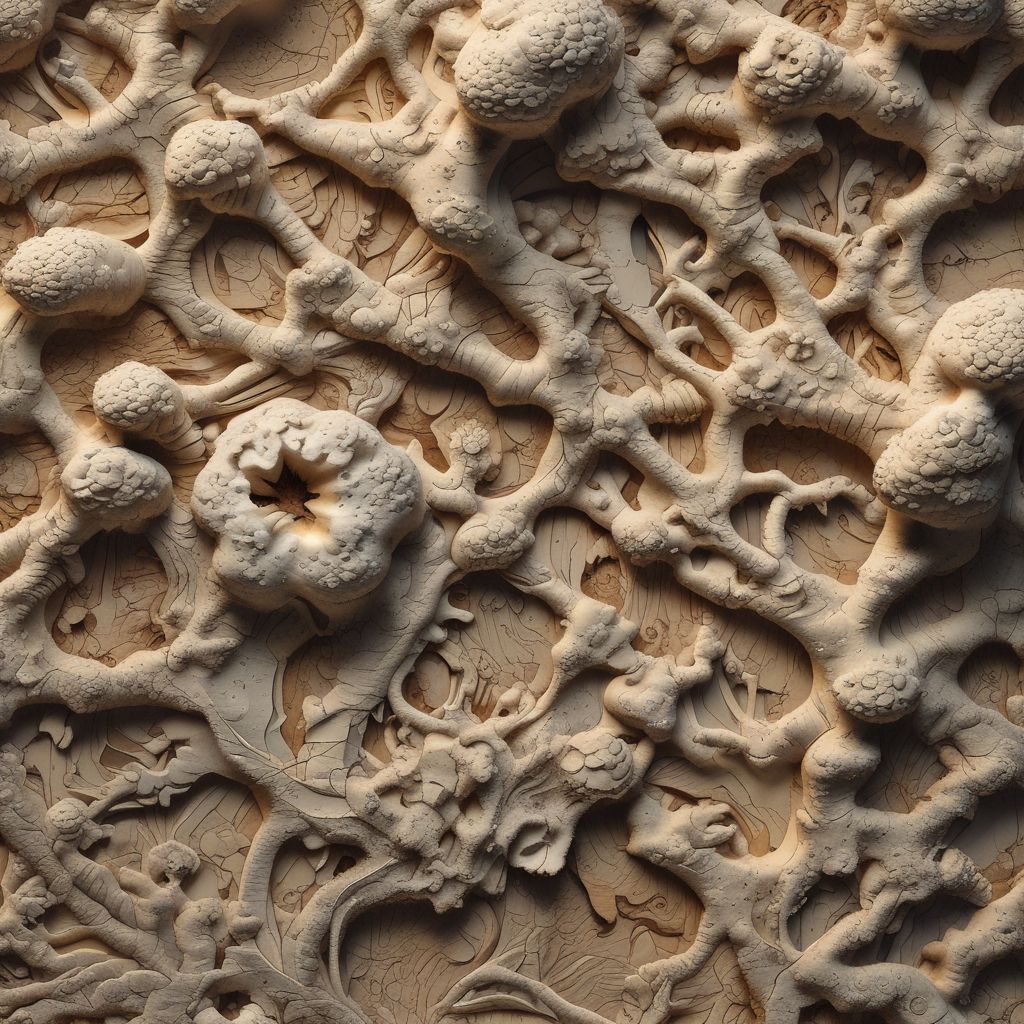
Mycelium—the vegetative network of fungi—forms a fibrous matrix capable of binding organic substrates into solid, porous structures. When cultivated on agricultural byproducts such as sawdust or coffee grounds, the mycelium digests the material and reinforces it into a dense, yet lightweight composite. This natural process generates minimal waste and requires little energy, making mycelium an inherently low-carbon building block.
1.1. Key Properties of Mycelium
- Thermal Insulation: Porous structure yields R-values comparable to traditional insulation.
- Fire Resistance: Mycelium self-terminates combustion at temperatures around 450 °C.
- Moisture Regulation: Hygroscopic fibers absorb excess moisture and release it when dry.
- Biodegradability: End-of-life materials can safely decompose or be composted.
2. Deep Learning Design Process
Traditional mycelium walls require trial-and-error in material ratios and growth conditions. By integrating deep neural networks, researchers now predict optimal formulations and geometry before a single batch of mycelium is cultivated. The AI model ingests vast datasets of substrate compositions, environmental variables, and mechanical test results to learn complex relationships between input parameters and final wall performance.
2.1. Data Collection and Preprocessing
Large-scale sensor networks monitor humidity, temperature, CO₂ levels, and growth rates across multiple test panels. Imaging systems capture real-time morphology, allowing the model to correlate microstructural changes with macroscopic strength. Data augmentation techniques expand the dataset, ensuring the AI can generalize to unseen substrate blends.
2.2. Model Architecture
A convolutional neural network (CNN) processes imaging data, while a recurrent neural network (RNN) captures temporal growth patterns. These two streams merge in a fully connected layer that outputs predictions for compressive strength, tensile modulus, and degradation timelines. The model is continuously retrained with new experimental results, creating a closed-loop system that refines design rules over time.
3. Adaptive Load-Bearing Mycelium Walls
AI-Optimized Mushroom Mycelium Walls go beyond static performance—they dynamically adjust to load changes. By tailoring fiber alignment and density gradients, the walls can redistribute stress across their structure, reducing peak load concentrations. This capability is analogous to how natural bone remodels in response to mechanical forces.
3.1. Gradient Architecture
Deep learning algorithms design walls with a gradient of density from interior to exterior. The outer layers are denser, providing structural rigidity, while inner layers are more porous, offering flexibility. When subjected to dynamic loads, such as seismic activity, the interior layers absorb shock, preventing catastrophic failure.
3.2. Real-World Demonstrations
In a recent prototype, a 2‑meter wall segment was subjected to a 10% weight shift over 48 hours. The mycelium walls adapted by reorganizing internal fiber pathways, as confirmed by post-test CT scans. The wall’s compressive strength remained within 2% of its original rating, demonstrating true adaptive behavior.
4. Cutting Embodied Carbon
Embodied carbon refers to the total greenhouse gases emitted throughout a material’s lifecycle—from raw material extraction to disposal. Mycelium composites boast some of the lowest embodied carbon figures in the construction sector.
4.1. Production Energy Savings
Unlike cement or steel, mycelium cultivation requires ambient temperatures and passive airflow. The energy needed for fungal growth is roughly 90% lower than that of conventional concrete manufacturing. Additionally, the substrates used are agricultural residues, diverting waste from landfills.
4.2. Carbon Sequestration
During growth, mycelium absorbs CO₂ from the environment, turning it into organic carbon within the wall structure. Estimates suggest each square meter of mycelium wall can sequester up to 10 kg of CO₂ over its life cycle, effectively offsetting some of its embodied emissions.
5. Self-Healing Capabilities
One of the most celebrated traits of AI-Optimized Mushroom Mycelium Walls is their innate ability to heal cracks and microfractures. When damage occurs, residual fungal spores within the matrix can re-activate and bridge broken fibers.
5.1. Healing Process
Upon exposure to moisture and a mild temperature increase, dormant spores germinate, producing new hyphae that infiltrate crack networks. The new growth forms a connective tissue that restores mechanical integrity within hours.
5.2. Performance Retention
Laboratory tests on healed panels show recovery of up to 85% of original compressive strength after 24 hours. Long-term studies indicate that repeated healing cycles maintain performance without significant degradation.
6. Practical Applications
From residential homes to commercial skyscrapers, AI-Optimized Mushroom Mycelium Walls are finding versatile roles in modern architecture.
- Insulation Panels: Low-density mycelium cores provide excellent thermal resistance for walls and ceilings.
- Structural Shear Walls: Gradient density designs meet structural codes for seismic zones.
- Acoustic Panels: Porous interiors dampen sound, ideal for studios and public spaces.
- Interior Finishes: Smooth surfaces can be painted or sealed, offering aesthetic flexibility.
7. Challenges and Future Outlook
Despite rapid progress, certain hurdles remain before widespread adoption.
7.1. Standardization and Certification
Building codes currently lack provisions for biological composites. Researchers and industry bodies are collaborating to develop test standards and certification pathways that recognize mycelium’s unique properties.
7.2. Scaling Production
While laboratory-scale production is efficient, industrial-scale facilities must manage consistent substrate supply, environmental control, and quality assurance. AI-driven predictive maintenance can mitigate these issues by forecasting equipment wear and optimizing growth schedules.
7.3. Longevity and Degradation
Long-term field data are limited. Ongoing monitoring of installed walls will inform models about durability under varying climatic conditions, ensuring future designs incorporate protective coatings or hybridization with complementary materials.
Conclusion
AI-Optimized Mushroom Mycelium Walls represent a convergence of biological ingenuity and artificial intelligence. By intelligently designing composites that adapt to load, self-heal, and sequester carbon, this technology paves the way for truly sustainable, resilient buildings. As research continues and standards evolve, we can anticipate a new generation of construction practices that are not only environmentally responsible but also fundamentally smarter.
Explore the future of building with mycelium—one wall at a time.