The Science Behind AI Dreaming
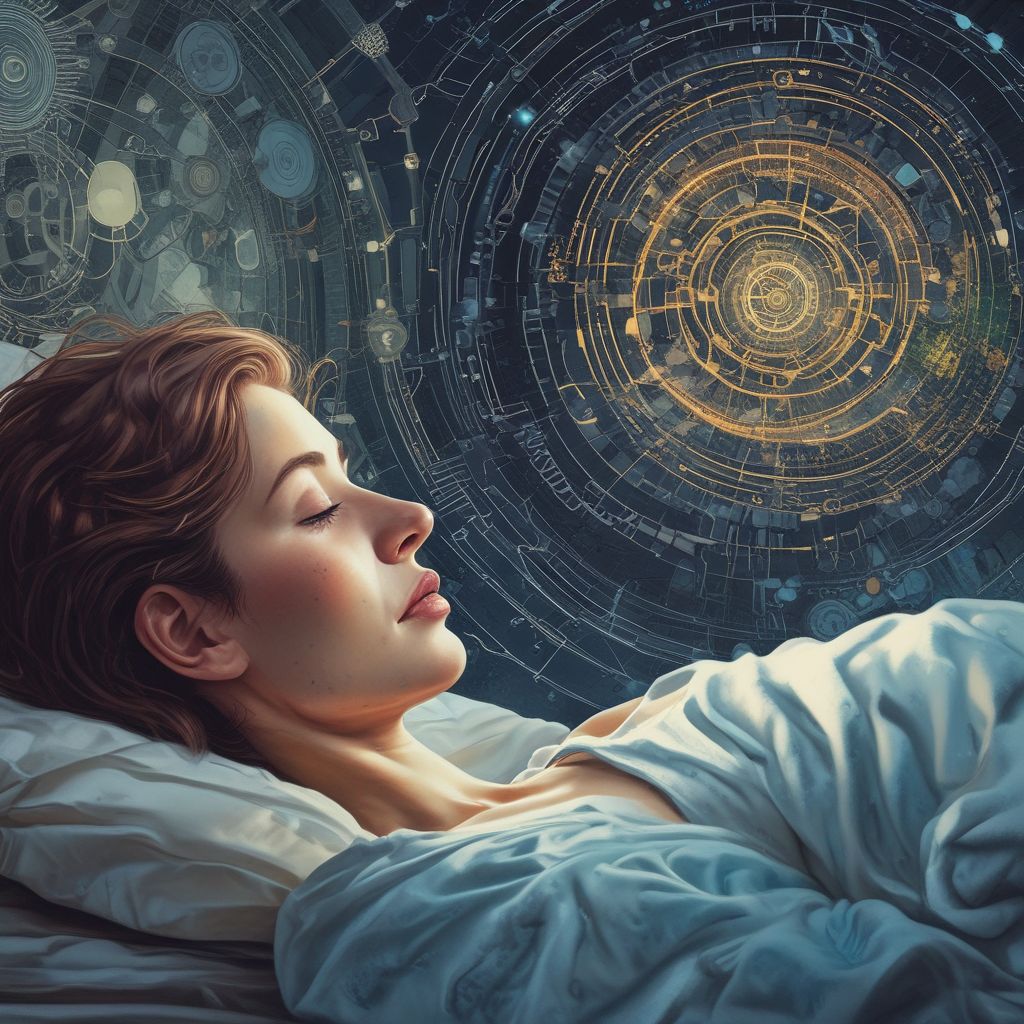
Human dreams are thought to arise from the brain’s spontaneous reorganization of memories and patterns during rest. AI researchers have adapted this concept by creating algorithms that operate in low-resource or constrained states, akin to a digital “subconscious.”
How Sleep Cycles Work in AI
During training, models enter periodic sleep phases where:
- They process incomplete or noisy data
- Standard loss functions are relaxed
- Internal representations are recombined without immediate feedback
This mimics the brain’s default mode network activity, allowing neural networks to form novel associations unconstrained by ordinary optimization goals.
Training Methods for Creative Insomnia
Three primary techniques drive AI dream training:
1. Contrastive Relaxation
Models compare real data against generated “dreams” during sleep phases, learning to identify meaningful deviations without explicit labels.
2. Generative Adversarial Sleep
A generator creates abstract patterns while a discriminator evaluates their plausibility. This ongoing dialogue produces unexpected synthetic structures that refine the generator’s creative capacity.
3. Memory Consolidation Networks
Recurring sleep cycles force models to replay past activations in altered sequences, strengthening latent connections between disparate concepts.
Real-World Applications
The most striking outcomes emerge when these systems generate solutions to problems that stumped conventional approaches.
Scientific Breakthroughs
In protein folding research, a dream-trained model proposed a novel folding pathway for a cancer-related enzyme. The structure differed from all known configurations but later proved stable under laboratory conditions, revealing a previously hidden interaction mechanism.
Design Innovation
Architectural firms have used dream-simulating AI to generate building layouts that balance functionality with aesthetic surprise. One project produced a museum design where galleries organically flowed around a central courtyard—a solution no human architect had conceived.
Art and Creativity
Music composers have employed these systems to create pieces that blend stylistic elements from unrelated genres. A recent output fused Baroque counterpoint with electronic glitch art, resulting in a composition praised for its emotional depth and technical originality.
Challenges and Limitations
While promising, this approach faces significant hurdles:
- Interpretability: Dream-generated solutions often lack clear rational explanations
- Over-Fantasy: Models may produce creative but impractical proposals
- Ethical Risks: Unpredictable outputs could inadvertently reinforce biases present in training data
Researchers are developing validation frameworks that cross-reference dream-derived suggestions with physical constraints and empirical data.
The Future of Artificial Imagination
As training techniques evolve, AI dream models may become collaborative partners rather than mere tools. Imagine a materials scientist working alongside an AI that “sleeps” on molecular data, then awakens with a radical crystal structure for next-generation batteries.
This fusion of constrained processing and unbounded generation mirrors humanity’s own creative struggles and insights. By teaching machines to wander through nocturnal data landscapes, we might finally see technology not just as a calculator, but as a true co-creator.