AI Dungeon Masters: The New Frontier of Tabletop RPGs
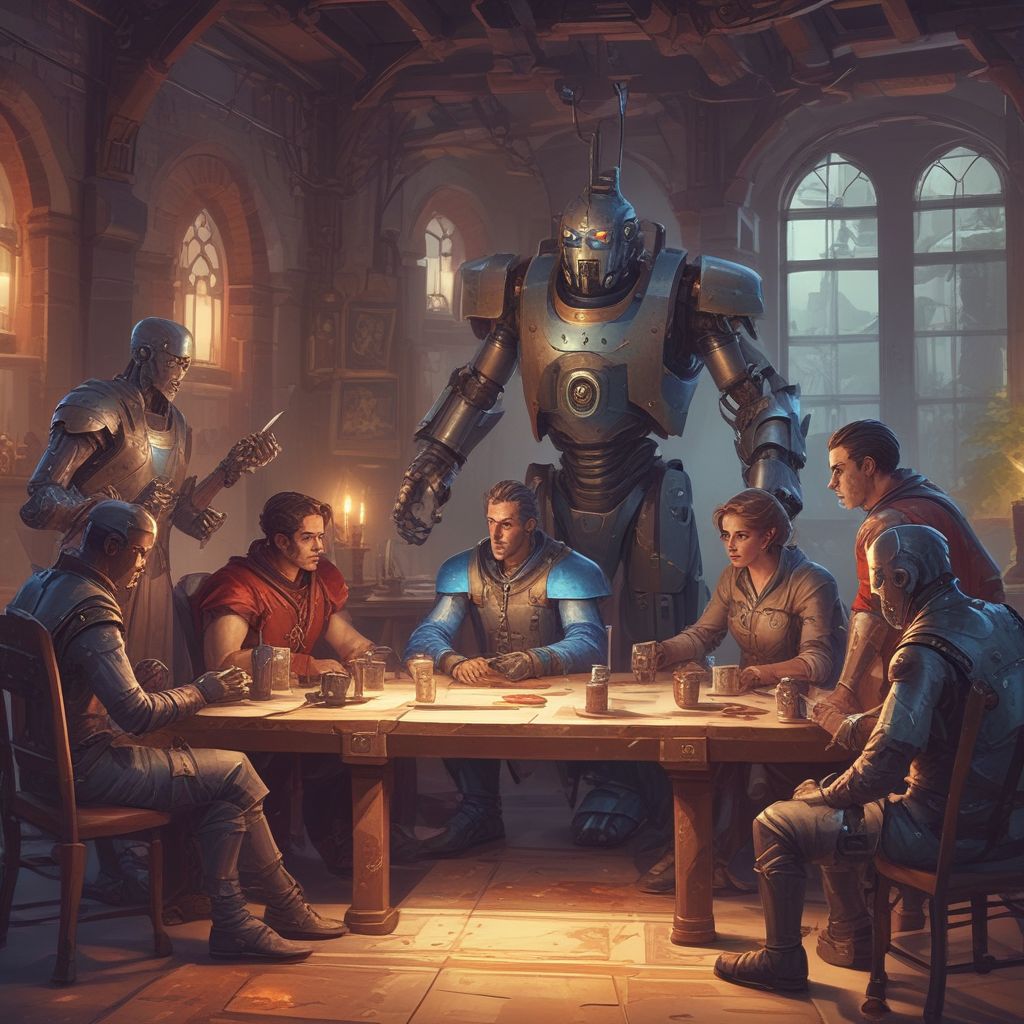
Tabletop role‑playing games have long been the realm of human imagination and improvisation, but recent advances in generative AI have introduced a new breed of storyteller: the AI Dungeon Master. These virtual narrators, powered by sophisticated language models such as GPT‑4 and Claude, can generate dynamic worlds, craft compelling characters, and adapt on the fly to player choices. In this article we explore how AI Dungeon Masters are transforming player‑driven storytelling, what they bring to the table, and how you can integrate them into your next gaming session.
The Rise of Generative AI in Gaming
Generative AI has moved from academic curiosity to practical tool in recent years, thanks largely to the proliferation of large language models (LLMs). OpenAI’s GPT‑4, Anthropic’s Claude, and other multimodal models can understand context, generate coherent prose, and even mimic specific writing styles. In gaming, this capability translates into on‑the‑fly world building, NPC dialogue, and plot twists that feel organic rather than pre‑written.
- Real‑time content generation: AI can produce maps, lore, and quest objectives within seconds, allowing game masters to iterate rapidly.
- Natural language interaction: Players can ask the AI for hints, world history, or character motivations using everyday language, reducing the need for complex rulebooks.
- Personalization: By feeding player back‑up data or character profiles, the AI tailors the narrative to individual preferences, enhancing immersion.
What Makes an AI Dungeon Master?
While the term “Dungeon Master” evokes a human storyteller, an AI DM embodies a set of core functionalities that make it uniquely powerful:
Dynamic World Building
Unlike static campaign modules, an AI can create new locations, cultures, and ecosystems on demand. Whether it’s a floating city, a subterranean kingdom, or an alien jungle, the AI constructs detailed environments that can be explored in real time.
Adaptive Narrative Engine
Player actions are unpredictable. An AI DM constantly evaluates the evolving story state, adjusting NPC goals, environmental hazards, and plot beats to maintain coherence. This keeps sessions fresh and prevents the “dead‑end” scenarios that sometimes plague linear campaigns.
Character and NPC Generation
From fully fleshed‑out allies to sinister adversaries, the AI crafts NPCs with unique backstories, motivations, and dialogue styles. It can even simulate voice tones or accents if integrated with speech synthesis.
Rule Enforcement and Balancing
Most AI DMs come with built‑in rulesets for popular systems like Dungeons & Dragons or Pathfinder. They can calculate damage, track initiative, and ensure game balance without the DM needing to constantly reference manuals.
Player-Driven Storytelling with AI
One of the biggest strengths of AI Dungeon Masters is their ability to amplify player agency. Traditional DMs often face cognitive load limits; they may inadvertently steer a story toward familiar tropes or favor certain players. AI, however, can:
- Provide instant feedback: Players can test creative solutions and receive immediate consequences, encouraging experimentation.
- Balance narrative weight: By monitoring player engagement metrics (e.g., time spent on tasks), the AI can shift focus to under‑represented characters.
- Offer multiple paths: Instead of a single branching tree, the AI can generate overlapping storylines that converge, giving players the illusion of a vast, living world.
As a result, campaigns become more collaborative, with players feeling that their choices genuinely shape the narrative arc.
Practical Tips for Integrating AI DMs
Ready to try an AI Dungeon Master? Follow these steps to ensure a smooth experience:
Select the Right Tool
- ChatGPT Plus or Enterprise: Ideal for text‑based sessions; supports custom instructions and fine‑tuning.
- Claude by Anthropic: Known for its conversational style; great for NPC dialogue.
- Third‑party platforms: Tools like AI Dungeon, Tabletop AI, or Fantasy Grounds AI Extension offer ready‑made integration with popular rulebooks.
Define Clear Prompt Parameters
Good results hinge on precise prompts. Start with a brief context (e.g., “You are a DM for a D&D 5e campaign set in a steampunk metropolis.”) and specify constraints (e.g., “No magic, focus on technology.”). Use prompt chaining to keep the AI grounded in the story’s continuity.
Establish a Playtesting Loop
Run a mock session where you act as both players and DM. Observe how the AI responds to unexpected actions. Refine prompts, add clarifying instructions, and adjust rule parameters accordingly.
Blend Human and AI Input
Even the most advanced AI benefits from a human touch. Use the AI to generate rough outlines or dialogue, then polish the output manually. This hybrid approach ensures high quality while maintaining speed.
Backup and Version Control
Keep session logs and AI outputs in a shared document (e.g., Google Docs or Notion). This allows the group to revisit earlier decisions and prevents narrative drift.
Challenges and Ethical Considerations
AI Dungeon Masters are powerful, but they are not without pitfalls. Here are key concerns to keep in mind:
Bias and Representation
Language models learn from large datasets that can contain biased or stereotypical content. Always review NPC descriptions, cultural references, and plot elements to avoid perpetuating harmful tropes.
Creative Ownership
When an AI generates original story content, questions arise about who owns the intellectual property. Clarify usage rights with your group and consider licensing agreements if you plan to publish or monetize the material.
Consistency and Continuity
LLMs can occasionally produce contradictory facts or lose track of long‑term plot threads. Establish a knowledge base—a shared document that tracks world lore, character arcs, and key events—to help the AI stay consistent.
Human DM Role
Some fear that AI DMs will replace human storytellers. Instead, view them as assistants that handle routine tasks, freeing DMs to focus on nuanced character interactions and emotional beats that AI still struggles to emulate.
Future Outlook
The trajectory of AI Dungeon Masters points toward even greater immersion and interactivity:
- Multimodal Storytelling: Integrating voice, image, and motion capture will allow players to experience richer narratives.
- Real‑time Adaptation with AR/VR: Imagine stepping into a virtual world where the AI shapes your surroundings based on your choices.
- Collaborative Co‑Creation: AI could help groups write novels, comics, or game modules collaboratively, bridging the gap between tabletop and digital media.
- Cross‑System Compatibility: As models become more flexible, they could seamlessly switch between rule systems, enabling hybrid campaigns.
These advancements hint at a future where storytelling is no longer confined to a single master or a pre‑written script but evolves organically through shared imagination and cutting‑edge technology.
Conclusion
AI Dungeon Masters are reshaping the tabletop RPG landscape by offering limitless creativity, adaptive storytelling, and enhanced player agency. While challenges like bias and consistency remain, thoughtful integration and hybrid approaches can harness their full potential. Whether you’re a seasoned DM looking to expand your toolkit or a newcomer curious about the future of role‑playing, AI DMs invite you to explore narratives that were once only limited by human imagination.
Ready to let an AI DM guide your next adventure? Dive in, experiment, and experience storytelling like never before.