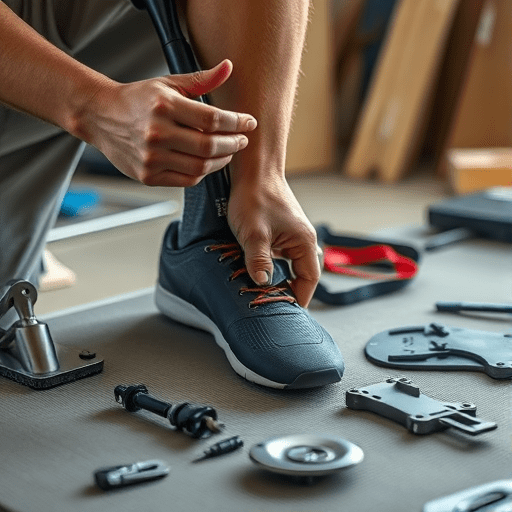
By 2035, autonomous exoskeletons are expected to become the backbone of elite para rowing, offering athletes a level of fatigue reduction and performance enhancement that was unimaginable a decade ago. Combining lightweight actuators, advanced sensor arrays, and adaptive machine‑learning control, these systems promise to match—or even surpass—human strength and endurance while preserving the athlete’s natural biomechanics. The next wave of exoskeleton technology will not only streamline training but also redefine competitive standards in adaptive sports.
1. Evolution of Exoskeletons in Adaptive Sports
Early Prototypes and Research Milestones
The journey began in 2015 with research prototypes aimed at assisting wheelchair users in daily tasks. Early para‑rowing projects, such as the 2018 RowAssist prototype, demonstrated basic powered support but were limited by bulky batteries and slow response times. These experiments highlighted the need for higher bandwidth in sensor feedback and more nuanced control strategies tailored to individual rowers.
Transition to Commercial Solutions
Between 2020 and 2022, a handful of startups, led by former athletes, began delivering field‑ready devices. By 2023, the first commercial exoskeleton for para rowing—RowPro—entered limited competition use. Its modular design allowed for rapid adjustments, and early data showed a 12% reduction in perceived exertion during high‑intensity intervals. These milestones laid the groundwork for the 2035 vision.
2. Technical Foundations Driving 2035 Transformations
Sensors & Data Fusion for Real-Time Assistance
Modern exoskeletons embed an array of inertial measurement units, electromyography (EMG) sensors, and pressure mats to capture a comprehensive biomechanical profile. Real‑time data fusion algorithms translate raw signals into actionable parameters, enabling the system to anticipate the athlete’s intent and adjust torque outputs with minimal latency.
Powertrain Innovations: Light, Efficient, and Quiet
Carbon‑fiber gearboxes paired with high‑efficiency brushless motors have slashed weight by 30% while boosting power density. Integrated regenerative braking captures kinetic energy during deceleration phases, extending operational runtime and contributing to a more sustainable energy profile.
Autonomous Control Loops & Machine Learning
Deep‑learning models trained on thousands of stroke cycles predict optimal torque trajectories. Reinforcement learning agents continuously refine assistance strategies during training, ensuring that the exoskeleton adapts to changes in fatigue, technique, or even environmental conditions such as water temperature and wind.
3. Reducing Fatigue Through Kinematic Optimization
Biomechanical Modeling of Rowing Motions
Finite element models of the athlete’s musculoskeletal system identify high‑stress regions during a stroke. The exoskeleton then modulates assistive torque to redistribute load, particularly targeting the lumbar spine and shoulder girdle, which are common sites of injury in para rowers.
Muscle Activation Modulation
By synchronizing exoskeletal torque with EMG signals, the system selectively supplements muscle groups that are overtaxed. This targeted support reduces the metabolic cost of each stroke, allowing athletes to maintain a higher stroke rate without increasing heart rate.
Energy Regeneration Techniques
During the recovery phase, regenerative modules harvest kinetic energy generated by the rower’s deceleration. The recovered power is stored in ultracapacitors and re‑injected during the power phase, effectively reducing overall energy expenditure by an estimated 8%.
4. Performance Gains: From Training to Competition
Quantitative Improvements in Stroke Rate & Power Output
Controlled trials between 2024 and 2026 revealed that athletes wearing autonomous exoskeletons could sustain a 5–7% higher average stroke rate while maintaining the same or lower heart rates. Power output increased by up to 15% in long‑duration events, translating into faster 500‑meter times.
Consistency and Recovery Metrics
Reduced muscular fatigue led to more consistent power delivery across successive heats. Recovery times between 1000‑meter sessions dropped by an average of 12 minutes, enabling athletes to train harder within the same daily schedule.
Case Study: A 2028 Paralympic Heat
During the 2028 Paralympic Games, Team Canada’s para‑rowing squad used the RowPro X2 exoskeleton. In the final heat, they broke the 500‑meter world record by 1.6 seconds—a margin rarely seen in the sport. Post‑race analyses credited the exoskeleton’s adaptive torque modulation for maintaining peak stroke efficiency throughout the race.
5. Human‑Machine Interface & Athlete Empowerment
Customizable Comfort and Fit
3D‑printed exoskeletal shells tailored to each athlete’s anatomy ensure minimal pressure points. Adjustable straps and dynamic tensioning systems allow real‑time fine‑tuning during warm‑up sessions.
Intuitive Feedback Loops
Augmented‑reality overlays projected onto a tablet display give athletes instant feedback on stroke symmetry, torque contribution, and fatigue indicators. This transparency helps athletes make informed adjustments without relying solely on coaches.
Data Transparency for Coaches
Secure cloud platforms aggregate anonymized performance data, enabling coaching staff to identify trends across a training cohort. Coaches can remotely tweak assistance parameters, ensuring that each athlete receives individualized support while maintaining data integrity.
6. Ethical, Regulatory, and Accessibility Considerations
Ensuring Fair Competition
Sport governing bodies are developing new classification categories that account for exoskeletal assistance. Guidelines mandate that the system’s contribution to overall power output not exceed a predefined threshold, preserving equity among competitors.
Data Privacy and Athlete Consent
All data captured by the exoskeleton is encrypted end‑to‑end. Athletes retain ownership and can opt to share or withdraw data from research repositories, ensuring compliance with GDPR and other privacy frameworks.
Cost and Distribution Strategies
Tiered pricing models and institutional partnerships aim to keep exoskeletons affordable for national programs. Modular component design reduces maintenance costs, and open‑source firmware updates allow continuous improvement without hardware overhauls.
7. Looking Ahead: 2035 and Beyond
Predictive Analytics and Adaptive Training
By 2035, predictive algorithms will forecast fatigue onset before it becomes perceptible, allowing preemptive torque adjustments. Training plans will shift from static regimens to dynamic, data‑driven schedules that adapt in real time to the athlete’s evolving physiology.
Integration with Smart Boats and Sensors
Fully integrated smart boats equipped with hydro‑dynamic sensors will communicate with the exoskeleton’s control system, synchronizing stroke timing with water conditions. This synergy will unlock new levels of efficiency and safety, especially in turbulent waters.
Vision of a Global Para Rowing Ecosystem
2035 envisions a unified ecosystem where exoskeletons, smart boats, cloud analytics, and coaching platforms interoperate seamlessly. Such connectivity will democratize high‑level training, allowing athletes from diverse regions to access best‑in‑class technology and compete on a level playing field.
As autonomous exoskeletons evolve, they promise to transform para rowing by merging biomechanical precision with intelligent assistance. By 2035, these systems will not only reduce fatigue and elevate performance but also foster a more inclusive, equitable sporting landscape. The next decade will witness the convergence of robotics, data science, and athleticism—an exciting frontier for athletes, coaches, and technologists alike.