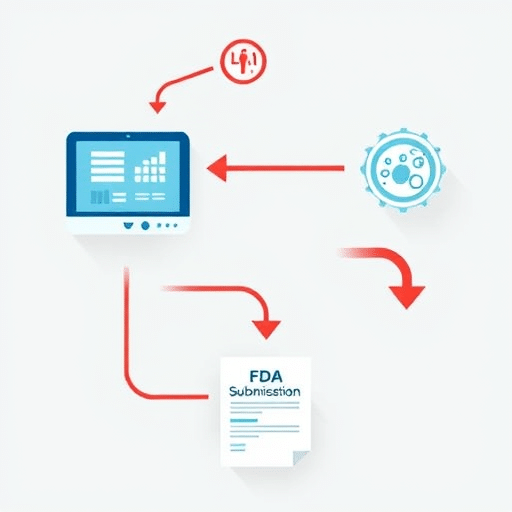
In an era where wearable devices have become ubiquitous, the promise of using a smartwatch as a reliable heart rate variability (HRV) biomarker in arrhythmia clinical trials has captured the attention of both researchers and regulators. Validating smartwatch heart rate biomarker for arrhythmia trials is no longer a theoretical exercise; it is a mandatory step to demonstrate that the device can provide accurate, reproducible, and clinically meaningful data that satisfies FDA expectations. This guide walks through each critical phase—from regulatory framing to statistical validation—offering a practical roadmap for investigators aiming to launch a compliant, evidence‑based smartwatch‑based arrhythmia study.
Regulatory Landscape and FDA Expectations
The FDA has issued a series of guidance documents on digital health technologies, notably the 2022 Digital Health Innovation Action Plan and the 2024 Update on Wearable Sensors. These documents clarify that a smartwatch intended for arrhythmia monitoring must be treated as a medical device, requiring a 510(k) clearance or De Novo request depending on predicate devices. Central to FDA scrutiny is the clinical validity of the HRV biomarker: the device must demonstrate that its output correlates reliably with gold‑standard ECG measurements in a representative patient cohort.
Key regulatory expectations include:
- Comprehensive documentation of algorithmic transparency and data handling.
- Evidence of accuracy, precision, and repeatability across diverse demographic groups.
- Clear definition of the biomarker’s clinical endpoint and thresholds for arrhythmia detection.
- Robust post‑market surveillance plans outlining adverse event reporting.
Choosing the Right HRV Biomarker Metric
HRV can be quantified through time‑domain, frequency‑domain, or nonlinear metrics. The FDA’s 2024 guidance recommends selecting metrics that are both physiologically interpretable and clinically actionable. For arrhythmia trials, the most relevant indicators are often the root mean square of successive differences (RMSSD) and the standard deviation of NN intervals (SDNN). These metrics provide a balance between sensitivity to atrial fibrillation onset and robustness against motion artifacts inherent in wrist‑worn devices.
When choosing your biomarker, consider:
- Baseline variability in the target population.
- Device’s optical sensor capabilities (photoplethysmography vs. ECG patch).
- Data resolution (sampling rate of 50–100 Hz is recommended for HRV).
- Regulatory precedent: prior cleared devices that used similar metrics.
Designing the Validation Study
Cohort Selection
A robust validation study requires a cohort that reflects the intended user base. For arrhythmia trials, this typically includes adults aged 18–80, stratified by sex, ethnicity, and comorbidities such as hypertension or heart failure. Enrolling both symptomatic and asymptomatic individuals ensures that the device’s sensitivity and specificity are evaluated across the spectrum of arrhythmic presentations.
Data Acquisition Protocol
Simultaneous acquisition of smartwatch data and gold‑standard ECG recordings is essential. The protocol should include:
- Continuous 24‑hour monitoring for at least 7 days to capture circadian variations.
- Standardized positioning (e.g., snug wrist fit) and calibration sessions before data capture.
- Pre‑defined activity logs to annotate periods of exercise, sleep, or motion artifacts.
Reference Standard Comparison
The gold standard remains the 12‑lead ECG, but for ambulatory settings, a validated Holter monitor can serve as a practical reference. The comparison should involve:
- Time‑synchronization of devices using NTP servers or embedded timestamps.
- Cross‑checking of RR intervals for alignment.
- Use of a blinded adjudication panel to confirm arrhythmia episodes.
Data Processing and Signal Quality Assessment
Raw photoplethysmographic (PPG) data from smartwatches contain motion artifacts and baseline drift. A multi‑stage preprocessing pipeline enhances data reliability:
- Band‑pass filtering (0.5–5 Hz) to isolate heart rate signals.
- Adaptive noise cancellation using accelerometer data to remove motion artifacts.
- Detection of RR interval outliers via median absolute deviation (MAD) thresholds.
- Calculation of a signal quality index (SQI) that flags segments below 80 % quality for exclusion.
Documenting the preprocessing steps is critical for FDA transparency, as algorithmic transparency is a prerequisite for device clearance.
Statistical Validation Framework
Accuracy, Precision, and Repeatability
Metrics of interest include:
- Mean Absolute Error (MAE) between smartwatch HRV and ECG reference.
- Intraclass Correlation Coefficient (ICC) for repeatability across days.
- Root Mean Square Error (RMSE) to capture variance in arrhythmic states.
FDA guidance recommends achieving within 5 % error for time‑domain HRV metrics when compared to ECG in a clinically relevant subpopulation.
Clinical Relevance and Threshold Determination
Beyond statistical concordance, the biomarker must map to clinically meaningful outcomes. For arrhythmia detection, define a threshold that balances sensitivity and specificity. Receiver Operating Characteristic (ROC) analysis should be conducted to determine the optimal cut‑off that maximizes the Youden Index. Reporting area under the ROC curve (AUC) provides an aggregate measure of discrimination capability.
In addition, subgroup analyses by age, sex, and comorbidities help confirm that thresholds remain valid across patient strata.
Documentation and Submission Package
Prepare a comprehensive submission that includes:
- Device description and technical specifications.
- Algorithm documentation with flowcharts and version control logs.
- Validation study protocol, statistical analysis plan, and results tables.
- Risk analysis and mitigation strategies per ISO 14971.
- Post‑market surveillance plan and adverse event reporting framework.
Ensure all tables and figures comply with FDA formatting standards (e.g., Font: Times New Roman, size 12). A clear, organized submission reduces the likelihood of request for additional information, expediting clearance.
Post‑Approval Surveillance and Iterative Improvement
FDA requires a robust Post‑Market Surveillance (PMS) plan to track real‑world performance. Key elements include:
- Real‑time monitoring of device metrics through a cloud analytics dashboard.
- Automated alerts for anomalous HRV patterns that could indicate algorithm drift.
- Annual safety reports summarizing adverse events and software updates.
- Engagement with patient communities to capture usability feedback.
Incorporating a Continuous Quality Improvement (CQI) loop ensures that firmware updates or algorithm refinements are validated before release, maintaining compliance with FDA’s Device Registration and Listing requirements.
Adhering to this structured approach—from pre‑submission planning through post‑market surveillance—provides a defensible path for obtaining FDA clearance and demonstrates scientific rigor to stakeholders.
In summary, validating smartwatch heart rate biomarker for arrhythmia trials demands meticulous design, rigorous data processing, and transparent documentation. By aligning every step with FDA expectations and focusing on clinically relevant metrics, researchers can transform a consumer smartwatch into a reliable, regulated tool that advances arrhythmia research and ultimately improves patient outcomes.