When a medical device is software‑only and intended to support clinical trial operations, the FDA classifies it as Software as a Medical Device (SaMD). In 2026, the regulatory landscape demands a meticulous approach to 510(k) clearance. This step‑by‑step guide walks through the entire process, from initial classification to post‑market vigilance, ensuring that your clinical trial software meets FDA expectations.
1. Clarify Your Device’s Scope and Classification
Before drafting any paperwork, determine whether your software truly falls under the SaMD definition. Key questions include:
- Does the software provide diagnosis, prognosis, or treatment recommendations?
- Is it intended for monitoring patient health status during a clinical trial?
- Does it generate actionable data that influences trial decisions?
Answering these helps you choose the correct regulatory pathway. If the software is purely a data collection tool with no clinical decision‑making capability, it may be exempt from 510(k) and instead fall under a lower regulatory category.
2. Review FDA 510(k) Requirements for SaMD
The FDA’s 510(k) guidance for SaMD in 2026 emphasizes three core pillars: Safety and Effectiveness, Risk Management, and Clinical Evidence. Your submission must demonstrate that your software performs safely and effectively, that all identified risks are mitigated, and that clinical data support its intended use.
2.1 Safety and Effectiveness
Provide a detailed software description, use cases, and intended clinical workflow. Include:
- System architecture diagram
- Functional specifications
- User interface mock‑ups
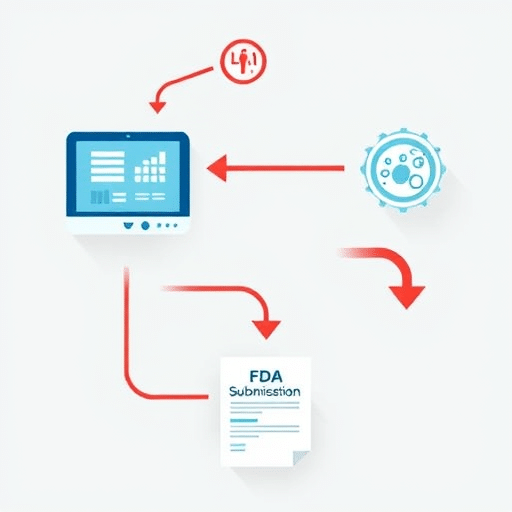
- Data flow diagrams showing how inputs lead to outputs
2.2 Risk Management
Employ ISO 14971 to identify hazards, assess their severity, and outline mitigations. The FDA expects a documented risk control plan that addresses:
- Software failure modes (e.g., data loss, misclassification)
- Security vulnerabilities (e.g., unauthorized access)
- Compliance with HIPAA and GDPR for data handling
2.3 Clinical Evidence
For SaMD that influences clinical decisions, the FDA requires evidence that the software performs as intended in a real‑world setting. This can be achieved through:
- Pilot studies or beta testing within a controlled environment
- Statistical validation of algorithms against gold‑standard methods
- Post‑market surveillance data if the software has been used previously
3. Build a Robust Software Development Life Cycle (SDLC)
Adopt a formal SDLC that incorporates FDA best practices. Key stages include:
- Requirements Definition – Capture user stories and regulatory constraints.
- Design and Architecture – Document design decisions and security controls.
- Implementation – Follow coding standards (e.g., MISRA, IEC 62304).
- Verification and Validation – Perform unit tests, integration tests, and system validation against the reference model.
- Release Management – Maintain version control and change logs.
Maintain traceability matrices linking requirements to design, code, and test artifacts. This documentation proves indispensable during FDA review.
4. Prepare the 510(k) Submission Package
The FDA requires a comprehensive 510(k) dossier. Organize it as follows:
- Cover Letter – Briefly state the purpose and classification.
- Device Description – Include software architecture, user interface, and workflow.
- Comparators – Identify a predicate device or equivalent software and explain why your product is similar yet has added value.
- Performance Data – Summarize test results, algorithm validation, and risk mitigation outcomes.
- Labeling and Instructions – Provide user manuals, installation guides, and safety notices.
- Security and Privacy Assessment – Detail compliance with HIPAA, GDPR, and FDA cyber‑security guidelines.
- Quality Management System (QMS) Documentation – Highlight ISO 13485 alignment and audit reports.
- Post‑Market Surveillance Plan – Describe how you will monitor adverse events and software updates.
All documents must be in PDF, electronically signed, and formatted according to FDA submission standards.
5. Engage the FDA Early – Pre‑Submission (PHS) Meetings
In 2026, the FDA offers Pre‑Submission meetings to clarify regulatory expectations. Use the PHS process to:
- Validate your comparator selection
- Confirm the sufficiency of your risk management plan
- Obtain guidance on the required clinical data scope
- Discuss any novel cybersecurity measures you intend to implement
Prepare a concise agenda and supporting documents before the meeting. The FDA’s feedback often saves weeks of revision and helps align your submission with regulatory expectations.
6. Submit and Respond to FDA Comments
Once the 510(k) is submitted, the FDA typically reviews it within 90 days. However, the timeline can extend if the FDA requests additional information. During this period:
- Maintain a dedicated point of contact for FDA queries.
- Keep your QMS logs current to provide rapid evidence if requested.
- Plan for a quick turnaround on post‑submission requests.
Document every response and keep the FDA’s comments in a shared repository. This practice facilitates traceability and future audits.
7. Post‑Approval Compliance and Market Introduction
After clearance, you must still adhere to post‑market requirements:
- Implement a robust change management process to track software updates.
- Maintain post‑market surveillance (PMR) data and promptly report adverse events.
- Update labeling and training materials as needed.
- Conduct periodic internal audits to ensure ongoing compliance with ISO 13485 and FDA 21 CFR Part 820.
Failure to uphold these obligations can jeopardize future clearances or lead to enforcement actions.
8. Common Pitfalls to Avoid
Even well‑planned submissions can falter due to minor oversights. Watch for:
- Incomplete Risk Management – Missing hazard identification can lead to rejection.
- Inadequate Clinical Evidence – Insufficient data for algorithm performance may trigger additional studies.
- Poor Documentation Traceability – Unlinked requirements or test cases can raise doubts about completeness.
- Security Gaps – Unaddressed cyber threats can cause delays or recalls.
Regular internal reviews and external audits help catch these issues before submission.
9. Future‑Proofing Your Software
Regulatory expectations evolve. In 2026, the FDA is increasingly focusing on continuous learning systems and adaptive algorithms. To stay ahead:
- Embed mechanisms for real‑time performance monitoring.
- Plan for a phased roll‑out that allows incremental validation.
- Maintain a flexible QMS that can incorporate new guidance documents.
Proactively addressing these trends positions your software for smoother future approvals.
10. Conclusion
Securing FDA 510(k) clearance for clinical trial software classified as SaMD demands a disciplined approach that integrates risk management, rigorous documentation, and clear clinical evidence. By following the structured steps above—clarifying device scope, aligning with 510(k) requirements, executing a robust SDLC, preparing a meticulous submission package, engaging the FDA early, and maintaining post‑market vigilance—developers can navigate the regulatory landscape confidently and bring critical trial tools to market in 2026 and beyond.